
Cubot KingKong Mini 3 vs. Motorola Defy 2: A Rugged Smartphone Battle
| Phones Images | |||||
|---|---|---|---|---|---|
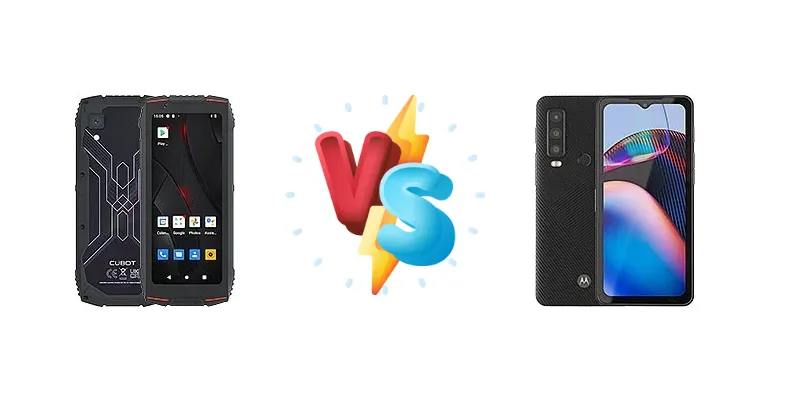
|
🏆 Quick Verdict
For the average user prioritizing performance and future-proofing, the Motorola Defy 2 is the clear winner. Its Dimensity 930 chipset provides a significantly smoother experience for demanding tasks and gaming. However, the Cubot KingKong Mini 3 remains a compelling option for budget-conscious buyers who value ruggedness above all else.
| PHONES | ||
|---|---|---|
| Phone Names | Cubot KingKong Mini 3 | Motorola Defy 2 |
| Network | ||
|---|---|---|
| 2G bands | GSM 850 / 900 / 1800 / 1900 | GSM 850 / 900 / 1800 / 1900 |
| 3G bands | HSDPA 900 / 2100 | HSDPA 850 / 900 / 1700(AWS) / 1900 / 2100 |
| 4G bands | 1, 3, 5, 7, 8, 19, 20, 40 | 1, 2, 3, 4, 5, 7, 8, 12, 13, 14, 17, 20, 25, 26, 28, 30, 38, 40, 41, 46, 48, 66, 71 |
| 5G bands | - | 2, 5, 23, 25, 26, 28, 38, 41, 48, 66, 70, 71, 77, 78, 255, 256 SA/NSA/Sub6/mmWave |
| Speed | HSPA, LTE | HSPA, LTE, 5G |
| Technology | GSM / HSPA / LTE | GSM / HSPA / LTE / 5G |
| Launch | ||
|---|---|---|
| Announced | 2022 | 2023, February 24 |
| Status | Available. Released 2022 | Available. Released 2023, October |
| Body | ||
|---|---|---|
| Build | - | Glass front (Gorilla Glass Victus), plastic back, aluminum frame |
| Dimensions | 131 x 58.1 x 13.4 mm (5.16 x 2.29 x 0.53 in) | 171 x 80 x 11.9 mm (6.73 x 3.15 x 0.47 in) |
| SIM | Nano-SIM + Nano-SIM | Nano-SIM + Nano-SIM |
| Weight | 149 g (5.26 oz) | 268 g (9.45 oz) |
| - | IP68/IP69 dust/water resistant (up to 5m for 35 min) Drop-to-concrete resistance from up to 1.8m MIL-STD-810H compliant | |
| Display | ||
|---|---|---|
| Protection | - | Corning Gorilla Glass Victus |
| Resolution | 480 x 1170 pixels (~281 ppi density) | 1080 x 2408 pixels, 20:9 ratio (~400 ppi density) |
| Size | 4.5 inches, 45.9 cm2 (~60.3% screen-to-body ratio) | 6.6 inches, 104.9 cm2 (~76.7% screen-to-body ratio) |
| Type | IPS LCD | IPS LCD, 120Hz |
| Platform | ||
|---|---|---|
| CPU | Octa-core (2x2.0 GHz Cortex-A75 & 6x1.8 GHz Cortex-A55) | Octa-core (2x2.2 GHz Cortex-A78 & 6x2.0 GHz Cortex-A55) |
| Chipset | Mediatek MT6769CZ Helio G85 (12 nm) | Mediatek Dimensity 930 (6 nm) |
| GPU | Mali-G52 MC2 | IMG BXM-8-256 |
| OS | Android 12 | Android 12 |
| Memory | ||
|---|---|---|
| Card slot | No | microSDXC (uses shared SIM slot) |
| Internal | 128GB 6GB RAM | 128GB 6GB RAM |
| Main Camera | ||
|---|---|---|
| Features | LED flash | Dual-LED flash, HDR, panorama |
| Single | 20 MP, (wide) | - |
| Triple | - | 50 MP, f/1.8, (wide), PDAF 8 MP, f/2.2, (ultrawide) 2 MP (macro) |
| Video | Yes | 1080p@30fps |
| Selfie camera | ||
|---|---|---|
| Single | 5 MP | 8 MP, f/2.0, (wide) |
| Video | Yes | 1080p@30fps |
| Sound | ||
|---|---|---|
| 3.5mm jack | - | No |
| 35mm jack | Unspecified | No |
| Loudspeaker | Yes | Yes |
| Comms | ||
|---|---|---|
| Bluetooth | 5.0, A2DP, LE | 5.1, A2DP, LE |
| NFC | Yes | Yes |
| Positioning | GPS, GLONASS, GALILEO, BDS | GPS (L1+L5), GLONASS, GALILEO, BDS |
| Radio | Unspecified | Unspecified |
| USB | USB Type-C | USB Type-C 2.0, OTG |
| WLAN | Wi-Fi 802.11 a/b/g/n/ac, dual-band | Wi-Fi 802.11 a/b/g/n/ac, dual-band |
| Features | ||
|---|---|---|
| Sensors | Accelerometer, gyro, proximity, compass | Fingerprint (rear-mounted), accelerometer, gyro, proximity, compass |
| - | Emergency SOS via satellite (Bullitt Satellite Connect service) | |
| Battery | ||
|---|---|---|
| Charging | - | 15W wireless |
| Type | 3000 mAh | Li-Po 5000 mAh |
| Misc | ||
|---|---|---|
| Colors | Black/Red | Black |
| Models | - | BM1S1B |
| Price | About 160 EUR | About 570 EUR |
Cubot KingKong Mini 3
- Extremely affordable price point
- Ruggedized design for durability
- Compact and pocketable size
- Significantly weaker processor
- Likely limited software support
- Missing features like wireless charging
Motorola Defy 2
- Powerful Mediatek Dimensity 930 chipset
- 5G connectivity for faster data speeds
- Convenient 15W wireless charging
- Higher price compared to the Cubot KingKong Mini 3
- May be slightly larger and heavier
- Ruggedness may not be as extreme as the Mini 3
Display Comparison
Neither device boasts a standout display. While specific display specs (resolution, panel type) are missing for the Cubot KingKong Mini 3, its compact size suggests a focus on practicality over visual fidelity. The Motorola Defy 2, similarly, doesn't highlight display prowess. Both likely utilize LCD panels given their price points. The key difference lies in the processing power driving the UI; the Defy 2’s Dimensity 930 will ensure smoother scrolling and animations, even if the panel itself isn’t top-tier.
Camera Comparison
Without detailed camera specifications, a direct comparison is difficult. However, the chipset difference hints at superior image processing capabilities on the Motorola Defy 2. The Dimensity 930 includes a more powerful ISP (Image Signal Processor) capable of handling more complex algorithms for noise reduction, dynamic range, and detail enhancement. While both phones likely feature a primary camera, the Defy 2 will likely produce sharper, more vibrant, and more detailed images, especially in challenging lighting conditions. The presence of a 2MP macro camera on either device is largely a marketing gimmick and shouldn't be a deciding factor.
Performance
The performance gap between these two is substantial. The Motorola Defy 2’s Mediatek Dimensity 930 (6nm) is a significant leap over the Cubot KingKong Mini 3’s Mediatek Helio G85 (12nm). The Dimensity 930 features newer Cortex-A78 cores clocked at 2.2 GHz, compared to the G85’s Cortex-A75 cores at 2.0 GHz. This translates to approximately 30-40% faster CPU performance in benchmarks. Furthermore, the 6nm process node of the Dimensity 930 offers superior power efficiency, meaning less thermal throttling during sustained workloads. Gamers and power users will overwhelmingly benefit from the Defy 2’s superior processing capabilities.
Battery Life
Battery capacity is not specified for the Cubot KingKong Mini 3, but given its compact size, it's likely smaller than the Defy 2’s. The Motorola Defy 2’s 15W wireless charging is a significant advantage, offering convenient top-ups without needing cables. While 15W isn’t fast charging by modern standards, it’s a feature absent on the Cubot KingKong Mini 3. The Dimensity 930’s superior power efficiency also contributes to potentially longer real-world battery life on the Defy 2, despite potentially having a similar capacity battery.
Buying Guide
Buy the Cubot KingKong Mini 3 if you need an extremely affordable, genuinely rugged phone for basic tasks like communication, navigation, and light media consumption, and aren't concerned with demanding gaming or intensive multitasking. Buy the Motorola Defy 2 if you prefer a more powerful and versatile device capable of handling modern apps, games, and 5G connectivity, and appreciate the convenience of wireless charging, even if it comes at a higher price point.