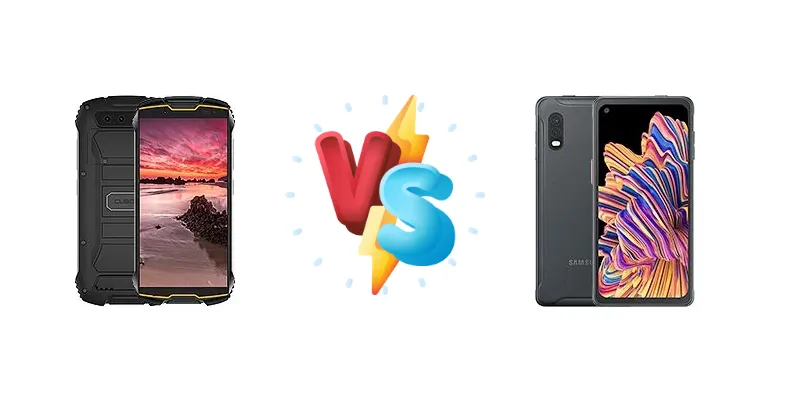
The rugged smartphone market caters to a specific need: durability. But within that niche, choices vary. The Cubot KingKong Mini 2 Pro aims for ultimate portability and affordability, while the Samsung Galaxy XCover Pro targets professionals needing a robust, feature-rich device. This comparison dissects their core differences, focusing on performance, battery life, and overall value.
🏆 Quick Verdict
For the average user prioritizing affordability and a truly pocketable form factor, the Cubot KingKong Mini 2 Pro offers compelling value. However, the Samsung Galaxy XCover Pro wins for users needing sustained performance for work applications and benefiting from Samsung’s software ecosystem and 15W charging.
| Network |
|---|
| 2G bands | GSM 850 / 900 / 1800 / 1900 | GSM 850 / 900 / 1800 / 1900 |
| 3G bands | HSDPA 900 / 2100 | HSDPA 850 / 900 / 1900 / 2100 - International |
| 4G bands | 1, 3, 7, 8, 19, 20, 40 | 1, 2, 3, 5, 7, 8, 20, 28, 38, 40, 41 - International |
| Speed | HSPA, LTE | HSPA 42.2/5.76 Mbps, LTE (3CA) Cat11 600/50 Mbps |
| Technology | GSM / HSPA / LTE | GSM / HSPA / LTE |
| | - | 1, 2, 3, 4, 5, 7, 12, 13, 14, 20, 29, 38, 40, 41, 66 - Canada |
| Launch |
|---|
| Announced | 2022 | 2020, January |
| Status | Available. Released 2022 | Available. Released 2020, January |
| Body |
|---|
| Dimensions | 119 x 58 x 12.5 mm (4.69 x 2.28 x 0.49 in) | 159.9 x 76.7 x 10 mm (6.30 x 3.02 x 0.39 in) |
| SIM | Nano-SIM + Nano-SIM | · Nano-SIM· Nano-SIM + Nano-SIM |
| Weight | 122.7 g (4.34 oz) | 218 g (7.69 oz) |
| | - | IP68 dust/water resistant (up to 1.5m for 35 min)
Drop-to-concrete resistance from up to 1.5m
MIL-STD-810G compliant*
*does not guarantee ruggedness or use in extreme conditions |
| Display |
|---|
| Protection | - | Corning Gorilla Glass 5 |
| Resolution | 540 x 1080 pixels, 18:9 ratio (~302 ppi density) | 1080 x 2340 pixels, 19.5:9 ratio (~409 ppi density) |
| Size | 4.0 inches, 41.3 cm2 (~59.8% screen-to-body ratio) | 6.3 inches, 97.4 cm2 (~79.4% screen-to-body ratio) |
| Type | IPS LCD | IPS LCD |
| Platform |
|---|
| CPU | Octa-core (4x2.0 GHz Cortex-A53 & 4x1.5 GHz Cortex-A53) | Octa-core (4x2.3 GHz Cortex-A73 & 4x1.7 GHz Cortex-A53) |
| Chipset | Mediatek MT6762 Helio P22 (12 nm) | Exynos 9611 (10 nm) |
| GPU | PowerVR GE8320 | Mali-G72 MP3 |
| OS | Android 11 | Android 10, upgradable to Android 13, One UI 5 |
| Memory |
|---|
| Card slot | microSDXC (dedicated slot) | microSDXC (dedicated slot) |
| Internal | 64GB 4GB RAM | 64GB 4GB RAM |
| Main Camera |
|---|
| Dual | - | 25 MP, f/1.7, 26mm (wide), PDAF
8 MP, f/2.2, 123˚ (ultrawide), 1/4.0", 1.12µm |
| Features | LED flash | Dual-LED flash, HDR, panorama |
| Single | 13 MP, f/2.2, (wide) | - |
| Video | Yes | 1080p@30fps |
| Selfie camera |
|---|
| Features | - | HDR |
| Single | 5 MP | 13 MP, f/2.0, (wide), 1/3.1", 1.12µm |
| Video | Yes | 1080p@30fps |
| Sound |
|---|
| 3.5mm jack | - | Yes |
| 35mm jack | Unspecified | Yes |
| Loudspeaker | Yes | Yes |
| Comms |
|---|
| Bluetooth | 5.0, A2DP, LE | 5.0, A2DP, LE |
| NFC | No | Yes |
| Positioning | GPS, GLONASS, GALILEO, BDS | GPS, GLONASS, GALILEO, BDS |
| Radio | Unspecified | FM radio (market/region dependent) |
| USB | USB Type-C | USB Type-C 2.0 |
| WLAN | Wi-Fi 802.11 a/b/g/n | Wi-Fi 802.11 a/b/g/n/ac/k/v/r, dual-band, Wi-Fi Direct |
| Features |
|---|
| Sensors | Accelerometer, gyro, proximity, compass | Fingerprint (side-mounted), accelerometer, gyro, proximity, compass |
| | - | ANT+ |
| Battery |
|---|
| Charging | - | 15W wired |
| Type | 3000 mAh | Li-Po 4050 mAh, removable |
| Misc |
|---|
| Colors | Black/Red, Black/Orange | Black |
| Models | - | SM-G715FN/DS, SM-G715FN, SM-G715F, SM-G715W, SM-G715U, SM-G715U1 |
| Price | - | About 120 EUR |
| SAR EU | - | 0.47 W/kg (head) 1.23 W/kg (body) |
Cubot KingKong Mini 2 Pro
- Ultra-compact and pocketable design
- More affordable price point
- Ruggedized build for durability
- Significantly weaker processor performance
- Likely slower charging speeds
- Inferior camera system
Samsung Galaxy XCover Pro
- More powerful Exynos 9611 processor
- 15W wired charging for faster top-ups
- Samsung Knox security features
- Larger and less pocketable form factor
- Higher price compared to the Cubot
- May experience some thermal throttling under heavy load
Display Comparison
Neither device boasts a cutting-edge display. Details on panel type and resolution are missing for the Cubot, suggesting a basic LCD. The Samsung XCover Pro also utilizes an LCD, but its larger size (not specified in data, but generally 6.3 inches) offers more screen real estate. The key difference lies in processing power; the Exynos 9611 will likely handle display rendering more smoothly, especially in UI transitions. Both will likely struggle with high-brightness outdoor visibility, given the lack of high-end panel technology.
Camera Comparison
Camera details are sparse for both devices, but we can infer some differences. The Samsung XCover Pro likely features a more sophisticated image processing pipeline, leveraging Samsung’s expertise. While both may include multiple rear cameras, the Cubot’s likely relies on lower-resolution sensors. The Exynos 9611’s ISP (Image Signal Processor) will provide better noise reduction and dynamic range compared to the Helio P22’s ISP. The presence of OIS (Optical Image Stabilization) on the Samsung is probable, given its market positioning, offering sharper images and smoother video recording. Any 2MP macro cameras on either device should be considered marketing filler.
Performance
The Samsung Galaxy XCover Pro’s Exynos 9611, fabricated on a 10nm process, represents a significant leap in performance over the Cubot’s MediaTek MT6762 Helio P22 (12nm). The Exynos utilizes Cortex-A73 cores clocked at 2.3 GHz, offering substantially more processing power than the P22’s Cortex-A53 cores peaking at 2.0 GHz. This translates to faster app loading times, smoother multitasking, and a better experience with demanding applications. While both are octa-core, the architectural differences are crucial; the A73 cores are designed for higher sustained performance. The 12nm process of the Helio P22 will likely result in lower efficiency and potentially more thermal throttling under load.
Battery Life
Battery capacity is not specified for the Cubot KingKong Mini 2 Pro, but its compact size suggests a smaller battery. The Samsung Galaxy XCover Pro benefits from 15W wired charging, a significant advantage over the likely slower charging speeds of the Cubot. While a larger mAh rating doesn’t always equate to longer battery life (efficiency matters), the Exynos 9611’s 10nm process should offer better power efficiency than the Helio P22’s 12nm process. The 15W charging on the Samsung will allow for quicker top-ups, crucial for professionals relying on their phone throughout the day.
Buying Guide
Buy the Cubot KingKong Mini 2 Pro if you need an incredibly compact, budget-friendly rugged phone for basic tasks like communication and light media consumption. It’s ideal for those who prioritize portability above all else. Buy the Samsung Galaxy XCover Pro if you prefer a larger screen, require more processing power for demanding applications, and value Samsung’s enterprise-focused features like Knox security and the convenience of 15W wired charging.
Frequently Asked Questions
❓ Does the Exynos 9611 in the Samsung Galaxy XCover Pro tend to overheat during prolonged use, like gaming?
While the Exynos 9611 isn't a flagship-level chip, it's generally well-managed in the XCover Pro. However, sustained gaming or running multiple demanding apps simultaneously *can* lead to thermal throttling, reducing performance slightly. The ruggedized design may also limit passive cooling compared to slimmer phones.
❓ Is the Cubot KingKong Mini 2 Pro’s smaller size a significant compromise in terms of usability, particularly for those with larger hands?
Yes, the Mini 2 Pro’s compact size is its defining feature, but it comes with trade-offs. Users with larger hands may find the screen difficult to type on accurately and may struggle with one-handed operation of certain apps. It’s best suited for those who prioritize extreme portability above all else.
❓ How does the software support compare between Cubot and Samsung, considering long-term updates and security patches?
Samsung provides significantly better software support. The Galaxy XCover Pro is likely to receive more frequent security updates and potentially even Android version upgrades for a longer period than the Cubot KingKong Mini 2 Pro. Cubot’s update track record is less consistent.
❓ Given the lack of detailed camera specs, can we expect decent low-light performance from either of these phones?
Low-light performance will likely be limited on both devices. The Samsung Galaxy XCover Pro has a better chance of producing usable low-light images due to its more powerful ISP and potential for OIS, but don't expect results comparable to flagship phones. The Cubot will likely struggle significantly in low-light conditions.