
Cubot KingKong ES vs. Ulefone Armor 17 Pro: A Rugged Showdown
| Phones Images | |||||
|---|---|---|---|---|---|
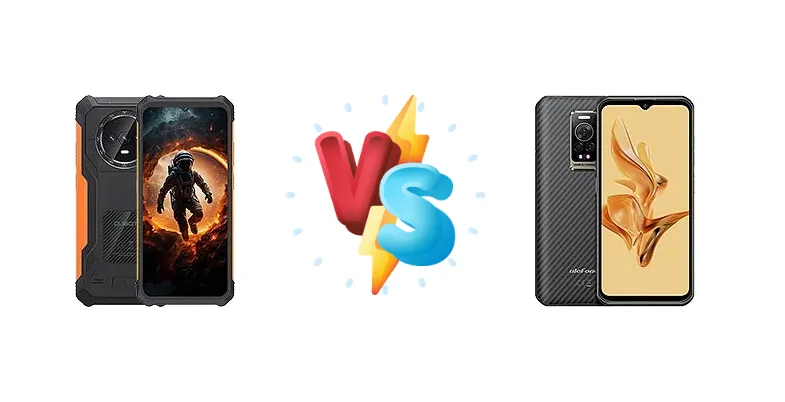
|
🏆 Quick Verdict
For the average user prioritizing sustained performance and quick top-ups, the Ulefone Armor 17 Pro is the better choice. Its Helio G99 chipset and 66W charging significantly outperform the KingKong ES's Unisoc T606 and wired-only charging. However, the KingKong ES remains a compelling option for those who absolutely need maximum battery endurance.
| PHONES | ||
|---|---|---|
| Phone Names | Cubot KingKong ES | Ulefone Armor 17 Pro |
| Network | ||
|---|---|---|
| 2G bands | GSM 850 / 900 / 1800 / 1900 | GSM 850 / 900 / 1800 / 1900 |
| 3G bands | HSDPA 850 / 900 / 1700(AWS) / 1900 / 2100 | HSDPA 800 / 850 / 900 / 1700(AWS) / 1900 / 2100 |
| 4G bands | 1, 2, 3, 4, 5, 7, 8, 12, 17, 20, 28, 41 | 1, 2, 3, 4, 5, 7, 8, 12, 13, 17, 18, 19, 20, 25, 26, 28, 34, 38, 39, 40, 41, 66 |
| Speed | HSPA, LTE | HSPA, LTE |
| Technology | GSM / HSPA / LTE | GSM / HSPA / LTE |
| Launch | ||
|---|---|---|
| Announced | 2024, August 20 | 2022, October 31 |
| Status | Available. Released 2024, August | Available. Released 2022, October 31 |
| Body | ||
|---|---|---|
| Dimensions | 172.6 x 81.2 x 12.8 mm (6.80 x 3.20 x 0.50 in) | 172.7 x 80.4 x 12.5 mm (6.80 x 3.17 x 0.49 in) |
| SIM | Nano-SIM + Nano-SIM | Nano-SIM + Nano-SIM |
| Weight | 268 g (9.45 oz) | 290 g (10.23 oz) |
| - | IP68/IP69K dust/water resistant (up to 1.5m for 30 min) Drop-to-concrete resistance from up to 1.5m MIL-STD-810G compliant | |
| Display | ||
|---|---|---|
| Protection | Mohs level 6 | Corning Gorilla Glass 5 |
| Resolution | 720 x 1612 pixels, 20:9 ratio (~269 ppi density) | 1080 x 2408 pixels, 20:9 ratio (~401 ppi density) |
| Size | 6.56 inches, 103.4 cm2 (~73.8% screen-to-body ratio) | 6.58 inches, 104.3 cm2 (~75.1% screen-to-body ratio) |
| Type | IPS LCD, 90Hz | IPS LCD, 120Hz |
| Platform | ||
|---|---|---|
| CPU | Octa-core (2x1.6 GHz Cortex-A75 & 6x1.6 GHz Cortex-A55) | Octa-core (2x2.2 GHz Cortex-A76 & 6x2.0 GHz Cortex-A55) |
| Chipset | Unisoc T606 (12 nm) | Mediatek Helio G99 (6 nm) |
| GPU | Mali-G57 MP1 | Mali-G57 MC2 |
| OS | Android 14 | Android 12 |
| Memory | ||
|---|---|---|
| Card slot | microSDXC (uses shared SIM slot) | microSDXC (dedicated slot) |
| Internal | 128GB 6GB RAM | 256GB 8GB RAM |
| Main Camera | ||
|---|---|---|
| Features | LED flash | Triple-LED flash, HDR, panorama |
| Single | - | 16 MP, f/2.2, (wide), 1.0µm |
| Triple | 48 MP, (wide), PDAF 2 MP (macro) Auxiliary lens | 108 MP, f/1.9, (wide), 1/1.52”, 0.7µm, PDAF 8 MP, f/2.2, 119˚, (ultrawide), 1/4.0", 1.12µm 8 MP, (night vision), 2 infrared night vision lights |
| Video | Yes | 1440p@30fps, 1080p@30fps |
| Selfie camera | ||
|---|---|---|
| Single | 16 MP | 16 MP, f/2.2, (wide), 1.0µm |
| Video | Yes | 1080p@30fps |
| Sound | ||
|---|---|---|
| 3.5mm jack | - | Yes |
| 35mm jack | No | Yes |
| Loudspeaker | Yes | Yes |
| Comms | ||
|---|---|---|
| Bluetooth | 5.0, A2DP, LE | 5.2, A2DP, LE |
| NFC | No | Yes |
| Positioning | GPS, GALILEO, GLONASS, BDS | GPS, GLONASS, GALILEO, BDS |
| Radio | No | Wireless FM radio, RDS, recording |
| USB | USB Type-C | USB Type-C 2.0, OTG |
| WLAN | Wi-Fi 802.11 a/b/g/n/ac, dual-band | Wi-Fi 802.11 a/b/g/n/ac, dual-band |
| Features | ||
|---|---|---|
| Sensors | Accelerometer, proximity, compass | Fingerprint (side-mounted), accelerometer, gyro, proximity, compass |
| - | MagSafe compatible accessories | |
| Battery | ||
|---|---|---|
| Charging | Wired | 66W wired, 53% in 15 min 15W wireless Wireless reversed |
| Type | 5100 mAh | Li-Po 5380 mAh |
| Misc | ||
|---|---|---|
| Colors | Black/Orange | Black |
| Price | About 120 EUR | About 260 EUR |
| EU LABEL | ||
|---|---|---|
| Battery | 53:11h endurance, 1400 cycles | - |
| Energy | Class B | - |
| Free fall | Class A (270 falls) | - |
| Repairability | Class C | - |
Cubot KingKong ES
- Exceptional battery endurance (53:11h)
- High battery cycle count (1400 cycles)
- More affordable price point (likely)
- Less powerful Unisoc T606 chipset
- Wired charging only
- Potentially slower app loading and multitasking
Ulefone Armor 17 Pro
- Faster and more efficient Mediatek Helio G99 chipset
- 66W wired charging with rapid top-up times
- Wireless charging and reverse wireless charging
- Potentially shorter battery life compared to KingKong ES
- Higher price point (likely)
- May experience more heat under heavy load
Display Comparison
Display specifications are not provided, so a direct comparison is limited. However, given the price points, both devices likely utilize IPS LCD panels. The Ulefone Armor 17 Pro, being the newer model, may benefit from slightly improved color accuracy and viewing angles. The absence of details like refresh rate or peak brightness makes it difficult to definitively declare a winner; however, the Armor 17 Pro's positioning suggests a more modern display experience.
Camera Comparison
Camera details are limited. Without sensor size or aperture information, a detailed comparison is impossible. However, the Armor 17 Pro’s higher processing power allows for more sophisticated image processing algorithms, potentially resulting in better dynamic range and low-light performance. The inclusion of features like optical image stabilization (OIS) – which is common in phones with this chipset – would further enhance image quality. The 2MP macro cameras often found in this segment are unlikely to provide significant value on either device.
Performance
The Ulefone Armor 17 Pro’s Mediatek Helio G99 (6nm) represents a significant leap in performance over the Cubot KingKong ES’s Unisoc T606 (12nm). The G99 utilizes more efficient Cortex-A76 cores clocked at 2.2 GHz, compared to the T606’s Cortex-A75 cores at 1.6 GHz. This translates to noticeably faster app loading times, smoother multitasking, and improved gaming performance. The 6nm process node of the G99 also contributes to better thermal efficiency, reducing the likelihood of throttling under sustained load. While both are octa-core CPUs, the architectural advantages of the G99 are substantial.
Battery Life
The Cubot KingKong ES boasts impressive battery endurance with 53:11h of usage and a 1400 cycle lifespan, suggesting a focus on longevity. However, the Ulefone Armor 17 Pro compensates for potentially smaller battery capacity with its 66W wired charging, capable of reaching 53% charge in just 15 minutes. It also adds the convenience of 15W wireless charging and reverse wireless charging. While the KingKong ES excels in sustained runtime, the Armor 17 Pro offers a more flexible charging experience, minimizing downtime.
Buying Guide
Buy the Cubot KingKong ES if you need a phone that can reliably last through multi-day expeditions or work shifts without access to power, and you're willing to trade some processing power for that longevity. Buy the Ulefone Armor 17 Pro if you prefer a smoother, more responsive experience for everyday tasks and occasional gaming, and value the convenience of rapid charging and wireless power transfer.