
Cubot KingKong ES 3 vs Doogee S99: Which Rugged Phone Reigns Supreme?
| Phones Images | |||||
|---|---|---|---|---|---|
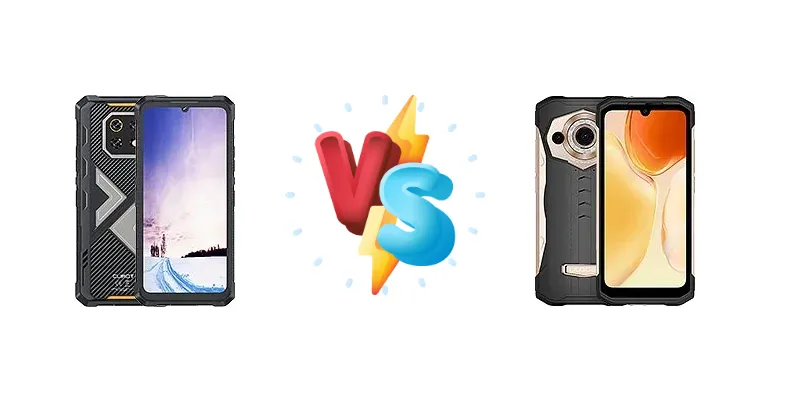
|
🏆 Quick Verdict
For users prioritizing sustained battery life and a stable, efficient experience, the Cubot KingKong ES 3 is the better choice. However, the Doogee S99 edges ahead for those who demand more processing power for gaming or demanding applications, coupled with the convenience of wireless and reverse charging.
| PHONES | ||
|---|---|---|
| Phone Names | Cubot KingKong ES 3 | Doogee S99 |
| Network | ||
|---|---|---|
| 2G bands | GSM 850 / 900 / 1800 / 1900 | GSM 850 / 900 / 1800 / 1900 |
| 3G bands | HSDPA 850 / 900 / 1700(AWS) / 1900 / 2100 | HSDPA 800 / 850 / 900 / 1700(AWS) / 1900 / 2100 |
| 4G bands | 1, 2, 3, 4, 5, 7, 8, 12, 17, 20, 26, 28, 38, 40, 41, 66 | 1, 2, 3, 4, 5, 7, 8, 12, 13, 17, 18, 19, 20, 25, 26, 28, 34, 38, 39, 40, 41, 66 |
| Speed | HSPA, LTE | HSPA, LTE |
| Technology | GSM / HSPA / LTE | GSM / CDMA / HSPA / LTE |
| Launch | ||
|---|---|---|
| Announced | 2025, August | 2022, December 05 |
| Status | Available. Released 2025, August | Available. Released 2022, December 05 |
| Body | ||
|---|---|---|
| Dimensions | 177.4 x 83.7 x 15.3 mm (6.98 x 3.30 x 0.60 in) | 172 x 82 x 15.5 mm (6.77 x 3.23 x 0.61 in) |
| SIM | Nano-SIM + Nano-SIM | Nano-SIM + Nano-SIM |
| Weight | 352 g (12.42 oz) | - |
| Display | ||
|---|---|---|
| Protection | Mohs level 6 | Corning Gorilla Glass |
| Resolution | 720 x 1600 pixels, 20:9 ratio (~260 ppi density) | 1080 x 2340 pixels, 19.5:9 ratio (~409 ppi density) |
| Size | 6.75 inches, 110.0 cm2 (~74.1% screen-to-body ratio) | 6.3 inches, 97.4 cm2 (~69.1% screen-to-body ratio) |
| Type | IPS LCD, 90Hz | IPS LCD |
| Platform | ||
|---|---|---|
| CPU | Octa-core (2x1.8 GHz Cortex-A75 & 6x1.6 GHz Cortex-A55) | Octa-core (2x2.05 GHz Cortex-A76 & 6x2.0 GHz Cortex-A55) |
| Chipset | Unisoc T615 (12 nm) | Mediatek MT6781 Helio G96 (12 nm) |
| GPU | Mali-G57 MP1 | Mali-G57 MC2 |
| OS | Android 15 | Android 12 |
| Memory | ||
|---|---|---|
| Card slot | microSDXC (uses shared SIM slot) | microSDXC (dedicated slot) |
| Internal | 256GB 6GB RAM | 128GB 8GB RAM |
| Main Camera | ||
|---|---|---|
| Features | LED flash | Dual-LED flash, HDR, panorama |
| Triple | 48 MP, (wide), PDAF 2 MP (macro) Auxiliary lens | 108 MP, f/1.9, (wide), 1/1.52", 0.7µm, PDAF 64 MP, f/1.8, (night vision), 2 infrared night vision lights 16 MP, f/1.8, 130˚ (ultrawide) |
| Video | Yes | 1440p@30fps, 1080p@30fps |
| Selfie camera | ||
|---|---|---|
| Single | 16 MP | 32 MP, f/2.0, (wide), 1/2.8", 0.8µm |
| Video | Yes | 1080p@30fps |
| Sound | ||
|---|---|---|
| 35mm jack | No | No |
| Loudspeaker | Yes | Yes |
| Comms | ||
|---|---|---|
| Bluetooth | 5.0, A2DP, LE | 5.1, A2DP, LE |
| NFC | Yes | Yes (market/region dependent) |
| Positioning | GPS, GALILEO, GLONASS, BDS | GPS, GLONASS, GALILEO, BDS |
| Radio | No | FM radio |
| USB | USB Type-C | USB Type-C 2.0, OTG |
| WLAN | Wi-Fi 802.11 a/b/g/n/ac, dual-band | Wi-Fi 802.11 a/b/g/n/ac, dual-band |
| Features | ||
|---|---|---|
| Sensors | Accelerometer, proximity, compass | Fingerprint (side-mounted), accelerometer, gyro, proximity, compass |
| Battery | ||
|---|---|---|
| Charging | 33W wired | 33W wired, 45% in 30 min 15W wireless Reverse wired |
| Type | 10200 mAh | 6000 mAh |
| Misc | ||
|---|---|---|
| Colors | Black | Gold, Black |
| Price | About 160 EUR | About 250 EUR |
| EU LABEL | ||
|---|---|---|
| Battery | 61:01h endurance, 1300 cycles | - |
| Energy | Class E | - |
| Free fall | Class C (90 falls) | - |
| Repairability | Class C | - |
Cubot KingKong ES 3
- Exceptional battery endurance (61:01h)
- High battery cycle count (1300 cycles)
- Efficient Unisoc T615 chipset for stable performance
- Less powerful CPU compared to the Doogee S99
- Lacks wireless and reverse charging capabilities
Doogee S99
- More powerful Mediatek Helio G96 chipset
- Faster charging with 33W wired and 15W wireless
- Reverse wired charging for added convenience
- Potentially shorter battery life compared to the Cubot ES 3
- Battery cycle count not specified
Display Comparison
Neither device's display specifications are provided, so a direct comparison is limited. However, given the price points, we can expect both to utilize IPS LCD panels. The focus here will likely be on durability rather than display quality. The absence of details like resolution or refresh rate suggests neither phone is targeting display-centric users.
Camera Comparison
Without detailed camera specifications beyond the chipsets, a precise comparison is difficult. However, the Helio G96 in the Doogee S99 typically supports more advanced image signal processors (ISPs) capable of handling higher resolution sensors and more complex image processing algorithms. This suggests the S99 may offer better image quality, especially in challenging lighting conditions. The absence of information on sensor sizes or optical image stabilization (OIS) makes a definitive statement impossible, but the chipset advantage leans towards the Doogee.
Performance
The Doogee S99 boasts the Mediatek Helio G96, featuring a CPU with 2x2.05 GHz Cortex-A76 cores and 6x2.0 GHz Cortex-A55 cores, while the Cubot KingKong ES 3 utilizes the Unisoc T615 with 2x1.8 GHz Cortex-A75 and 6x1.6 GHz Cortex-A55 cores. The G96’s Cortex-A76 cores represent a significant architectural improvement over the T615’s A75 cores, offering better single-core performance crucial for responsive app loading and smoother multitasking. While both chipsets are built on a 12nm process, the G96’s more modern architecture translates to a noticeable performance advantage, particularly in graphically intensive tasks. This benefits users who play mobile games or use demanding applications.
Battery Life
The Cubot KingKong ES 3 claims an impressive 61:01h endurance and 1300 charge cycles, indicating a focus on long-term battery health and longevity. While the Doogee S99 doesn’t provide endurance figures, it offers 33W wired charging with a 45% charge in 30 minutes, alongside 15W wireless charging and reverse wired charging. The ES 3’s endurance suggests a larger battery capacity optimized for efficiency. The S99’s charging capabilities provide flexibility, allowing for both fast wired and convenient wireless top-ups, and the reverse charging feature can be a lifesaver for accessories or other devices in emergencies.
Buying Guide
Buy the Cubot KingKong ES 3 if you need a phone that will reliably last through multi-day use, prioritizing battery endurance over raw processing speed. This is ideal for hikers, campers, or anyone working in remote locations. Buy the Doogee S99 if you prefer a phone capable of handling more intensive tasks like gaming or video editing, and value the added convenience of wireless charging and the ability to charge other devices.