
Cubot KingKong AX vs. Blackview BV9200: A Rugged Smartphone Showdown
| Phones Images | |||||
|---|---|---|---|---|---|
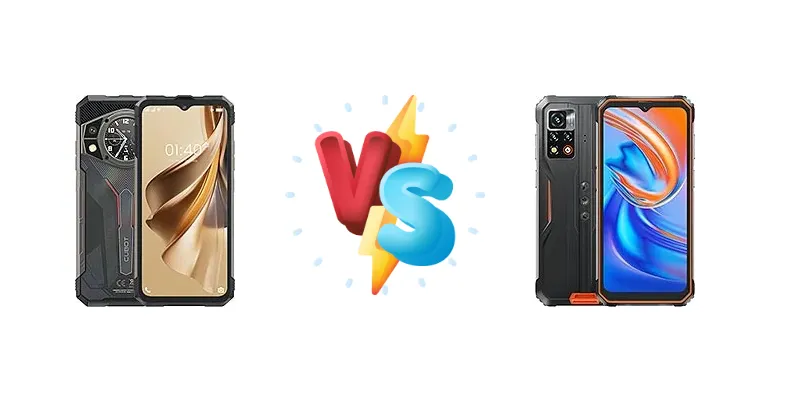
|
🏆 Quick Verdict
For most users, the Cubot KingKong AX emerges as the stronger choice. Its newer Mediatek Helio G99 chipset, built on a more efficient 6nm process, offers a performance edge and potentially better long-term efficiency. While the Blackview BV9200 boasts 66W charging, the AX’s superior processor and battery endurance make it the more well-rounded package.
| PHONES | ||
|---|---|---|
| Phone Names | Cubot KingKong AX | Blackview BV9200 |
| Network | ||
|---|---|---|
| 2G bands | GSM 850 / 900 / 1800 / 1900 | GSM 850 / 900 / 1800 / 1900 |
| 3G bands | HSDPA 800 / 850 / 900 / 1700(AWS) / 1900 / 2100 | HSDPA 850 / 900 / 1700(AWS) / 1900 / 2100 |
| 4G bands | 1, 2, 3, 4, 5, 7, 8, 12, 13, 17, 18, 19, 20, 25, 26, 28, 38, 39, 40, 41, 66 | 1, 2, 3, 4, 5, 7, 8, 12, 13, 17, 18, 19, 20, 25, 26, 28, 34, 38, 39, 40, 41, 66 |
| Speed | HSPA, LTE | HSPA, LTE |
| Technology | GSM / HSPA / LTE | GSM / CDMA / HSPA / LTE |
| - | CDMA 800 / 1900 | |
| Launch | ||
|---|---|---|
| Announced | 2024, March | 2022, December 28 |
| Status | Available. Released 2024, April | Available. Released 2023, January 09 |
| Body | ||
|---|---|---|
| Dimensions | 172 x 80.9 x 12.7 mm (6.77 x 3.19 x 0.5 in) | 174.5 x 81.8 x 13.6 mm (6.87 x 3.22 x 0.54 in) |
| SIM | Nano-SIM + Nano-SIM | Nano-SIM + Nano-SIM |
| Weight | 296 g (10.44 oz) | 310 g (10.93 oz) |
| - | IP68/IP69K dust/water resistant (up to 1.5m for 30 min) Drop-to-concrete resistance from up to 1.8m MIL-STD-810H compliant | |
| Display | ||
|---|---|---|
| Protection | Mohs level 6 | Corning Gorilla Glass 5 |
| Resolution | 1080 x 2408 pixels, 20:9 ratio (~401 ppi density) | 1080 x 2408 pixels, 20:9 ratio (~400 ppi density) |
| Size | 6.58 inches, 104.3 cm2 (~75.0% screen-to-body ratio) | 6.6 inches, 104.9 cm2 (~73.5% screen-to-body ratio) |
| Type | IPS LCD, 120Hz | IPS LCD, 120Hz |
| Platform | ||
|---|---|---|
| CPU | Octa-core (2x2.2 GHz Cortex-A76 & 6x2.0 GHz Cortex-A55) | Octa-core (2x2.05 GHz Cortex-A76 & 6x2.0 GHz Cortex-A55) |
| Chipset | Mediatek Helio G99 (6 nm) | Mediatek MT6781 Helio G96 (12 nm) |
| GPU | Mali-G57 MC2 | Mali-G52 MC2 |
| OS | Android 14 | Android 12, Doke-OS 3.1 |
| Memory | ||
|---|---|---|
| Card slot | microSDXC (uses shared SIM slot) | microSDXC (dedicated slot) |
| Internal | 256GB 12GB RAM | 256GB 8GB RAM |
| - | UFS 2.1 | |
| Main Camera | ||
|---|---|---|
| Dual | 100 MP, (wide), PDAF 5 MP (macro) Auxiliary lens | - |
| Features | LED flash | LED flash, HDR, panorama |
| Single | - | 16 MP, (wide), 1/3", 1.0µm |
| Triple | - | 50 MP, f/1.8, (wide), 1/2.76", 0.64µm, PDAF 8 MP, f/1.8, 120˚, (ultrawide), AF Auxiliary lens |
| Video | Yes | 1440p@30fps, 1080p@30fps |
| Selfie camera | ||
|---|---|---|
| Single | 32 MP | 16 MP, f/2.0, (wide), 1/3", 1.0µm |
| Video | Yes | 1080p |
| Sound | ||
|---|---|---|
| 3.5mm jack | - | No |
| 35mm jack | Unspecified | No |
| Loudspeaker | Yes | Yes, with dual speakers |
| Comms | ||
|---|---|---|
| Bluetooth | 5.2, A2DP, LE | 5.2, A2DP, LE |
| NFC | Yes | Yes |
| Positioning | GPS, GLONASS, GALILEO, BDS | GPS, GLONASS, GALILEO, BDS |
| Radio | Unspecified | FM radio |
| USB | USB Type-C, OTG | USB Type-C, OTG |
| WLAN | Wi-Fi 802.11 a/b/g/n/ac, dual-band | Wi-Fi 802.11 a/b/g/n/ac, dual-band |
| Features | ||
|---|---|---|
| Sensors | Fingerprint (side-mounted), accelerometer, gyro, proximity, compass | Fingerprint (side-mounted), accelerometer, gyro, proximity, compass, barometer |
| Battery | ||
|---|---|---|
| Charging | 33W wired | 66W wired 30W wireless |
| Type | 5100 mAh | 5000 mAh |
| Misc | ||
|---|---|---|
| Colors | Black | Black, Orange, Green |
| Price | About 240 EUR | About 200 EUR |
| EU LABEL | ||
|---|---|---|
| Battery | 30:30h endurance, 900 cycles | - |
| Energy | Class E | - |
| Free fall | Class A (270 falls) | - |
| Repairability | Class C | - |
Cubot KingKong AX
- Newer, more efficient Mediatek Helio G99 chipset
- Excellent battery endurance (30:30h)
- Long battery lifespan (900 cycles)
- Slower charging speed (33W)
- Display specifications are unknown
Blackview BV9200
- Bright display (481 nits)
- Fast 66W wired and 30W wireless charging
- High contrast ratio (1423:1)
- Older, less efficient Mediatek Helio G96 chipset
- Battery endurance not specified
Display Comparison
The Blackview BV9200 distinguishes itself with a measured peak brightness of 481 nits and a 1423:1 contrast ratio. While the KingKong AX’s display specs are not provided, the BV9200’s numbers suggest superior visibility in bright outdoor conditions. The higher contrast ratio translates to richer, more vibrant colors. However, without knowing the panel technology (e.g., IPS, AMOLED) or refresh rate of the AX, a definitive judgment is difficult. The BV9200’s brightness is a clear advantage for users who spend significant time outdoors.
Camera Comparison
Unfortunately, detailed camera specifications are absent for both devices. Without knowing sensor sizes, aperture values, or image processing algorithms, a direct comparison is limited. However, given the market segment, it’s likely both phones rely on similar mid-range camera setups. The presence of a 2MP macro camera on either device is unlikely to be a significant selling point, as image quality is typically limited. Focusing on the main sensor’s capabilities would be crucial for discerning image quality.
Performance
The Cubot KingKong AX’s Mediatek Helio G99 (6nm) chipset represents a significant architectural advantage over the Blackview BV9200’s Helio G96 (12nm). The smaller 6nm node allows for greater transistor density and improved power efficiency, resulting in better performance per watt. While both CPUs feature the same core configuration (2x2.2 GHz Cortex-A76 & 6x2.0 GHz Cortex-A55), the G99’s architecture allows it to sustain higher clock speeds for longer periods without thermal throttling. This translates to smoother multitasking, faster app loading times, and a more responsive gaming experience for the AX.
Battery Life
The Cubot KingKong AX boasts a 30:30h endurance rating and a 900-cycle battery lifespan, suggesting excellent longevity and real-world usability. While the Blackview BV9200’s battery capacity isn’t specified, its 66W wired and 30W wireless charging capabilities are a major draw. The 66W charging allows for significantly faster top-ups compared to the AX’s 33W wired charging. However, the AX’s superior battery endurance and cycle count suggest it will hold its charge longer and maintain capacity over a longer period. The BV9200’s wireless charging is a convenience feature the AX lacks.
Buying Guide
Buy the Cubot KingKong AX if you prioritize sustained performance for gaming or demanding applications, and value a longer battery life between charges. It’s ideal for users who frequently use their phone outdoors and need reliable power throughout the day. Buy the Blackview BV9200 if rapid charging is paramount, and you frequently find yourself needing to top up quickly. The brighter display also benefits those who use their phone extensively in direct sunlight.