
Cubot KingKong Ace 3 vs. Ulefone Armor 17 Pro: A Rugged Performance Showdown
| Phones Images | |||||
|---|---|---|---|---|---|
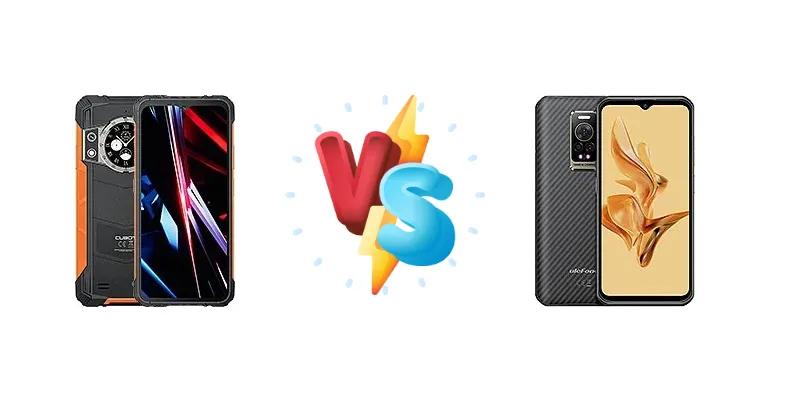
|
🏆 Quick Verdict
For the average user prioritizing speed and convenience, the Ulefone Armor 17 Pro is the clear winner. Its Helio G99 chipset and 66W charging significantly outperform the KingKong Ace 3’s Helio G88 and 33W charging, justifying the potential price difference. However, the Ace 3 remains a compelling option for budget-conscious buyers.
| PHONES | ||
|---|---|---|
| Phone Names | Cubot KingKong Ace 3 | Ulefone Armor 17 Pro |
| Network | ||
|---|---|---|
| 2G bands | GSM 850 / 900 / 1800 / 1900 | GSM 850 / 900 / 1800 / 1900 |
| 3G bands | HSDPA 800 / 850 / 900 / 1700(AWS) / 1900 / 2100 | HSDPA 800 / 850 / 900 / 1700(AWS) / 1900 / 2100 |
| 4G bands | 1, 2, 3, 4, 5, 7, 8, 12, 13, 17, 18, 19, 20, 26, 28, 38, 39, 40, 41, 66 | 1, 2, 3, 4, 5, 7, 8, 12, 13, 17, 18, 19, 20, 25, 26, 28, 34, 38, 39, 40, 41, 66 |
| Speed | HSPA, LTE | HSPA, LTE |
| Technology | GSM / HSPA / LTE | GSM / HSPA / LTE |
| Launch | ||
|---|---|---|
| Announced | 2024, June 28 | 2022, October 31 |
| Status | Available. Released 2024, July 23 | Available. Released 2022, October 31 |
| Body | ||
|---|---|---|
| Dimensions | 173.9 x 81.8 x 12.7 mm (6.85 x 3.22 x 0.5 in) | 172.7 x 80.4 x 12.5 mm (6.80 x 3.17 x 0.49 in) |
| SIM | Nano-SIM + Nano-SIM | Nano-SIM + Nano-SIM |
| Weight | 284 g (10.02 oz) | 290 g (10.23 oz) |
| - | IP68/IP69K dust/water resistant (up to 1.5m for 30 min) Drop-to-concrete resistance from up to 1.5m MIL-STD-810G compliant | |
| Display | ||
|---|---|---|
| Protection | - | Corning Gorilla Glass 5 |
| Resolution | 1080 x 2408 pixels, 20:9 ratio (~401 ppi density) | 1080 x 2408 pixels, 20:9 ratio (~401 ppi density) |
| Size | 6.58 inches, 104.3 cm2 (~73.3% screen-to-body ratio) | 6.58 inches, 104.3 cm2 (~75.1% screen-to-body ratio) |
| Type | IPS LCD, 90Hz | IPS LCD, 120Hz |
| Platform | ||
|---|---|---|
| CPU | Octa-core (2x2.0 GHz Cortex-A75 & 6x1.8 GHz Cortex-A55) | Octa-core (2x2.2 GHz Cortex-A76 & 6x2.0 GHz Cortex-A55) |
| Chipset | Mediatek Helio G88 (12 nm) | Mediatek Helio G99 (6 nm) |
| GPU | Mali-G52 MC2 | Mali-G57 MC2 |
| OS | Android 14 | Android 12 |
| Memory | ||
|---|---|---|
| Card slot | microSDXC (uses shared SIM slot) | microSDXC (dedicated slot) |
| Internal | 256GB 8GB RAM | 256GB 8GB RAM |
| Main Camera | ||
|---|---|---|
| Dual | 100 MP, (wide), PDAF 5 MP (macro) | - |
| Features | LED flash | Triple-LED flash, HDR, panorama |
| Single | - | 16 MP, f/2.2, (wide), 1.0µm |
| Triple | - | 108 MP, f/1.9, (wide), 1/1.52”, 0.7µm, PDAF 8 MP, f/2.2, 119˚, (ultrawide), 1/4.0", 1.12µm 8 MP, (night vision), 2 infrared night vision lights |
| Video | Yes | 1440p@30fps, 1080p@30fps |
| Selfie camera | ||
|---|---|---|
| Single | 32 MP | 16 MP, f/2.2, (wide), 1.0µm |
| Video | Yes | 1080p@30fps |
| Sound | ||
|---|---|---|
| 3.5mm jack | - | Yes |
| 35mm jack | Unspecified | Yes |
| Loudspeaker | Yes | Yes |
| Comms | ||
|---|---|---|
| Bluetooth | 5.0, A2DP, LE | 5.2, A2DP, LE |
| NFC | Yes | Yes |
| Positioning | GPS, GLONASS, GALILEO, BDS | GPS, GLONASS, GALILEO, BDS |
| Radio | Unspecified | Wireless FM radio, RDS, recording |
| USB | USB Type-C, OTG | USB Type-C 2.0, OTG |
| WLAN | Wi-Fi 802.11 a/b/g/n/ac, dual-band | Wi-Fi 802.11 a/b/g/n/ac, dual-band |
| Features | ||
|---|---|---|
| Sensors | Fingerprint (side-mounted), accelerometer, gyro, proximity, compass | Fingerprint (side-mounted), accelerometer, gyro, proximity, compass |
| - | MagSafe compatible accessories | |
| Battery | ||
|---|---|---|
| Charging | 33W wired | 66W wired, 53% in 15 min 15W wireless Wireless reversed |
| Type | 5100 mAh | Li-Po 5380 mAh |
| Misc | ||
|---|---|---|
| Colors | Black/Orange | Black |
| Price | - | About 260 EUR |
Cubot KingKong Ace 3
- More affordable price point
- Rugged design for durability
- Decent performance for basic tasks
- Slower charging speed (33W)
- Less powerful chipset (Helio G88)
- Potentially lower sustained performance
Ulefone Armor 17 Pro
- Faster charging (66W wired, 15W wireless)
- More powerful chipset (Helio G99)
- Improved thermal management
- Reverse wireless charging capability
- Higher price compared to the Ace 3
- Rugged design may add bulk
- Potentially shorter battery life due to increased power draw
Display Comparison
Neither device's display specifications are provided, so a direct comparison is limited. However, given the Armor 17 Pro's positioning, it likely features a higher-quality panel with better color accuracy and potentially higher brightness. Rugged phones often prioritize durability over display excellence, so expect both to be functional rather than flagship-level.
Camera Comparison
Without detailed camera specifications, a precise comparison is difficult. However, the chipset difference suggests the Armor 17 Pro will have a more capable image signal processor (ISP), leading to better image processing and potentially improved low-light performance. Rugged phones often focus on practicality, so expect competent but not groundbreaking camera systems on both devices. The absence of information on sensor sizes makes it impossible to determine a clear winner.
Performance
The Ulefone Armor 17 Pro’s Mediatek Helio G99 (6nm) represents a significant leap over the Cubot KingKong Ace 3’s Helio G88 (12nm). The G99 utilizes more efficient 6nm fabrication, resulting in better thermal management and sustained performance. Furthermore, the G99’s CPU features Cortex-A76 cores clocked at 2.2 GHz, compared to the Ace 3’s Cortex-A75 cores at 2.0 GHz – a noticeable upgrade for CPU-intensive tasks. This translates to faster app loading times, smoother multitasking, and improved gaming performance on the Armor 17 Pro. The G99's improved GPU will also provide a better gaming experience.
Battery Life
While battery capacity isn't specified, the Ulefone Armor 17 Pro’s 66W wired charging is a game-changer. The advertised 53% charge in 15 minutes drastically reduces downtime compared to the Cubot KingKong Ace 3’s 33W charging. The Armor 17 Pro also adds 15W wireless charging and reverse wireless charging, offering greater flexibility. Even if the Ace 3 has a slightly larger battery, the Armor 17 Pro’s faster charging will likely result in less perceived battery anxiety for power users.
Buying Guide
Buy the Cubot KingKong Ace 3 if you need a highly durable phone for basic tasks, prioritize affordability, and aren't heavily reliant on demanding applications. Buy the Ulefone Armor 17 Pro if you prefer a smoother user experience, faster charging speeds, and need a phone capable of handling more intensive gaming or multitasking, even if it means a higher investment.