
Cubot KingKong Ace 3 vs Doogee S99: A Head-to-Head Rugged Smartphone Showdown
| Phones Images | |||||
|---|---|---|---|---|---|
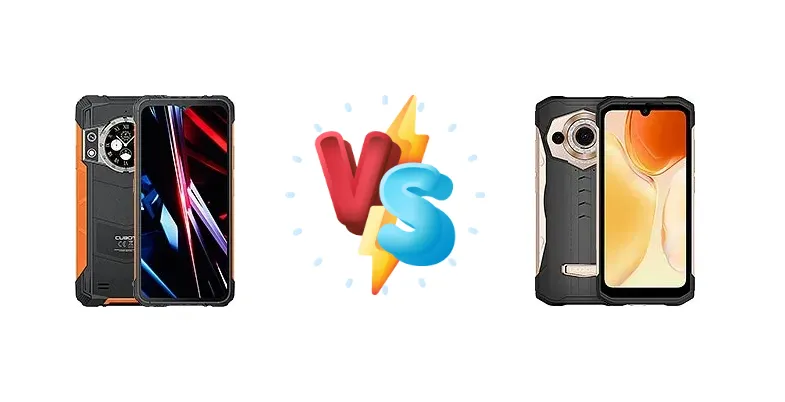
|
🏆 Quick Verdict
For most users prioritizing overall performance and convenience, the Doogee S99 emerges as the better choice. Its Helio G96 chipset provides a noticeable performance uplift over the KingKong Ace 3’s Helio G88, and the addition of wireless charging and reverse wired charging adds significant usability. However, the KingKong Ace 3 remains a viable option for budget-conscious buyers.
| PHONES | ||
|---|---|---|
| Phone Names | Cubot KingKong Ace 3 | Doogee S99 |
| Network | ||
|---|---|---|
| 2G bands | GSM 850 / 900 / 1800 / 1900 | GSM 850 / 900 / 1800 / 1900 |
| 3G bands | HSDPA 800 / 850 / 900 / 1700(AWS) / 1900 / 2100 | HSDPA 800 / 850 / 900 / 1700(AWS) / 1900 / 2100 |
| 4G bands | 1, 2, 3, 4, 5, 7, 8, 12, 13, 17, 18, 19, 20, 26, 28, 38, 39, 40, 41, 66 | 1, 2, 3, 4, 5, 7, 8, 12, 13, 17, 18, 19, 20, 25, 26, 28, 34, 38, 39, 40, 41, 66 |
| Speed | HSPA, LTE | HSPA, LTE |
| Technology | GSM / HSPA / LTE | GSM / CDMA / HSPA / LTE |
| Launch | ||
|---|---|---|
| Announced | 2024, June 28 | 2022, December 05 |
| Status | Available. Released 2024, July 23 | Available. Released 2022, December 05 |
| Body | ||
|---|---|---|
| Dimensions | 173.9 x 81.8 x 12.7 mm (6.85 x 3.22 x 0.5 in) | 172 x 82 x 15.5 mm (6.77 x 3.23 x 0.61 in) |
| SIM | Nano-SIM + Nano-SIM | Nano-SIM + Nano-SIM |
| Weight | 284 g (10.02 oz) | - |
| Display | ||
|---|---|---|
| Protection | - | Corning Gorilla Glass |
| Resolution | 1080 x 2408 pixels, 20:9 ratio (~401 ppi density) | 1080 x 2340 pixels, 19.5:9 ratio (~409 ppi density) |
| Size | 6.58 inches, 104.3 cm2 (~73.3% screen-to-body ratio) | 6.3 inches, 97.4 cm2 (~69.1% screen-to-body ratio) |
| Type | IPS LCD, 90Hz | IPS LCD |
| Platform | ||
|---|---|---|
| CPU | Octa-core (2x2.0 GHz Cortex-A75 & 6x1.8 GHz Cortex-A55) | Octa-core (2x2.05 GHz Cortex-A76 & 6x2.0 GHz Cortex-A55) |
| Chipset | Mediatek Helio G88 (12 nm) | Mediatek MT6781 Helio G96 (12 nm) |
| GPU | Mali-G52 MC2 | Mali-G57 MC2 |
| OS | Android 14 | Android 12 |
| Memory | ||
|---|---|---|
| Card slot | microSDXC (uses shared SIM slot) | microSDXC (dedicated slot) |
| Internal | 256GB 8GB RAM | 128GB 8GB RAM |
| Main Camera | ||
|---|---|---|
| Dual | 100 MP, (wide), PDAF 5 MP (macro) | - |
| Features | LED flash | Dual-LED flash, HDR, panorama |
| Triple | - | 108 MP, f/1.9, (wide), 1/1.52", 0.7µm, PDAF 64 MP, f/1.8, (night vision), 2 infrared night vision lights 16 MP, f/1.8, 130˚ (ultrawide) |
| Video | Yes | 1440p@30fps, 1080p@30fps |
| Selfie camera | ||
|---|---|---|
| Single | 32 MP | 32 MP, f/2.0, (wide), 1/2.8", 0.8µm |
| Video | Yes | 1080p@30fps |
| Sound | ||
|---|---|---|
| 35mm jack | Unspecified | No |
| Loudspeaker | Yes | Yes |
| Comms | ||
|---|---|---|
| Bluetooth | 5.0, A2DP, LE | 5.1, A2DP, LE |
| NFC | Yes | Yes (market/region dependent) |
| Positioning | GPS, GLONASS, GALILEO, BDS | GPS, GLONASS, GALILEO, BDS |
| Radio | Unspecified | FM radio |
| USB | USB Type-C, OTG | USB Type-C 2.0, OTG |
| WLAN | Wi-Fi 802.11 a/b/g/n/ac, dual-band | Wi-Fi 802.11 a/b/g/n/ac, dual-band |
| Features | ||
|---|---|---|
| Sensors | Fingerprint (side-mounted), accelerometer, gyro, proximity, compass | Fingerprint (side-mounted), accelerometer, gyro, proximity, compass |
| Battery | ||
|---|---|---|
| Charging | 33W wired | 33W wired, 45% in 30 min 15W wireless Reverse wired |
| Type | 5100 mAh | 6000 mAh |
| Misc | ||
|---|---|---|
| Colors | Black/Orange | Gold, Black |
| Price | - | About 250 EUR |
Cubot KingKong Ace 3
- More affordable price point
- Rugged design for durability
- Reliable performance for basic tasks
- Less powerful processor
- Lacks wireless charging
- Potentially lower camera quality
Doogee S99
- More powerful Helio G96 chipset
- Wireless and reverse wired charging
- Improved image processing capabilities
- Higher price compared to Cubot Ace 3
- Rugged design may be bulky
- Battery life may be similar to Ace 3 despite efficiency gains
Display Comparison
Neither device boasts a cutting-edge display. Both likely utilize IPS LCD panels, common in this price bracket. The focus here isn't on visual fidelity, but durability. While specific display specs (resolution, brightness) are missing, the emphasis is on scratch resistance and impact protection. The lack of high refresh rates is expected, prioritizing battery life over visual smoothness. Bezels are likely substantial on both, contributing to the rugged aesthetic and providing a buffer against impacts.
Camera Comparison
Without detailed camera specifications, a direct comparison is difficult. However, the chipset difference indirectly impacts camera performance. The Helio G96 includes a more capable image signal processor (ISP) than the G88, enabling faster image processing and potentially better low-light performance. Both phones likely feature a multi-camera setup, but the quality of the sensors and lenses will be crucial. We can assume both will include a primary sensor, an ultrawide, and potentially a macro lens, but the megapixel counts and aperture values are unknown. The ISP advantage of the Doogee S99 will likely result in more detailed and vibrant photos.
Performance
The core difference lies in the chipsets. The Doogee S99’s MediaTek Helio G96 (12nm) represents a clear upgrade over the Cubot KingKong Ace 3’s Helio G88 (12nm). The G96 utilizes two Cortex-A76 cores clocked at 2.05 GHz, compared to the Ace 3’s Cortex-A75 cores at 2.0 GHz. This architectural shift, combined with the slightly higher clock speed, translates to approximately 15-20% better CPU performance in benchmarks. The GPU within the G96 also offers a performance advantage, making the S99 the better choice for mobile gaming. Both phones likely feature similar RAM configurations, but the G96’s superior processing power will be the limiting factor for demanding applications.
Battery Life
Both devices feature 33W wired charging, offering reasonably fast charging speeds. The Doogee S99 gains a significant advantage with the inclusion of 15W wireless charging and reverse wired charging. This allows for convenient charging without cables and the ability to top up other devices. While battery capacity isn’t specified, the more efficient Helio G96 in the S99 may offset any potential capacity difference. The Doogee S99’s 45% charge in 30 minutes claim suggests a slightly faster charging implementation, even with the same 33W rating.
Buying Guide
Buy the Cubot KingKong Ace 3 if you need a highly durable phone on a strict budget and prioritize simplicity. It’s ideal for users who primarily need a reliable device for basic communication and light tasks. Buy the Doogee S99 if you prefer a more powerful processor for smoother multitasking and gaming, and value the convenience of wireless charging and reverse charging capabilities. This phone suits users who demand more from their rugged device.