
Cubot KingKong 11 vs. Motorola Defy 2: A Deep Dive into Rugged Smartphone Performance
| Phones Images | |||||
|---|---|---|---|---|---|
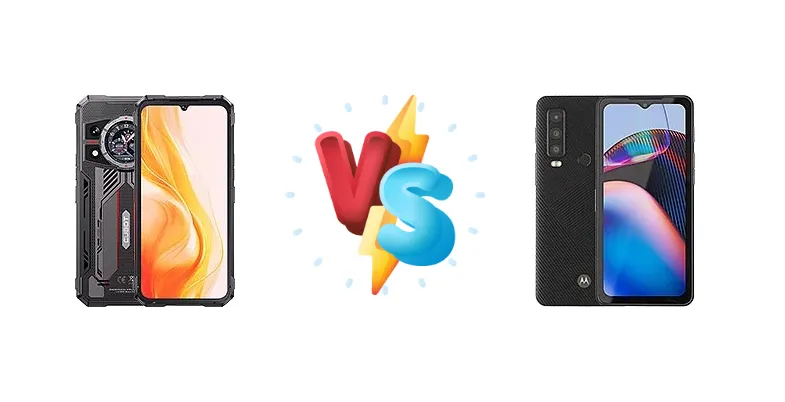
|
🏆 Quick Verdict
For users prioritizing all-day (and then some) battery life and a lower price point, the Cubot KingKong 11 is the clear winner. However, the Motorola Defy 2’s more powerful Dimensity 930 chipset and wireless charging capabilities make it a compelling choice for those who demand faster processing and modern convenience.
| PHONES | ||
|---|---|---|
| Phone Names | Cubot KingKong 11 | Motorola Defy 2 |
| Network | ||
|---|---|---|
| 2G bands | GSM 850 / 900 / 1800 / 1900 | GSM 850 / 900 / 1800 / 1900 |
| 3G bands | HSDPA 800 / 850 / 900 / 1700(AWS) / 1900 / 2100 | HSDPA 850 / 900 / 1700(AWS) / 1900 / 2100 |
| 4G bands | 1, 2, 3, 4, 5, 7, 8, 12, 13, 17, 18, 19, 20, 25, 26, 28, 34, 38, 39, 40, 41, 66, 71 | 1, 2, 3, 4, 5, 7, 8, 12, 13, 14, 17, 20, 25, 26, 28, 30, 38, 40, 41, 46, 48, 66, 71 |
| 5G bands | 1, 2, 3, 5, 7, 8, 20, 25, 28, 38, 40, 41, 66, 77, 78 SA/NSA | 2, 5, 23, 25, 26, 28, 38, 41, 48, 66, 70, 71, 77, 78, 255, 256 SA/NSA/Sub6/mmWave |
| Speed | HSPA, LTE, 5G | HSPA, LTE, 5G |
| Technology | GSM / HSPA / LTE / 5G | GSM / HSPA / LTE / 5G |
| Launch | ||
|---|---|---|
| Announced | 2025, August | 2023, February 24 |
| Status | Available. Released 2025, August | Available. Released 2023, October |
| Body | ||
|---|---|---|
| Build | - | Glass front (Gorilla Glass Victus), plastic back, aluminum frame |
| Dimensions | 176 x 84.1 x 18.7 mm (6.93 x 3.31 x 0.74 in) | 171 x 80 x 11.9 mm (6.73 x 3.15 x 0.47 in) |
| SIM | Nano-SIM + Nano-SIM | Nano-SIM + Nano-SIM |
| Weight | - | 268 g (9.45 oz) |
| - | IP68/IP69 dust/water resistant (up to 5m for 35 min) Drop-to-concrete resistance from up to 1.8m MIL-STD-810H compliant | |
| Display | ||
|---|---|---|
| Protection | Mohs level 6 | Corning Gorilla Glass Victus |
| Resolution | 1080 x 2400 pixels, 20:9 ratio (~392 ppi density) | 1080 x 2408 pixels, 20:9 ratio (~400 ppi density) |
| Size | 6.72 inches, 109.0 cm2 (~73.7% screen-to-body ratio) | 6.6 inches, 104.9 cm2 (~76.7% screen-to-body ratio) |
| Type | IPS LCD, 120Hz | IPS LCD, 120Hz |
| Platform | ||
|---|---|---|
| CPU | Octa-core (2x2.5 GHz Cortex-A78 & 6x2.0 GHz Cortex-A55) | Octa-core (2x2.2 GHz Cortex-A78 & 6x2.0 GHz Cortex-A55) |
| Chipset | Mediatek Dimensity 7025 (6 nm) | Mediatek Dimensity 930 (6 nm) |
| GPU | IMG BXM-8-256 | IMG BXM-8-256 |
| OS | Android 15 | Android 12 |
| Memory | ||
|---|---|---|
| Card slot | microSDXC (uses shared SIM slot) | microSDXC (uses shared SIM slot) |
| Internal | 256GB 16GB RAM | 128GB 6GB RAM |
| Main Camera | ||
|---|---|---|
| Dual | 108 MP, (wide), PDAF 8 MP, (ultrawide), AF | - |
| Features | LED flash, dual infrared LED | Dual-LED flash, HDR, panorama |
| Triple | - | 50 MP, f/1.8, (wide), PDAF 8 MP, f/2.2, (ultrawide) 2 MP (macro) |
| Video | Yes | 1080p@30fps |
| Selfie camera | ||
|---|---|---|
| Single | 32 MP | 8 MP, f/2.0, (wide) |
| Video | Yes | 1080p@30fps |
| Sound | ||
|---|---|---|
| 3.5mm jack | - | No |
| 35mm jack | No | No |
| Loudspeaker | Yes | Yes |
| Comms | ||
|---|---|---|
| Bluetooth | 5.1, A2DP, LE | 5.1, A2DP, LE |
| NFC | Yes | Yes |
| Positioning | GPS, GALILEO, GLONASS, BDS | GPS (L1+L5), GLONASS, GALILEO, BDS |
| Radio | Unspecified | Unspecified |
| USB | USB Type-C, OTG | USB Type-C 2.0, OTG |
| WLAN | Wi-Fi 802.11 a/b/g/n/ac, dual-band | Wi-Fi 802.11 a/b/g/n/ac, dual-band |
| Features | ||
|---|---|---|
| Sensors | Fingerprint (side-mounted), accelerometer, gyro, proximity, compass | Fingerprint (rear-mounted), accelerometer, gyro, proximity, compass |
| - | Emergency SOS via satellite (Bullitt Satellite Connect service) | |
| Battery | ||
|---|---|---|
| Charging | 33W wired | 15W wireless |
| Type | 10200 mAh | Li-Po 5000 mAh |
| Misc | ||
|---|---|---|
| Colors | Black | Black |
| Models | - | BM1S1B |
| Price | € 254.95 / $ 196.64 / £ 265.99 | About 570 EUR |
| EU LABEL | ||
|---|---|---|
| Battery | 40:46h endurance, 1400 cycles | - |
| Energy | Class G | - |
| Free fall | Class C (90 falls) | - |
| Repairability | Class C | - |
Cubot KingKong 11
- Exceptional battery life (40:46h endurance)
- High battery cycle count (1400 cycles)
- Faster 33W wired charging
- Less powerful chipset compared to the Defy 2
- Limited information on display quality
Motorola Defy 2
- More powerful Mediatek Dimensity 930 chipset
- Convenient 15W wireless charging
- Potentially better camera image processing
- Shorter battery life compared to the KingKong 11
- No information on battery cycle count
Display Comparison
Neither device’s display specifications are provided, so a direct comparison is limited. However, given the KingKong 11’s focus on endurance, it likely utilizes a power-efficient panel. The Defy 2, aiming for a more premium experience, may feature a slightly higher resolution or color accuracy. Both are likely to employ durable glass, given their rugged nature, but specifics like Gorilla Glass version are unknown. Bezels are expected to be functional rather than minimal, prioritizing protection over aesthetics.
Camera Comparison
Without detailed camera specifications, a comprehensive comparison is difficult. However, the chipset difference suggests the Defy 2 will have a more capable image signal processor (ISP), leading to better image processing, especially in low-light conditions. The KingKong 11 likely focuses on practicality and durability in its camera system, while the Defy 2 may prioritize image quality and features. The absence of information regarding sensor sizes and optical image stabilization (OIS) makes a definitive judgment impossible, but the Defy 2’s higher-tier chipset suggests a more sophisticated camera experience.
Performance
The Motorola Defy 2 holds a clear advantage in raw processing power, leveraging the Mediatek Dimensity 930 chipset with a 2.2 GHz Cortex-A78 core configuration. While the Cubot KingKong 11’s Dimensity 7025 (2.5 GHz Cortex-A78) is a capable processor, the 930’s superior architecture and slightly higher clock speeds translate to faster app loading, smoother multitasking, and improved gaming performance. Both chipsets are fabricated on a 6nm process, offering good efficiency, but the 930’s more advanced design provides a noticeable edge. The impact of RAM speed (LPDDR4x vs LPDDR5x, assumed) isn't specified, but the Defy 2 likely benefits from faster memory access.
Battery Life
The Cubot KingKong 11 truly shines in battery endurance, boasting a remarkable 40:46h of usage time and a 1400 cycle lifespan. This is a significant advantage over the Motorola Defy 2, which lacks specific battery endurance data but compensates with 15W wireless charging. The KingKong 11’s 33W wired charging is faster than the Defy 2’s wireless option, allowing for quicker top-ups when a power source is available. The Defy 2’s wireless charging is a convenience feature, but the KingKong 11’s extended battery life is more impactful for users who frequently find themselves away from outlets.
Buying Guide
Buy the Cubot KingKong 11 if you need a phone that can genuinely last for two days on a single charge, and you frequently work or play in harsh environments where battery access is limited. Buy the Motorola Defy 2 if you prefer a more responsive user experience for demanding apps and games, and value the convenience of wireless charging, even if it means sacrificing some battery endurance.