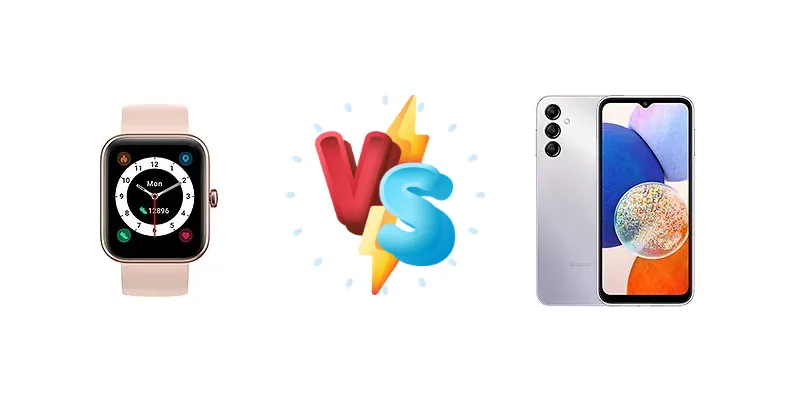
The sub-$200 5G smartphone market is heating up, with the Cubot ID206 and Samsung Galaxy A14 5G vying for attention. While the Samsung benefits from brand recognition and a wider feature set, the Cubot aims to undercut on price. This comparison dissects the key differences to determine which device offers the most compelling package for budget-conscious consumers.
🏆 Quick Verdict
For the average user prioritizing a reliable brand, consistent software updates, and a brighter display, the Samsung Galaxy A14 5G is the better choice. Its Exynos 1330 chipset (in some variants) offers a performance edge, and the 130-hour endurance rating provides peace of mind. However, the Cubot ID206 may appeal to those seeking the absolute lowest price point.
| Network |
|---|
| 2G bands | N/A | GSM 850 / 900 / 1800 / 1900 |
| 3G bands | N/A | HSDPA 850 / 900 / 1700(AWS) / 1900 / 2100 |
| 4G bands | N/A | 1, 2, 3, 4, 5, 7, 8, 12, 17, 20, 26, 28, 38, 40, 41, 66 - International |
| 5G bands | - | 2, 5, 66, 77 Sub6/mmWave - USA |
| EDGE | No | - |
| GPRS | No | - |
| Speed | No | HSPA, LTE, 5G |
| Technology | No cellular connectivity | GSM / HSPA / LTE / 5G |
| | - | 1, 3, 5, 7, 8, 20, 28, 40, 41, 78 SA/NSA/Sub6 - India |
| Launch |
|---|
| Announced | 2020. Released 2020 | 2023, January 04 |
| Status | Discontinued | Available. Released 2023, January 12 |
| Body |
|---|
| Build | - | Glass front, plastic back, plastic frame |
| Dimensions | 40 x 40 x 12 mm (1.57 x 1.57 x 0.47 in) | 167.7 x 78 x 9.1 mm (6.60 x 3.07 x 0.36 in) |
| SIM | No | · Nano-SIM· Nano-SIM + Nano-SIM |
| Weight | - | 202 g (7.13 oz) |
| Display |
|---|
| Protection | Scratch-resistant glass | - |
| Resolution | 240 x 280 pixels (~217 ppi density) | 1080 x 2408 pixels, 20:9 ratio (~400 ppi density) |
| Size | 1.7 inches | 6.6 inches, 104.9 cm2 (~80.2% screen-to-body ratio) |
| Type | TFT LCD | PLS LCD, 90Hz |
| Platform |
|---|
| CPU | - | Octa-core (2x2.4 GHz Cortex-A78 & 6x2.0 GHz Cortex-A55) - SM-A146BOcta-core (2x2.2 GHz Cortex-A76 & 6x2.0 GHz Cortex-A55) - SM-A146P |
| Chipset | - | Exynos 1330 (5 nm) - SM-A146BMediatek Dimensity 700 (7 nm) - SM-A146P |
| GPU | - | Mali-G68 MP2 - SM-A146BMali-G57 MC2 - SM-A146P |
| OS | Proprietary OS | Android 13, upgradable to Android 15, One UI Core 7 |
| Memory |
|---|
| Card slot | No | microSDXC (uses shared SIM slot) - USA onlymicroSDXC (dedicated slot) - International |
| Internal | - | 64GB 4GB RAM, 128GB 4GB RAM, 128GB 6GB RAM, 128GB 8GB RAM |
| Main Camera |
|---|
| Features | - | LED flash, panorama, HDR |
| Single | - | 13 MP, f/2.0, (wide) |
| Triple | - | 50 MP, f/1.8, 26mm (wide), 1/2.76", 0.64µm, PDAF
2 MP (macro)
Auxiliary lens |
| Video | - | 1080p@30fps |
| Selfie camera |
|---|
| Single | - | 13 MP, f/2.0, 26mm (wide), 1.12µm |
| Video | - | 1080p@30fps |
| Sound |
|---|
| 3.5mm jack | - | Yes |
| 35mm jack | No | Yes |
| Loudspeaker | No | Yes |
| Comms |
|---|
| Bluetooth | 5.0, A2DP, LE | 5.2, A2DP, LE |
| NFC | No | Yes |
| Positioning | No | GPS, GLONASS, GALILEO |
| Radio | No | FM radio (Exynos 1330 chipset only), recording |
| USB | No | USB Type-C 2.0 |
| WLAN | No | Wi-Fi 802.11 a/b/g/n/ac, dual-band, Wi-Fi Direct |
| Features |
|---|
| Sensors | Accelerometer, gyro, heart rate, SpO2 | Fingerprint (side-mounted), accelerometer, gyro, proximity, compass, barometer (USA only) |
| Battery |
|---|
| Charging | - | 15W wired |
| Type | 300 mAh | Li-Po 5000 mAh |
| Misc |
|---|
| Colors | Black, Pink | Black, Light Green, Dark Red, Silver |
| Models | - | SM-A146B, SM-A146B/DS, SM-A146P, SM-A146P/DS, SM-A146U, SM-A146U1, SM-A146U1/DS, SM-A146W, SM-A146P/N, SM-A146P/DSN, SM-S146VL, SM-A146M |
| Price | - | $ 77.63 / C$ 151.00 / £ 97.00 / € 159.79 / ₹ 14,990 |
| SAR | - | 1.00 W/kg (head) 1.00 W/kg (body) |
| SAR EU | - | 0.56 W/kg (head) 1.28 W/kg (body) |
| Tests |
|---|
| Battery life | - |
Endurance rating 130h
|
| Camera | - |
Photo / Video |
| Display | - |
Contrast ratio: 1334:1 (nominal) |
| Loudspeaker | - |
-26.8 LUFS (Good)
|
| Performance | - |
AnTuTu: 307886 (v9)
GeekBench: 1727 (v5.1)
GFXBench: 12fps (ES 3.1 onscreen) |
Cubot ID206
- Potentially the lowest price point in the 5G market.
- Offers 5G connectivity for budget users.
- May appeal to users who prioritize affordability above all else.
- Lack of detailed specifications makes a thorough assessment impossible.
- Likely compromises in build quality, software support, and camera performance.
- Uncertain long-term reliability.
Samsung Galaxy A14 5G
- Brighter and more vibrant display (519 nits, 1334:1 contrast).
- More powerful chipset options (Exynos 1330 or Dimensity 700).
- Excellent battery life (130-hour endurance rating).
- Samsung’s brand reputation and software ecosystem.
- 15W charging is relatively slow.
- May be slightly more expensive than the Cubot ID206.
- Chipset variant (Exynos vs Dimensity) impacts performance.
Display Comparison
The Samsung Galaxy A14 5G boasts a measured peak brightness of 519 nits and a 1334:1 contrast ratio, indicating a significantly more vibrant and visible display, especially outdoors. While the Cubot ID206’s display specifications are unavailable, it’s reasonable to assume it will fall short of these figures given its price point. The contrast ratio on the A14 5G suggests deeper blacks and more impactful colors, enhancing media consumption. The lack of information on the Cubot’s panel technology makes it difficult to assess its color accuracy or viewing angles.
Camera Comparison
Both devices offer photo and video capabilities, but detailed camera specifications for the Cubot ID206 are absent. The Samsung Galaxy A14 5G’s camera system likely centers around a primary sensor, but details regarding its resolution and aperture are unavailable. It’s crucial to note that many budget phones include low-resolution auxiliary cameras (like 2MP macro lenses) that offer limited practical benefit. Without knowing the Cubot’s sensor size or image processing capabilities, it’s difficult to assess its camera performance, but it’s unlikely to match the image quality achievable with a well-tuned Samsung camera system.
Performance
The Samsung Galaxy A14 5G presents a split chipset strategy: the SM-A146B model utilizes the 5nm Exynos 1330, featuring a 2x2.4 GHz Cortex-A78 and 6x2.0 GHz Cortex-A55 core configuration, while the SM-A146P uses the 7nm MediaTek Dimensity 700 with a 2x2.2 GHz Cortex-A76 and 6x2.0 GHz Cortex-A55 setup. The 5nm process node of the Exynos 1330 generally translates to improved power efficiency and thermal performance compared to the 7nm Dimensity 700, potentially leading to less throttling during sustained workloads. The Cortex-A78 cores in the Exynos 1330 also offer a performance advantage over the Cortex-A76 cores in the Dimensity 700. The Cubot ID206’s chipset remains unknown, but given its price, it likely utilizes a less powerful and less efficient processor.
Battery Life
The Samsung Galaxy A14 5G achieves an impressive endurance rating of 130 hours, indicating excellent battery life under typical usage. This suggests a well-optimized combination of battery capacity and power efficiency. The 15W wired charging is relatively slow by modern standards, but sufficient for overnight charging. The Cubot ID206’s battery capacity and charging speed are unknown, but it’s reasonable to expect a smaller battery and slower charging speeds given its lower price point. The A14 5G’s endurance rating provides a significant advantage for users who prioritize all-day battery life.
Buying Guide
Buy the Cubot ID206 if you need a functional 5G smartphone with minimal frills and are willing to accept potential compromises in software support and long-term reliability. Buy the Samsung Galaxy A14 5G if you prefer a more polished experience, a brighter and more viewable display, and the assurance of Samsung’s software ecosystem, even if it means paying a slight premium.
Frequently Asked Questions
❓ Does the Exynos 1330 in the Samsung Galaxy A14 5G overheat during prolonged gaming sessions?
The Exynos 1330, built on a 5nm process, is generally efficient and manages heat well. While some throttling is possible during extended gaming, it's unlikely to cause significant performance drops or discomfort. The Dimensity 700 variant may exhibit slightly more throttling due to its 7nm process.
❓ Is the 2MP macro camera on the Samsung Galaxy A14 5G actually useful for taking detailed close-up photos?
Generally, 2MP macro cameras on budget phones produce images with limited detail and sharpness. They are often included for marketing purposes but rarely deliver truly impressive macro photography. Expect soft images and limited dynamic range.
❓ What 5G bands does the Samsung Galaxy A14 5G support, and will it work with my carrier?
The Samsung Galaxy A14 5G supports a wide range of 5G bands, but specific compatibility varies by region and carrier. It's crucial to check your carrier's website or contact them directly to confirm compatibility before purchasing.
❓ Given the lack of detailed specs for the Cubot ID206, what are the biggest risks of purchasing this device?
The primary risks are potential compromises in build quality, software support (including security updates), and long-term reliability. Without detailed specifications, it's difficult to assess the device's performance, camera capabilities, and overall user experience.