
Cubot Hafury Meet vs. Ulefone Armor 15: A Deep Dive into Rugged Performance
| Phones Images | |||||
|---|---|---|---|---|---|
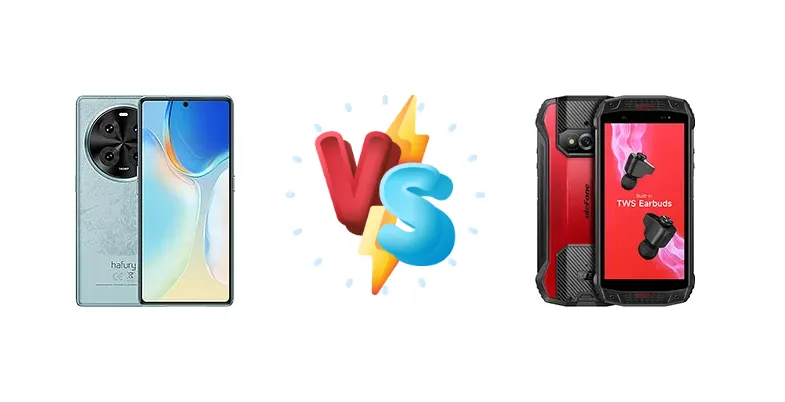
|
🏆 Quick Verdict
For the average user prioritizing performance and faster charging, the Cubot Hafury Meet is the clear winner. Its Helio G99 chipset offers a significant performance uplift over the Armor 15’s Helio G35, and the 33W charging is substantially quicker. While the Armor 15 offers ruggedness, the Meet provides a more responsive user experience.
| PHONES | ||
|---|---|---|
| Phone Names | Cubot Hafury Meet | Ulefone Armor 15 |
| Network | ||
|---|---|---|
| 2G bands | GSM 850 / 900 / 1800 / 1900 | GSM 850 / 900 / 1800 / 1900 |
| 3G bands | HSDPA 800 / 850 / 900 / 1700(AWS) / 1900 / 2100 | HSDPA 850 / 900 / 1700(AWS) / 1900 / 2100 |
| 4G bands | 1, 2, 3, 4, 5, 7, 8, 12, 13, 17, 18, 19, 20, 25, 26, 28, 38, 39, 40, 41, 66 | 1, 2, 3, 4, 5, 7, 8, 12, 13, 17, 18, 19, 20, 25, 26, 28, 38, 39, 40, 41, 66 |
| Speed | HSPA, LTE | HSPA, LTE Cat13 300/150 Mbps |
| Technology | GSM / HSPA / LTE | GSM / HSPA / LTE |
| Launch | ||
|---|---|---|
| Announced | 2024, April 02 | 2022, July 27 |
| Status | Available. Released 2024, April | Available. Released 2022, August 10 |
| Body | ||
|---|---|---|
| Dimensions | 162.2 x 74 x 9.4 mm (6.39 x 2.91 x 0.37 in) | 170.2 x 79.6 x 18.2 mm (6.70 x 3.13 x 0.72 in) |
| SIM | Nano-SIM + Nano-SIM | Nano-SIM + Nano-SIM |
| Weight | 211 g (7.44 oz) | 346 g (12.20 oz) |
| - | IP68 dust/water resistant (up to 1.5m for 30 min) Drop-to-concrete resistance from up to 1.5m MIL-STD-810G compliant Built-in wireless earbuds housed inside the top side of the phone; charging | |
| Display | ||
|---|---|---|
| Resolution | 1080 x 2400 pixels, 20:9 ratio (~395 ppi density) | 720 x 1440 pixels, 18:9 ratio (~295 ppi density) |
| Size | 6.67 inches, 107.4 cm2 (~89.5% screen-to-body ratio) | 5.45 inches, 76.7 cm2 (~56.6% screen-to-body ratio) |
| Type | AMOLED, 1B colors, 120Hz, 1500 nits (peak) | IPS LCD |
| Platform | ||
|---|---|---|
| CPU | Octa-core (2x2.2 GHz Cortex-A76 & 6x2.0 GHz Cortex-A55) | Octa-core (4x2.3 GHz Cortex-A53 & 4x1.8 GHz Cortex-A53) |
| Chipset | Mediatek Helio G99 (6 nm) | Mediatek MT6765G Helio G35 (12 nm) |
| GPU | Mali-G57 MC2 | PowerVR GE8320 |
| OS | Android 13 | Android 12 |
| Memory | ||
|---|---|---|
| Card slot | microSDXC (uses shared SIM slot) | microSDXC (dedicated slot) |
| Internal | 256GB 12GB RAM | 128GB 6GB RAM |
| Main Camera | ||
|---|---|---|
| Dual | - | 12 MP, f/1.8, (wide), 1.4μm 13 MP, f/2.4, 106˚ (ultrawide) |
| Features | LED flash | LED flash, HDR, panorama |
| Single | - | 16 MP, f/2.4, (wide), 1.0μm |
| Triple | 100 MP, (wide), PDAF 16 MP, 117˚ (ultrawide) 5 MP (macro) | - |
| Video | 1080p@30fps | 1080p@30fps |
| Selfie camera | ||
|---|---|---|
| Single | 32 MP | 16 MP, f/2.4, (wide), 1.0μm |
| Video | 1080p@30fps | 1080p@30fps |
| Sound | ||
|---|---|---|
| 3.5mm jack | - | No |
| 35mm jack | No | No |
| Loudspeaker | Yes | Yes |
| Comms | ||
|---|---|---|
| Bluetooth | 5.2, A2DP | 5.0, A2DP |
| NFC | Yes | Yes |
| Positioning | GPS, GALILEO, GLONASS, BDS | GPS, GLONASS, BDS, GALILEO |
| Radio | Unspecified | Stereo FM radio, RDS, recording |
| USB | USB Type-C, OTG | USB Type-C 2.0, OTG |
| WLAN | Wi-Fi 802.11 a/b/g/n/ac, dual-band | Wi-Fi 802.11 a/b/g/n/ac, dual-band |
| Features | ||
|---|---|---|
| Sensors | Fingerprint (under display, optical), accelerometer, gyro, proximity, compass | Fingerprint (side-mounted), accelerometer, proximity, gyro, compass |
| Battery | ||
|---|---|---|
| Charging | 33W wired | 18W wired |
| Type | 5100 mAh | Li-Po 6600 mAh |
| Misc | ||
|---|---|---|
| Colors | Green | Meteorite Black, Tech Blue, Sport Red |
| Price | About 200 EUR | About 300 EUR |
Cubot Hafury Meet
- Significantly faster processor (Helio G99)
- Faster 33W charging
- More efficient 6nm process node
- Ruggedness may be slightly less than Armor 15
- Display specifications unknown
Ulefone Armor 15
- Potentially larger battery capacity
- Robust rugged design
- Lower price point (likely)
- Slower processor (Helio G35)
- Slower 18W charging
- Less efficient 12nm process node
Display Comparison
Neither device’s display specifications are provided, so a direct comparison is limited. However, given the Armor 15’s focus on ruggedness, it likely prioritizes durability over display quality. The Hafury Meet, positioned as a more all-around device, *may* offer a slightly more refined display experience, but this is speculative. Both will likely feature LCD panels given the price points, and users should expect adequate, but not exceptional, color accuracy and brightness.
Camera Comparison
Without detailed camera specifications, a precise comparison is difficult. However, the chipset difference indirectly impacts camera performance. The G99’s more powerful ISP (Image Signal Processor) in the Hafury Meet will likely result in faster image processing, better noise reduction, and improved dynamic range compared to the G35 in the Armor 15. It’s reasonable to assume both phones will feature a primary camera and potentially a macro/depth sensor, but the G99’s processing capabilities will give the Hafury Meet an edge in image quality. We can expect the Armor 15 to focus on functional photography, while the Hafury Meet may offer a more polished result.
Performance
The core difference lies in the chipsets. The Cubot Hafury Meet’s Mediatek Helio G99 (6nm) is a substantial upgrade over the Ulefone Armor 15’s Helio G35 (12nm). The G99 utilizes more modern Cortex-A76 cores (2x2.2 GHz) compared to the G35’s Cortex-A53 cores (4x2.3 GHz), resulting in significantly better single-core and multi-core performance. The 6nm process node of the G99 also translates to improved power efficiency and reduced thermal throttling during sustained workloads. The Armor 15’s G35, while capable for basic tasks, will struggle with demanding games or applications. The G99’s architecture provides a smoother, more responsive experience for everyday use and gaming.
Battery Life
The Ulefone Armor 15’s battery capacity is not specified, but rugged phones often prioritize larger batteries. However, the Hafury Meet’s 33W wired charging is a significant advantage over the Armor 15’s 18W charging. This translates to considerably faster charging times – a full charge on the Hafury Meet will be noticeably quicker. While the Armor 15 *may* have a larger battery, the Hafury Meet’s faster charging mitigates the impact of a potentially smaller capacity, offering more convenience for users who need to quickly top up their device.
Buying Guide
Buy the Cubot Hafury Meet if you need a rugged phone that can handle demanding tasks like gaming or multitasking without significant slowdown. It’s ideal for users who value a smoother experience and quicker charging. Buy the Ulefone Armor 15 if your primary concern is absolute durability and you prioritize battery life over raw processing power, and are comfortable with a slower chipset and charging speed.