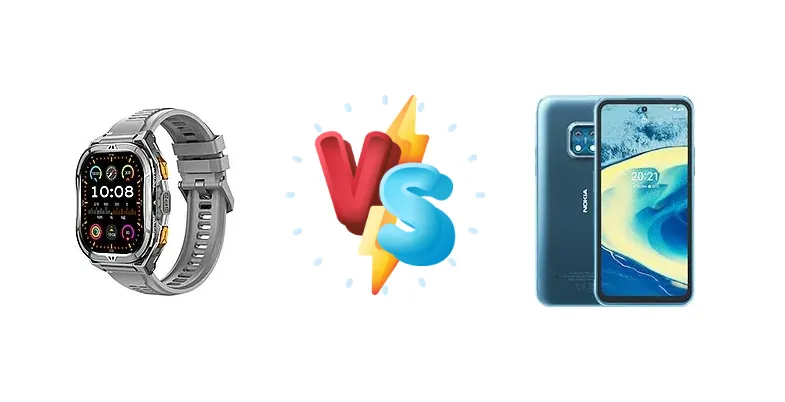
The smartphone market is flooded with options, but finding a durable, 5G-capable device without breaking the bank can be challenging. We pit the Cubot GT3 against the Nokia XR20, two contenders aiming to deliver ruggedness and connectivity at accessible price points. While the Cubot GT3 remains largely a mystery in terms of detailed specifications, we'll analyze it within the context of its likely market positioning and compare it to the well-defined Nokia XR20.
🏆 Quick Verdict
For the average user prioritizing a known quantity and guaranteed software support, the Nokia XR20 is the clear winner. Its Qualcomm Snapdragon 480 5G chipset provides a solid, if not groundbreaking, performance profile, coupled with Nokia’s commitment to updates. The Cubot GT3, lacking detailed specs, is a gamble, potentially offering value but with significant uncertainty.
| Network |
|---|
| 2G bands | N/A | GSM 850 / 900 / 1800 / 1900 |
| 3G bands | N/A | HSDPA 850 / 900 / 1700(AWS) / 1900 / 2100 |
| 4G bands | N/A | 1, 2, 3, 4, 5, 7, 8, 12, 13, 14, 20, 25, 26, 28, 30, 38, 40, 41, 48, 66, 71 |
| 5G bands | - | 2, 5, 25, 38, 41, 48, 66, 77, 78 SA/NSA |
| EDGE | No | - |
| GPRS | No | - |
| Speed | No | HSPA, LTE, 5G |
| Technology | No cellular connectivity | GSM / CDMA / HSPA / EVDO / LTE / 5G |
| | - | CDMA2000 1xEV-DO |
| Launch |
|---|
| Announced | 2025, March | 2021, July 27 |
| Status | Available. Released 2025, March | Available. Released 2021, August 04 |
| Body |
|---|
| Dimensions | 59.3 x 48.2 x 13.4 mm (2.33 x 1.90 x 0.53 in) | 171.6 x 81.5 x 10.6 mm (6.76 x 3.21 x 0.42 in) |
| SIM | No | · Nano-SIM· Nano-SIM + Nano-SIM |
| Weight | 57 g (2.01 oz) | 248 g (8.75 oz) |
| | - | IP68 dust/water resistant (up to 1.5m for 60 min)
Drop-to-concrete resistance from up to 1.8m
MIL-STD-810H compliant |
| Display |
|---|
| Protection | - | Corning Gorilla Glass Victus |
| Resolution | 410 x 502 pixels (~331 ppi density) | 1080 x 2400 pixels, 20:9 ratio (~395 ppi density) |
| Size | 1.96 inches | 6.67 inches, 107.4 cm2 (~76.8% screen-to-body ratio) |
| Type | AMOLED | IPS LCD, 550 nits |
| Platform |
|---|
| CPU | - | Octa-core (2x2.0 GHz Kryo 460 & 6x1.8 GHz Kryo 460) |
| Chipset | - | Qualcomm SM4350 Snapdragon 480 5G (8 nm) |
| GPU | - | Adreno 619 |
| OS | Proprietary OS | Android 11, upgradable to Android 13 |
| Memory |
|---|
| Card slot | No | microSDXC (uses shared SIM slot) |
| Internal | 32MB | 64GB 4GB RAM, 128GB 6GB RAM |
| Main Camera |
|---|
| Dual | - | 48 MP, f/1.8, (wide), 1/2.25", 0.8µm, PDAF
13 MP, f/2.4, 123˚ (ultrawide), 1/3.0", 1.12µm |
| Features | - | Zeiss optics, Dual-LED dual-tone flash, second LED flash, HDR, panorama |
| Single | - | 8 MP, f/2.0 (wide), 1/4.0", 1.12µm |
| Video | - | 1080p@30fps |
| Selfie camera |
|---|
| Single | - | 8 MP, f/2.0 (wide), 1/4.0", 1.12µm |
| Video | - | 1080p@30fps |
| Sound |
|---|
| 3.5mm jack | - | Yes |
| 35mm jack | No | Yes |
| Loudspeaker | Yes | Yes, with stereo speakers |
| Comms |
|---|
| Bluetooth | 5.3, A2DP, LE | 5.1, A2DP, LE, aptX Adaptive |
| NFC | No | Yes |
| Positioning | GPS (L1+L5) | GPS (L1+L5), GLONASS, BDS, GALILEO, QZSS, NavIC |
| Radio | No | Unspecified |
| USB | No | USB Type-C 3.0 |
| WLAN | No | Wi-Fi 802.11 a/b/g/n/ac/6, dual-band, Wi-Fi Direct |
| Features |
|---|
| Sensors | Accelerometer, gyro, barometer, compass, heart rate, SpO2 | Fingerprint (side-mounted), accelerometer, gyro, proximity, compass, barometer |
| Battery |
|---|
| Charging | - | 18W wired
15W wireless |
| Type | 530 mAh | Li-Po 4630 mAh |
| Misc |
|---|
| Colors | Black, Gray | Ultra Blue, Granite Gray |
| Models | - | TA-1368, TA-1362 |
| Price | - | About 270 EUR |
| SAR EU | - | 1.13 W/kg (head) 1.43 W/kg (body) |
Cubot GT3
- Potentially very affordable price
- Rugged design (assumed)
- May offer unique features not found on the XR20
- Unknown specifications
- Uncertain software support
- Potentially lower performance
Nokia XR20
- Qualcomm Snapdragon 480 5G chipset
- Guaranteed software updates from Nokia
- Durable build with Gorilla Glass Victus
- Higher price than potential Cubot GT3 cost
- 18W charging is relatively slow
- Camera performance is good, not exceptional
Display Comparison
Without specific display details for the Cubot GT3, we can only assume it targets a similar LCD panel found in this price bracket. The Nokia XR20 features a 6.67-inch FHD+ display. The XR20’s durability is enhanced by Gorilla Glass Victus, a significant advantage over any likely protective glass on the GT3. The XR20’s display is designed for outdoor visibility, a key feature for a rugged phone, while the GT3’s display performance remains unknown. The XR20’s 18W wireless charging capability suggests a focus on convenience, a feature likely absent in the GT3.
Camera Comparison
The Nokia XR20’s camera system is headlined by a 48MP main sensor, offering a reasonable level of detail and image quality. While the XR20 also includes an 8MP ultrawide and 2MP macro, the main sensor is the primary focus. The Cubot GT3’s camera specifications are unavailable, but it’s reasonable to expect a lower-resolution main sensor and potentially inferior image processing capabilities. The XR20’s image stabilization (OIS) is a key benefit for capturing steady photos and videos in challenging conditions, a feature unlikely to be found on the GT3.
Performance
The Nokia XR20’s Qualcomm Snapdragon 480 5G (8nm) is the performance centerpiece. Its octa-core CPU, with 2x2.0 GHz Kryo 460 cores and 6x1.8 GHz Kryo 460 cores, provides a capable experience for everyday tasks and moderate gaming. The 8nm process node contributes to improved thermal efficiency compared to older, larger-node chipsets. The Cubot GT3’s chipset is unknown, but given its likely price point, it will almost certainly utilize a less powerful and less efficient processor, potentially impacting multitasking and app loading times. The XR20’s 5G modem is a significant advantage, offering faster data speeds where available.
Battery Life
The Nokia XR20 packs a 4470mAh battery, supported by 18W wired charging and 15W wireless charging. This combination provides a balance between battery life and charging convenience. The Cubot GT3’s battery capacity is unknown, but a larger capacity doesn’t automatically translate to longer runtime; chipset efficiency plays a crucial role. The XR20’s wireless charging is a notable advantage, offering a convenient way to top up the battery without cables. The XR20’s 18W wired charging, while not the fastest, is adequate for a full charge in a few hours.
Buying Guide
Buy the Cubot GT3 if you need a potentially ultra-budget-friendly option and are comfortable with a less established brand and potentially limited software support. You're likely prioritizing absolute lowest cost over guaranteed performance or longevity. Buy the Nokia XR20 if you prefer a device from a reputable brand with a proven track record for durability, 5G connectivity, and regular software updates, even if it means paying a premium.
Frequently Asked Questions
❓ Is the Nokia XR20 truly waterproof, or just water-resistant?
The Nokia XR20 boasts an IP68 rating, meaning it's dust-tight and can survive immersion in up to 1.5 meters of freshwater for up to 30 minutes. However, it's crucial to remember that water resistance degrades over time and isn't a guarantee against all water damage. Avoid prolonged exposure to saltwater or chlorinated water.
❓ Given the Snapdragon 480 5G's age, will the Nokia XR20 receive Android updates in the future?
Nokia has committed to providing three years of security updates and two major Android OS upgrades for the XR20. This is a significant advantage over many budget phones and ensures the device remains secure and functional for a reasonable period. While the Snapdragon 480 isn't the newest chipset, Nokia's software support mitigates concerns about long-term usability.
❓ What kind of warranty and support can I expect with the Cubot GT3?
Cubot's warranty and support network are less established than Nokia's. Finding authorized repair centers or receiving timely software updates may be challenging. This is a key consideration for buyers prioritizing long-term reliability and support.