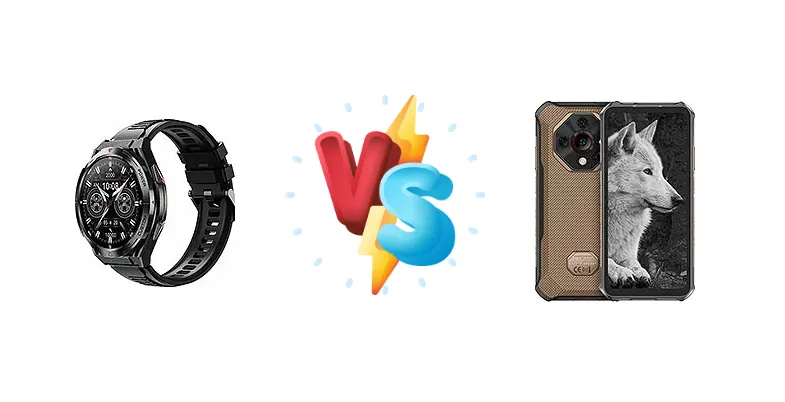
The smartphone market is flooded with options, but the Ulefone Armor X16 Pro and Cubot GT1 represent distinct approaches. The X16 Pro targets users needing durability and long-lasting power, while the GT1's specifications are currently unavailable, making a direct comparison challenging and reliant on brand positioning.
🏆 Quick Verdict
For the average user, the Ulefone Armor X16 Pro is the clear winner. Its Mediatek Dimensity 6300 chipset and impressive 114:48h battery endurance provide a tangible benefit. The Cubot GT1, lacking published specifications, is difficult to recommend without further information.
| Network |
|---|
| 2G bands | N/A | GSM 850 / 900 / 1800 / 1900 |
| 3G bands | N/A | HSDPA 800 / 850 / 900 / 1700(AWS) / 1900 / 2100 |
| 4G bands | N/A | 1, 2, 3, 4, 5, 7, 8, 12, 13, 17, 18, 19, 20, 25, 26, 28, 32, 34, 38, 39, 40, 41, 66, 71 |
| 5G bands | - | 1, 2, 3, 5, 7, 8, 20, 25, 28, 38, 40, 41, 66, 71, 77, 78, 79 SA/NSA/Sub6 |
| EDGE | No | - |
| GPRS | No | - |
| Speed | No | HSPA, LTE, 5G |
| Technology | No cellular connectivity | GSM / CDMA / HSPA / LTE / 5G |
| Launch |
|---|
| Announced | 2024 | 2025, July |
| Status | Available. Released 2024 | Available. Released 2025, July |
| Body |
|---|
| Build | Zinc alloy frame | - |
| Dimensions | 53.9 x 51.9 x 13.2 mm (2.12 x 2.04 x 0.52 in) | 173.8 x 83.4 x 18 mm (6.84 x 3.28 x 0.71 in) |
| SIM | No | Nano-SIM + Nano-SIM |
| Weight | 92 g (3.25 oz) | 395.4 g (13.93 oz) |
| Display |
|---|
| Protection | Panda Glass | Corning Gorilla Glass 5, Mohs level 5 |
| Resolution | 466 x 466 pixels (~461 ppi density) | 720 x 1612 pixels, 20:9 ratio (~269 ppi density) |
| Size | 1.43 inches | 6.56 inches, 103.4 cm2 (~71.3% screen-to-body ratio) |
| Type | TFT LCD | IPS LCD, 120Hz, 910 nits (peak) |
| Platform |
|---|
| CPU | - | Octa-core (2x2.4 GHz Cortex-A76 & 6x2.0 GHz Cortex-A55) |
| Chipset | - | Mediatek Dimensity 6300 (6 nm) |
| GPU | - | Mali-G57 MC2 |
| OS | Proprietary OS | Android 15 |
| Memory |
|---|
| Card slot | No | microSDXC (dedicated slot) |
| Internal | - | 256GB 8GB RAM |
| Main Camera |
|---|
| Features | - | LED flash, HDR, panorama |
| Triple | - | 64 MP, f/1.9, (wide), 1/1.73", 0.8µm, PDAF
25 MP, f/1.8, (night vision), 2 infrared lights
2 MP (macro) |
| Video | - | 1440p@30fps, 1080p@30fps |
| Selfie camera |
|---|
| Single | - | 16 MP, f/2.2, (wide), 1.0µm |
| Video | - | 1080p@30fps |
| Sound |
|---|
| 35mm jack | No | Yes |
| Loudspeaker | Yes | Yes |
| Comms |
|---|
| Bluetooth | 5.3, A2DP | 5.2, A2DP, LE |
| Infrared port | - | Yes |
| NFC | No | Yes |
| Positioning | GPS (L1+L5) | GPS, GALILEO, GLONASS, BDS, QZSS |
| Radio | No | Wireless FM radio |
| USB | No | USB Type-C 2.0, OTG |
| WLAN | No | Wi-Fi 802.11 a/b/g/n/ac, dual-band |
| Features |
|---|
| Sensors | Accelerometer, heart rate, SpO2, barometer, compass | Fingerprint (side-mounted), accelerometer, gyro, proximity, compass, barometer |
| Battery |
|---|
| Charging | - | 33W wired
5W reverse wired |
| Type | 480 mAh | Li-Ion 10360 mAh |
| Misc |
|---|
| Colors | Black | Wasteland Shadow/Sand Dune |
| Price | - | $ 199.99 / C$ 399.99 / £ 215.99 / € 249.99 |
| EU LABEL |
|---|
| Battery | - | 114:48h endurance, 1000 cycles |
| Energy | - | Class A |
| Free fall | - | Class A (270 falls) |
| Repairability | - | Class C |
Cubot GT1
- Unknown price point could be attractive
- Potential for unique features (unconfirmed)
- May offer a more compact design (speculation)
- No published specifications available
- Uncertain performance and reliability
- Limited information for informed decision-making
Ulefone Armor X16 Pro
- Excellent battery life (114:48h endurance)
- Capable Mediatek Dimensity 6300 processor
- Rugged design for durability
- Likely a bulkier design due to ruggedization
- Camera performance may not be flagship-level
- Higher price compared to some budget options
Display Comparison
Without display specifications for the Cubot GT1, a comparison is impossible. The Ulefone Armor X16 Pro’s display details are also unavailable, but given its rugged nature, we can anticipate a focus on durability rather than cutting-edge features like high refresh rates or LTPO technology. Bezels are likely to be substantial for impact protection. Color accuracy is likely to be secondary to visibility in bright sunlight.
Camera Comparison
Camera details for the Cubot GT1 are absent. The Ulefone Armor X16 Pro’s camera specifications are also unavailable. However, rugged phones often prioritize practicality over camera prowess. We can expect a functional camera system suitable for documentation and casual photography, but likely not competing with flagship smartphone camera performance. The absence of information on sensor size, OIS, or lens apertures for either device prevents a meaningful comparison.
Performance
The Ulefone Armor X16 Pro’s performance is anchored by the Mediatek Dimensity 6300 (6nm). This octa-core processor, featuring 2x2.4 GHz Cortex-A76 and 6x2.0 GHz Cortex-A55 cores, offers a significant performance boost over older Mediatek chips. The 6nm process node contributes to improved thermal efficiency, reducing throttling during sustained workloads. The Cubot GT1’s processor remains unknown, making a performance comparison impossible. However, given the X16 Pro’s positioning, the GT1 likely targets a lower price bracket and therefore a less powerful chipset.
Battery Life
The Ulefone Armor X16 Pro boasts an impressive 114:48h endurance rating and a 1000-cycle battery lifespan. This suggests a large capacity battery optimized for longevity. The 33W wired charging allows for relatively quick replenishment, while the 5W reverse wired charging provides emergency power to other devices. The Cubot GT1’s battery capacity and charging speed are unknown, but a longer endurance rating is a key selling point for the X16 Pro.
Buying Guide
Buy the Cubot GT1 if you prioritize a potentially lower price point and are willing to gamble on unconfirmed specifications. Buy the Ulefone Armor X16 Pro if you need a rugged device with guaranteed long battery life and a known, capable processor for everyday tasks and moderate gaming.
Frequently Asked Questions
❓ Given the Ulefone Armor X16 Pro's rugged design, does the Dimensity 6300 chipset have sufficient thermal headroom to maintain performance during extended use?
The Mediatek Dimensity 6300's 6nm process node is designed for efficiency, and the X16 Pro's rugged build likely incorporates thermal management solutions. While it won't match a flagship Snapdragon, the Dimensity 6300 should provide sustained performance for most tasks without significant throttling.
❓ With no specifications available for the Cubot GT1, what should potential buyers consider before purchasing?
Potential buyers should exercise extreme caution. Research the brand's reputation for software updates and customer support. Be prepared for potentially lower performance and a less refined user experience compared to established brands like Ulefone. A very low price is the only compelling reason to consider the GT1.
❓ What is the practical benefit of the 1000 charge cycles claimed for the Ulefone Armor X16 Pro's battery?
The 1000 charge cycle claim indicates the battery is designed to retain a significant portion of its original capacity even after being fully charged and discharged 1000 times. This translates to a longer usable lifespan for the device, reducing the need for battery replacement.