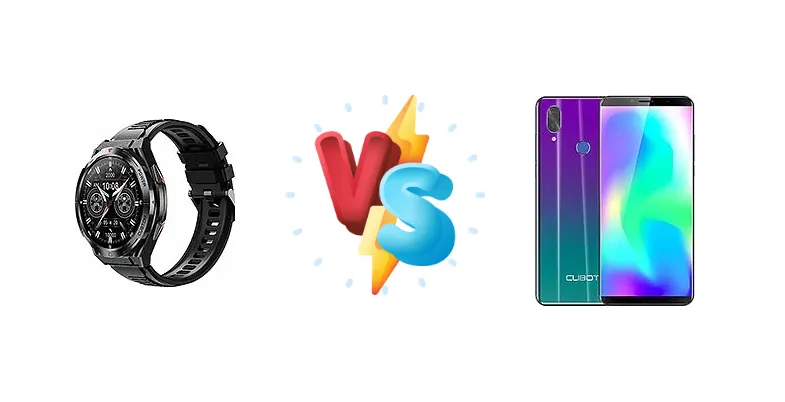
Cubot occupies a competitive space in the ultra-budget smartphone market. The X19S, featuring the Mediatek Helio P23, represents a known quantity. The GT1, however, is a newer entrant with limited publicly available specifications, making a direct comparison a challenge focused on inferring value based on market positioning and the X19S's established hardware.
🏆 Quick Verdict
For the average user prioritizing a known performer, the Cubot X19S is the safer bet due to its Helio P23 chipset. However, if the GT1 is significantly cheaper and basic functionality is sufficient, it could represent a compelling value proposition, assuming it doesn't compromise on essential features like display quality or battery life.
| Network |
|---|
| 2G bands | N/A | GSM 850 / 900 / 1800 / 1900 |
| 3G bands | N/A | HSDPA 900 / 2100 |
| 4G bands | N/A | 1, 3, 7, 8, 20 |
| EDGE | No | - |
| GPRS | No | - |
| Speed | No | HSPA, LTE |
| Technology | No cellular connectivity | GSM / HSPA / LTE |
| Launch |
|---|
| Announced | 2024 | 2020. Released 2020 |
| Status | Available. Released 2024 | Discontinued |
| Body |
|---|
| Build | Zinc alloy frame | - |
| Dimensions | 53.9 x 51.9 x 13.2 mm (2.12 x 2.04 x 0.52 in) | 155 x 74.7 x 9.6 mm (6.10 x 2.94 x 0.38 in) |
| SIM | No | Nano-SIM + Nano-SIM |
| Weight | 92 g (3.25 oz) | 178.9 g (6.31 oz) |
| Display |
|---|
| Protection | Panda Glass | - |
| Resolution | 466 x 466 pixels (~461 ppi density) | 1080 x 2160 pixels, 18:9 ratio (~407 ppi density) |
| Size | 1.43 inches | 5.93 inches, 90.7 cm2 (~78.4% screen-to-body ratio) |
| Type | TFT LCD | IPS LCD |
| Platform |
|---|
| CPU | - | Octa-core 2.5 GHz Cortex-A53 |
| Chipset | - | Mediatek MT6763 Helio P23 (16 nm) |
| GPU | - | Mali-G71 MP2 |
| OS | Proprietary OS | Android 9.0 (Pie) |
| Memory |
|---|
| Card slot | No | microSDXC (uses shared SIM slot) |
| Internal | - | 32GB 4GB RAM |
| Main Camera |
|---|
| Dual | - | 16 MP, f/2.0, (wide), PDAF
2 MP |
| Features | - | LED flash |
| Video | - | Yes |
| Selfie camera |
|---|
| Single | - | 8 MP |
| Video | - | Yes |
| Sound |
|---|
| 35mm jack | No | Unspecified |
| Loudspeaker | Yes | Yes |
| Comms |
|---|
| Bluetooth | 5.3, A2DP | 4.2, A2DP |
| NFC | No | No |
| Positioning | GPS (L1+L5) | GPS |
| Radio | No | Unspecified |
| USB | No | microUSB, OTG |
| WLAN | No | Wi-Fi 802.11 a/b/g/n |
| Features |
|---|
| Sensors | Accelerometer, heart rate, SpO2, barometer, compass | Fingerprint (rear-mounted), accelerometer, gyro, proximity, compass |
| Battery |
|---|
| Type | 480 mAh | 4000 mAh |
| Misc |
|---|
| Colors | Black | Gradient, Black |
Cubot GT1
- Potentially lower price point
- May offer a larger display
- Could include newer software features (depending on Android version)
- Unknown chipset performance
- Uncertain display quality
- Limited information available
Cubot X19S
- Known Helio P23 performance
- Established reliability
- Reasonable power efficiency
- Older chipset technology
- Likely basic camera performance
- May be slightly more expensive than the GT1
Display Comparison
Without specific display details for the GT1, we can only compare based on likely scenarios. The X19S likely features a standard IPS LCD panel. The GT1, to remain competitive, would need to offer a similar panel quality or a larger screen size to justify its existence. The absence of information on GT1's resolution or refresh rate suggests it likely targets the same entry-level segment as the X19S, meaning comparable viewing angles and color accuracy, but potentially lower peak brightness.
Camera Comparison
The X19S’s camera specifications are not detailed beyond the chipset, but budget phones often prioritize megapixel count over sensor size and image processing. The GT1’s camera is entirely unknown. Without knowing sensor sizes, apertures, or image processing capabilities, it’s impossible to make a meaningful comparison. It’s reasonable to assume both phones will struggle in low-light conditions and offer limited dynamic range. The presence of a 2MP macro camera on many phones in this segment is often more of a marketing gimmick than a genuinely useful feature.
Performance
The Cubot X19S’s Mediatek MT6763 Helio P23 (16nm) with its octa-core 2.5 GHz Cortex-A53 CPU is the clear performance leader here. The 16nm process node, while not cutting-edge, provides a reasonable balance between power efficiency and performance. The GT1’s chipset is unknown, but given its likely price point, it will almost certainly utilize a less powerful processor. This translates to slower app loading times, less fluid multitasking, and a less enjoyable gaming experience on the GT1. The Helio P23’s Cortex-A53 cores, while not the fastest, are well-suited for handling everyday tasks and light gaming.
Battery Life
Battery capacity for both devices is unknown. However, the Helio P23’s 16nm process node offers reasonable power efficiency. The GT1’s battery life will heavily depend on its chipset and display technology. Without knowing the charging wattage for either device, it’s difficult to estimate 0-100% charging times. A larger battery capacity on the GT1 could offset a less efficient chipset, but a smaller battery combined with a power-hungry processor would result in significantly shorter battery life.
Buying Guide
Buy the Cubot GT1 if you need a functional smartphone for basic tasks like calls, messaging, and light social media, and are operating on an extremely tight budget. Buy the Cubot X19S if you prefer a more responsive experience for everyday use, occasional gaming, and a more established track record of performance thanks to the Helio P23 chipset.
Frequently Asked Questions
❓ Is the Helio P23 in the Cubot X19S still capable of running popular apps like TikTok and WhatsApp smoothly?
Yes, the Helio P23 is sufficient for running everyday apps like TikTok and WhatsApp without significant lag. While it won't deliver a flagship-level experience, it provides a usable and responsive experience for common tasks.
❓ If the Cubot GT1 is significantly cheaper, is it worth sacrificing performance for the lower price?
That depends on your needs. If you primarily use your phone for calls, texts, and very light browsing, the GT1 could be a viable option. However, if you value a smoother experience, enjoy mobile gaming, or frequently multitask, the X19S’s Helio P23 is a worthwhile investment.
❓ What kind of gaming performance can I expect from the Cubot X19S?
The Helio P23 can handle less demanding games like older titles or simple puzzle games. However, graphically intensive games like PUBG Mobile will likely require low settings and may still experience frame drops. It's not a gaming-focused device.