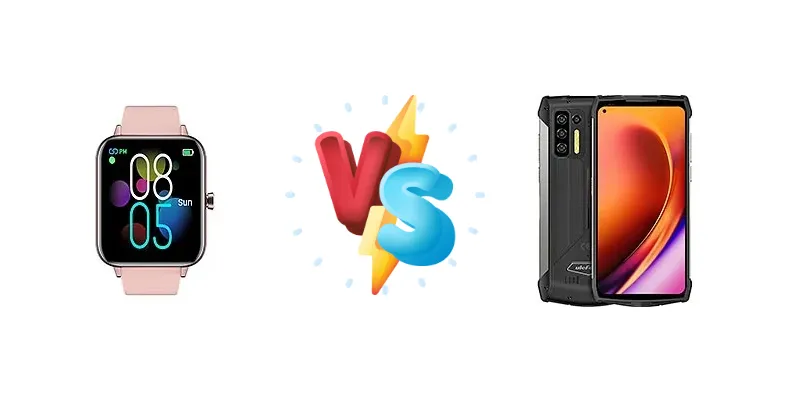
The Ulefone Power Armor 13 stakes its claim as a long-lasting, durable smartphone built for harsh conditions. The Cubot C7, however, enters the arena with limited publicly available information, making a direct comparison a challenge of assessing potential versus proven capability. This analysis will focus on the known strengths of the Power Armor 13 and extrapolate the C7's position based on brand reputation and market segment.
🏆 Quick Verdict
For the average user prioritizing battery life and a proven rugged design, the Ulefone Power Armor 13 is the clear winner. Its 296-hour endurance rating and 33W charging significantly outperform what we can reasonably expect from the Cubot C7, given the latter's lack of detailed specifications.
| Network |
|---|
| 2G bands | N/A | GSM 850 / 900 / 1800 / 1900 |
| 3G bands | N/A | HSDPA 850 / 900 / 1700(AWS) / 1900 / 2100 |
| 4G bands | N/A | 1, 2, 3, 4, 5, 7, 8, 12, 13, 17, 18, 19, 20, 25, 26, 28, 38, 40, 66 |
| EDGE | No | - |
| GPRS | No | - |
| Speed | No | HSPA 42.2/11.5 Mbps, LTE Cat12 600/150 Mbps |
| Technology | No cellular connectivity | GSM / HSPA / LTE |
| Launch |
|---|
| Announced | 2021 | 2021, July 22 |
| Status | Available. Released 2021 | Available. Released 2021, July 26 |
| Body |
|---|
| Dimensions | 44 x 44 x 12 mm (1.73 x 1.73 x 0.47 in) | 183.7 x 85.4 x 20.8 mm (7.23 x 3.36 x 0.82 in) |
| SIM | No | Nano-SIM + Nano-SIM |
| Weight | 34 g (1.20 oz) | 492 g (1.08 lb) |
| | - | IP68 dust/water resistant (up to 1.5m for 30 min)
Drop-to-concrete resistance from up to 1.2m
MIL-STD-810G compliant |
| Display |
|---|
| Protection | Scratch-resistant glass | Corning Gorilla Glass 3 |
| Resolution | 240 x 240 pixels (~220 ppi density) | 1080 x 2400 pixels, 20:9 ratio (~386 ppi density) |
| Size | 1.54 inches | 6.81 inches, 112.0 cm2 (~71.4% screen-to-body ratio) |
| Type | IPS LCD | IPS LCD |
| Platform |
|---|
| CPU | - | Octa-core (2x2.05 GHz Cortex-A76 & 6x2.0 GHz Cortex-A55) |
| Chipset | - | Mediatek MT6785V/CD Helio G95 (12 nm) |
| GPU | - | Mali-G76 MC4 |
| OS | Proprietary OS | Android 11 |
| Memory |
|---|
| Card slot | No | microSDXC (uses shared SIM slot) |
| Internal | - | 256GB 8GB RAM |
| Main Camera |
|---|
| Features | - | Quad-LED flash, HDR, panorama |
| Penta | - | 48 MP, f/1.8, 26mm (wide), 1/2.0", 0.8µm, PDAF
8 MP, f/2.2, (ultrawide)
2 MP (macro)
Auxiliary lens |
| Video | - | 4K@30fps, 1080p@30fps |
| Selfie camera |
|---|
| Features | - | HDR, panorama |
| Single | - | 16 MP, f/2.2 |
| Video | - | 1080p@30fps |
| Sound |
|---|
| 3.5mm jack | - | Yes |
| 35mm jack | No | Yes |
| Loudspeaker | No | Yes |
| Comms |
|---|
| Bluetooth | 5.0, A2DP, LE | 5.0, A2DP, LE |
| NFC | No | Yes |
| Positioning | No | GPS, GLONASS, GALILEO, BDS |
| Radio | No | FM radio, RDS, recording |
| USB | No | - |
| WLAN | No | Wi-Fi 802.11 a/b/g/n/ac, dual-band |
| Features |
|---|
| Sensors | Accelerometer, gyro, heart rate | Fingerprint (side-mounted), accelerometer, gyro, proximity, compass, baroceptor, coulombmeter |
| | - | Infrared distance measure (error range: 1~20m, ±10mm; 20~40m, ±25mm) |
| Battery |
|---|
| Charging | - | 33W wired
15W wireless
5W reverse wireless |
| Type | 260 mAh | Li-Po 13200 mAh |
| Misc |
|---|
| Colors | Black, Pink | Black |
| Price | - | About 300 EUR |
| Tests |
|---|
| Battery life | - |
Endurance rating 296h
|
| Camera | - |
Photo / Video |
| Display | - |
Contrast ratio: 1306:1 (nominal) |
| Loudspeaker | - |
-28.3 LUFS (Average)
|
| Performance | - |
AnTuTu: 294194 (v8), 351678 (v9)
GeekBench: 1610 (v5.1)
GFXBench: 18fps (ES 3.1 onscreen) |
Cubot C7
- Potentially very affordable
- May offer a compact form factor (speculation)
- Could be a good option for basic users
- Lack of detailed specifications
- Uncertain durability
- Potentially poor performance
Ulefone Power Armor 13
- Exceptional battery life (296h endurance)
- Rugged and durable design
- Fast charging (33W wired, 15W wireless)
- Higher price point
- May be bulky due to ruggedization
- Camera likely not flagship-level
Display Comparison
The Ulefone Power Armor 13 boasts a display with a measured peak brightness of 401 nits and a 1306:1 contrast ratio. While not class-leading, this provides adequate visibility outdoors and good image quality. The Cubot C7’s display specifications are unknown; however, given its likely budget positioning, it’s reasonable to expect a lower peak brightness and contrast ratio, potentially impacting outdoor visibility and color accuracy. The Power Armor 13’s contrast ratio suggests a VA panel, prioritizing deeper blacks, while the C7 may utilize an IPS panel for wider viewing angles.
Camera Comparison
Both devices list 'Photo / Video' capabilities, offering minimal insight. The Ulefone Power Armor 13’s camera system likely focuses on practicality rather than high-end features. Without specific sensor details for either phone, it’s difficult to make a direct comparison. However, the Power Armor 13’s brand positioning suggests a more robust image processing pipeline, potentially delivering more consistent results in challenging conditions. The C7’s camera is likely to be a basic setup, suitable for casual snapshots.
Performance
The Ulefone Power Armor 13 is powered by the Mediatek Helio G95 chipset, featuring an octa-core CPU with 2x2.05 GHz Cortex-A76 and 6x2.0 GHz Cortex-A55 cores. This processor provides a solid mid-range performance suitable for everyday tasks and moderate gaming. The Cubot C7’s processor is unspecified. Given the price bracket, it likely utilizes a less powerful chipset, potentially impacting app loading times and multitasking capabilities. The G95’s 12nm process node offers a balance between performance and efficiency, while the C7’s chipset’s node is unknown, potentially affecting thermal performance.
Battery Life
The Ulefone Power Armor 13 truly shines with its exceptional battery life, achieving an endurance rating of 296 hours. This is complemented by 33W wired charging, 15W wireless charging, and even 5W reverse wireless charging. The Cubot C7’s battery capacity and charging speeds are unknown. Given the lack of information, it’s unlikely to match the Power Armor 13’s endurance or charging versatility. The Power Armor 13’s charging options provide significant convenience, allowing for both fast wired and convenient wireless top-ups.
Buying Guide
Buy the Cubot C7 if you are seeking the absolute lowest possible price point and are willing to accept compromises in performance, durability, and software support. Buy the Ulefone Power Armor 13 if you need a phone that can withstand drops, dust, and water, and you value extended battery life and faster charging capabilities – even if it comes at a higher cost.
Frequently Asked Questions
❓ Given the Ulefone Power Armor 13's rugged design, does it feel overly bulky in everyday use?
While the Power Armor 13 is undeniably more substantial than standard smartphones, Ulefone has made efforts to optimize its ergonomics. The added thickness and weight contribute to its durability, but it may not be ideal for users prioritizing a slim and lightweight device. Consider your hand size and typical usage scenarios before purchasing.
❓ What type of protection does the Ulefone Power Armor 13 offer against water and dust?
The Ulefone Power Armor 13 boasts an IP68 rating, meaning it is dust-tight and can withstand immersion in up to 1.5 meters of freshwater for up to 30 minutes. This level of protection makes it suitable for use in challenging outdoor environments and provides peace of mind against accidental spills.
❓ Is the Helio G95 chipset in the Ulefone Power Armor 13 capable of running demanding games like PUBG or Genshin Impact?
The Helio G95 can handle PUBG and Genshin Impact, but you'll likely need to lower the graphics settings to medium or low to achieve a consistently smooth frame rate. It's not a gaming powerhouse, but it provides a playable experience for casual gamers.