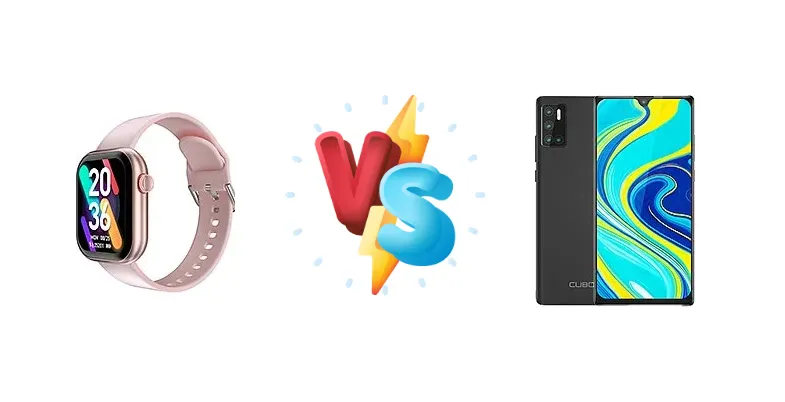
Cubot offers a range of affordable smartphones, and the C5 and P40 represent two points within their entry-level lineup. While specific details on the C5 are scarce, we can analyze the P40’s Mediatek Helio A22 chipset and 10W charging to understand the trade-offs and determine which device best suits your needs, particularly given the C5's unknown specifications.
🏆 Quick Verdict
For the average user prioritizing basic functionality and a known chipset, the Cubot P40 is the better choice. Its Mediatek Helio A22 provides a defined level of performance, while the C5 remains a mystery without detailed specifications. The P40’s 10W charging is also a known quantity.
| Network |
|---|
| 2G bands | N/A | GSM 850 / 900 / 1800 / 1900 |
| 3G bands | N/A | HSDPA 900 / 2100 |
| 4G bands | N/A | 1, 3, 7, 8, 19, 20 |
| EDGE | No | - |
| GPRS | No | - |
| Speed | No | HSPA, LTE |
| Technology | No cellular connectivity | GSM / HSPA / LTE |
| Launch |
|---|
| Announced | 2020. Released 2020 | 2020. Released 2020 |
| Status | Discontinued | Discontinued |
| Body |
|---|
| Dimensions | 43 x 43 x 10 mm (1.69 x 1.69 x 0.39 in) | 155 x 73 x 10 mm (6.10 x 2.87 x 0.39 in) |
| SIM | No | Nano-SIM + Nano-SIM |
| Weight | - | 184 g (6.49 oz) |
| Display |
|---|
| Protection | Scratch-resistant glass | - |
| Resolution | 240 x 280 pixels (~217 ppi density) | 720 x 1520 pixels, 19:9 ratio (~271 ppi density) |
| Size | 1.7 inches | 6.2 inches, 95.9 cm2 (~84.8% screen-to-body ratio) |
| Type | TFT LCD | IPS LCD |
| Platform |
|---|
| CPU | - | Quad-core 1.8 GHz Cortex-A53 |
| Chipset | - | Mediatek MT6761 Helio A22 (12 nm) |
| GPU | - | PowerVR GE8320 |
| OS | Proprietary OS | Android 10 |
| Memory |
|---|
| Card slot | No | microSDXC |
| Internal | 16MB | 128GB 4GB RAM |
| Main Camera |
|---|
| Features | - | LED flash |
| Triple | - | 12 MP, (wide), 1/2.9", PDAF
5 MP (macro)
Auxiliary lenses |
| Video | - | Yes |
| Selfie camera |
|---|
| Single | - | 20 MP |
| Video | - | Yes |
| Sound |
|---|
| 35mm jack | No | Unspecified |
| Loudspeaker | No | Yes |
| Comms |
|---|
| Bluetooth | 5.1, A2DP, LE | 4.2, A2DP |
| NFC | No | Yes |
| Positioning | No | GPS |
| Radio | No | Unspecified |
| USB | No | USB Type-C, OTG |
| WLAN | No | Wi-Fi 802.11 a/b/g/n |
| Features |
|---|
| Sensors | Accelerometer, gyro, heart rate | Accelerometer, gyro, proximity, compass |
| Battery |
|---|
| Charging | - | 10W wired |
| Type | 260 mAh | 4200 mAh, removable |
| Misc |
|---|
| Colors | Black, Pink | Blue, Black, Green |
Cubot C5
- Potentially lower price point (speculation)
- May offer a unique feature not found on the P40 (unknown)
- Could be more compact (speculation)
- Completely unknown specifications
- Uncertain performance and reliability
- Lack of information makes informed decision-making impossible
Cubot P40
- Known Mediatek Helio A22 chipset
- Predictable 10W charging
- Suitable for basic smartphone tasks
- Limited performance for demanding apps
- Basic camera capabilities
- Entry-level display quality
Display Comparison
Without display specifications for the Cubot C5, a direct comparison is impossible. The P40 likely features a standard LCD panel common in this price bracket. Expect 720p resolution and moderate brightness. The absence of information on the C5’s panel suggests it’s unlikely to offer features like high refresh rates or advanced color calibration found in more expensive devices. The P40’s display will be adequate for basic viewing, but don’t expect vibrant colors or excellent outdoor visibility.
Camera Comparison
Camera details for both devices are limited. The P40 likely features a basic camera setup, potentially with a single main sensor. The C5’s camera specifications are unknown. Given the price segment, image quality on both devices will be limited, especially in low-light conditions. Expect reliance on software processing to enhance images, but don’t anticipate flagship-level results. Without knowing the sensor size or aperture of either device, a meaningful comparison is impossible.
Performance
The Cubot P40’s Mediatek MT6761 Helio A22 (12 nm) chipset is the defining factor in its performance. The quad-core 1.8 GHz Cortex-A53 CPU is designed for efficiency rather than raw power. This means it’s suitable for everyday tasks like browsing, messaging, and light social media use. The C5, lacking any chipset information, is difficult to assess. However, given its likely price point, it’s probable that its processor is similarly entry-level, or potentially even less powerful. The 12nm process node of the Helio A22 offers a reasonable balance between performance and power consumption, though it won't compete with more modern chipsets.
Battery Life
The Cubot P40’s 10W wired charging is a standard offering in this price range. Expect a full charge to take several hours. Battery capacity for both devices is unknown, but given the focus on affordability, it’s likely to be in the 3000-4000 mAh range. The P40’s 10W charging provides a predictable charging experience, while the C5’s charging speed and battery capacity remain a mystery. The Helio A22’s efficiency should contribute to reasonable battery life on the P40, even with a smaller capacity.
Buying Guide
Buy the Cubot C5 if you need a smartphone for extremely basic tasks like calls and texts, and are willing to accept a completely unknown performance profile. It may be suitable for users who prioritize minimal cost above all else. Buy the Cubot P40 if you prefer a device with a known, albeit entry-level, processor capable of handling light multitasking and social media, and appreciate the certainty of 10W charging.
Frequently Asked Questions
❓ Is the Mediatek Helio A22 in the Cubot P40 capable of running popular social media apps like TikTok and Instagram?
Yes, the Helio A22 is sufficient for running most popular social media apps like TikTok and Instagram. However, expect some lag when multitasking or using the apps for extended periods. The processor is designed for light to moderate use, and these apps fall within that range.
❓ What type of charging cable does the Cubot P40 use, and is a fast charger compatible?
The Cubot P40 uses a Micro-USB charging cable. While you can technically use a charger with higher wattage, the phone will only draw 10W due to its charging limitations. Using a more powerful charger won't result in faster charging speeds.
❓ Given the lack of information on the Cubot C5, is it a risky purchase?
Yes, purchasing the Cubot C5 is a significantly riskier proposition. Without detailed specifications, you're essentially buying a phone without knowing its capabilities. The P40, while basic, offers the benefit of a known chipset and charging standard, reducing the uncertainty.