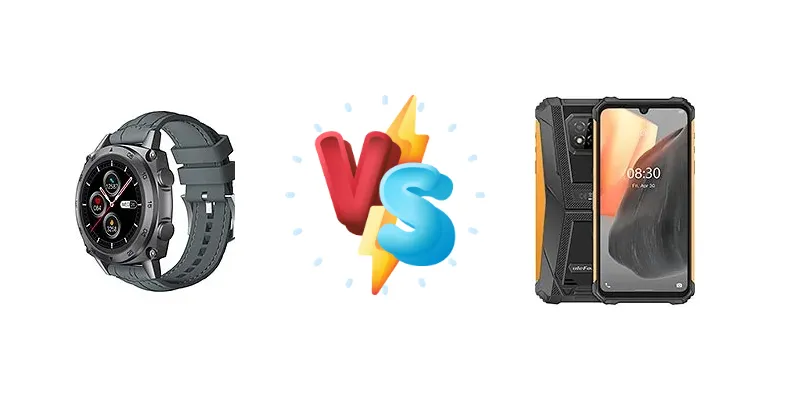
The smartphone market offers a wide spectrum of choices, from ultra-premium flagships to incredibly affordable options. We're pitting the Cubot C3, a device with limited publicly available specifications, against the Ulefone Armor 8 Pro, a known quantity in the rugged smartphone space. This comparison aims to determine which phone delivers the best value for users prioritizing either affordability or durability.
🏆 Quick Verdict
For the average user, the Ulefone Armor 8 Pro emerges as the stronger choice. While the Cubot C3's price point is likely attractive, the Armor 8 Pro's Mediatek Helio P60 chipset provides a demonstrably better performance profile, making it suitable for more demanding tasks and offering a longer software support lifespan. The ruggedized build is a significant bonus for outdoor enthusiasts.
| Network |
|---|
| 2G bands | N/A | GSM 850 / 900 / 1800 / 1900 |
| 3G bands | N/A | HSDPA 850 / 900 / 1700(AWS) / 1900 / 2100 |
| 4G bands | N/A | 1, 2, 3, 4, 5, 7, 8, 12, 13, 17, 18, 19, 20, 25, 26, 28, 66 |
| EDGE | No | - |
| GPRS | No | - |
| Speed | No | HSPA 42.2/11.5 Mbps, LTE Cat7 300/150 Mbps |
| Technology | No cellular connectivity | GSM / HSPA / LTE |
| Launch |
|---|
| Announced | 2020. Released 2020 | 2021, April 28 |
| Status | Discontinued | Available. Released 2021, April 28 |
| Body |
|---|
| Build | - | Front glass, aluminum back with rubber, aluminum frame |
| Dimensions | 46 x 46 x 14.8 mm (1.81 x 1.81 x 0.58 in) | 166 x 81.8 x 15 mm (6.54 x 3.22 x 0.59 in) |
| SIM | No | Nano-SIM + Nano-SIM |
| Weight | - | 282 g (9.95 oz) |
| | - | IP68 dust/water resistant (up to 1.5m for 30 min)
Drop-to-concrete resistance from up to 1.2m
MIL-STD-810G compliant |
| Display |
|---|
| Protection | Scratch-resistant glass | Scratch-resistant glass, oleophobic coating |
| Resolution | 240 x 240 pixels (~261 ppi density) | 720 x 1560 pixels, 19.5:9 ratio (~282 ppi density) |
| Size | 1.3 inches | 6.1 inches, 91.3 cm2 (~67.3% screen-to-body ratio) |
| Type | TFT LCD | IPS LCD |
| Platform |
|---|
| CPU | - | Octa-core (4x2.0 GHz Cortex-A73 & 4x2.0 GHz Cortex-A53) |
| Chipset | - | Mediatek MT6771 Helio P60 (12 nm) |
| GPU | - | Mali-G72 MP3 |
| OS | Proprietary OS | Android 11 |
| Memory |
|---|
| Card slot | No | microSDXC (uses shared SIM slot) |
| Internal | - | 128GB 6GB RAM, 128GB 8GB RAM |
| Main Camera |
|---|
| Features | - | LED flash, Panorama, HDR |
| Single | - | 8 MP, f/2.2 |
| Triple | - | 16 MP, f/2.2, (wide), PDAF
5 MP (macro)
Auxiliary lens |
| Video | - | 1080p@30fps |
| Selfie camera |
|---|
| Single | - | 8 MP, f/2.2 |
| Video | - | 1080p@30fps |
| Sound |
|---|
| 3.5mm jack | - | Yes |
| 35mm jack | No | Yes |
| Loudspeaker | No | Yes |
| Comms |
|---|
| Bluetooth | 5.1, A2DP, LE | 4.2, A2DP, LE |
| NFC | No | Yes |
| Positioning | No | GPS, GLONASS, GALILEO, BDS |
| Radio | No | FM radio, RDS, recording |
| USB | No | USB Type-C 2.0, OTG |
| WLAN | No | Wi-Fi 802.11 a/b/g/n/ac, Wi-Fi Direct |
| Features |
|---|
| Sensors | Accelerometer, gyro, heart rate | Fingerprint (side-mounted), accelerometer, gyro, proximity, compass |
| Battery |
|---|
| Charging | - | 15W wired |
| Type | 260 mAh | Li-Po 5580 mAh |
| Misc |
|---|
| Colors | Black, Gray | Black, Orange, Red |
| Price | - | About 190 EUR |
Cubot C3
- Likely very affordable price point
- Potentially compact form factor
- Basic smartphone functionality
- Unknown chipset and performance
- Limited camera capabilities (assumed)
- Lack of durability features
Ulefone Armor 8 Pro
- Ruggedized design for enhanced durability
- Mediatek Helio P60 provides solid performance
- Reliable battery life and 15W charging
- 15W charging is relatively slow
- May be bulkier than standard smartphones
- Camera performance is not flagship-level
Display Comparison
Without specific display details for the Cubot C3, a direct comparison is challenging. The Ulefone Armor 8 Pro likely features an IPS LCD panel, common in its price range. The absence of information regarding refresh rate, resolution, or brightness on the C3 suggests a more basic display experience. Users should expect the Armor 8 Pro to offer a more vibrant and potentially brighter viewing experience, though it won't compete with high-end OLED panels.
Camera Comparison
Given the lack of camera specifications for the Cubot C3, it's reasonable to assume a basic camera setup geared towards casual photography. The Ulefone Armor 8 Pro, while not boasting flagship-level camera hardware, offers a more defined imaging experience. The focus should be on the main sensor's capabilities, as auxiliary sensors (often 2MP macro lenses) provide limited practical benefit. Image processing will likely be more refined on the Armor 8 Pro due to the Helio P60's integrated image signal processor (ISP).
Performance
The Ulefone Armor 8 Pro's Mediatek Helio P60 chipset, built on a 12nm process, is the clear performance leader. Its octa-core configuration (4x2.0 GHz Cortex-A73 & 4x2.0 GHz Cortex-A53) provides a significant advantage over the likely entry-level processor found in the Cubot C3. The Helio P60's architecture allows for smoother multitasking and more responsive app loading times. While not a gaming powerhouse, it can handle moderate gaming loads. The Cubot C3, lacking any published chipset information, is expected to struggle with demanding applications.
Battery Life
The Ulefone Armor 8 Pro features 15W wired charging. Without battery capacity information for the Cubot C3, it's difficult to make a direct comparison. However, rugged phones often prioritize battery life, suggesting the Armor 8 Pro likely has a substantial battery capacity. The 15W charging, while not fast by modern standards, is adequate for overnight charging and should provide sufficient power for a full day of moderate use. The C3's charging speed and battery life are unknown, but likely to be less impressive.
Buying Guide
Buy the Cubot C3 if you need a basic smartphone for essential communication and light tasks, and your budget is extremely limited. Its appeal lies in being a functional device at the lowest possible price. Buy the Ulefone Armor 8 Pro if you prioritize durability, require a more capable processor for multitasking and occasional gaming, and value the peace of mind that comes with a ruggedized design. It's ideal for construction workers, outdoor adventurers, or anyone prone to dropping their phone.
Frequently Asked Questions
❓ Is the Ulefone Armor 8 Pro truly waterproof and dustproof, and what certifications does it have?
The Ulefone Armor 8 Pro is typically advertised with IP68 and IP69K certifications. IP68 signifies dust-tight protection and the ability to withstand immersion in up to 1.5 meters of freshwater for 30 minutes. IP69K indicates protection against close-range, high-pressure, high-temperature spray downs, making it suitable for demanding work environments.
❓ How well does the Helio P60 in the Ulefone Armor 8 Pro handle popular games like PUBG Mobile or Call of Duty Mobile?
The Helio P60 can run PUBG Mobile and Call of Duty Mobile, but you'll likely need to lower the graphics settings to medium or low to achieve a consistently smooth frame rate. Expect playable performance, but don't anticipate the same experience as on a flagship-level chipset. The phone's thermal management will also play a role; prolonged gaming sessions may lead to some throttling.
❓ What kind of software updates can I expect on the Ulefone Armor 8 Pro?
Ulefone's software update track record is not as consistent as larger brands. While the Armor 8 Pro likely launched with Android 9 or 10, updates to newer Android versions are not guaranteed. Expect security patches to be infrequent. The Helio P60 is a relatively mature chipset, so continued software support may be limited.