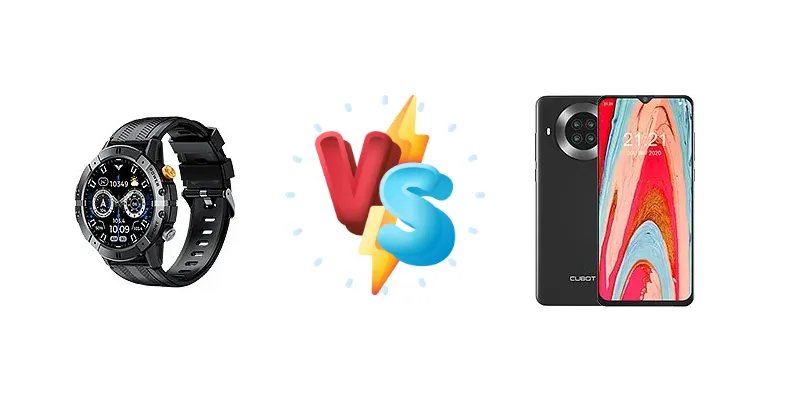
Cubot offers a range of affordable smartphones, and the C29 and Note 20 Pro represent different approaches within that segment. The Note 20 Pro, featuring the Mediatek Helio P60, aims for a balance of features and performance. The C29, lacking detailed specifications, likely targets the ultra-budget consumer, prioritizing affordability above all else. This comparison will dissect the known strengths of the Note 20 Pro and infer the C29's positioning based on typical market strategies.
🏆 Quick Verdict
For most users, the Cubot Note 20 Pro is the better choice. Its Mediatek Helio P60 chipset provides a significantly more capable processing experience than what the C29 likely offers, making it suitable for everyday tasks and even some light gaming. The C29 may appeal to those on the absolute tightest budget, but sacrifices performance for cost savings.
| Network |
|---|
| 2G bands | N/A | GSM 850 / 900 / 1800 / 1900 |
| 3G bands | N/A | HSDPA 900 / 2100 |
| 4G bands | N/A | 1, 3, 7, 8, 19, 20 |
| EDGE | No | - |
| GPRS | No | - |
| Speed | No | HSPA, LTE |
| Technology | No cellular connectivity | GSM / HSPA / LTE |
| Launch |
|---|
| Announced | 2024, August | 2020. Released 2020 |
| Status | Available. Released 2024, August | Discontinued |
| Body |
|---|
| Build | Zinc alloy/ Stainless steel frame, titanium bezel | - |
| Dimensions | 51.9 x 49.5 x 13.4 mm (2.04 x 1.95 x 0.53 in) | 162.8 x 75.4 x 9.1 mm (6.41 x 2.97 x 0.36 in) |
| SIM | No | Nano-SIM + Nano-SIM |
| Weight | 42.1 g (1.48 oz) | 200 g (7.05 oz) |
| Display |
|---|
| Resolution | 360 x 360 pixels (~335 ppi density) | 720 x 1600 pixels, 20:9 ratio (~270 ppi density) |
| Size | 1.52 inches | 6.5 inches, 102.0 cm2 (~83.1% screen-to-body ratio) |
| Type | TFT LCD | IPS LCD |
| Platform |
|---|
| CPU | - | Octa-core (4x2.0 GHz Cortex-A73 & 4x2.0 GHz Cortex-A53) |
| Chipset | - | Mediatek MT6771 Helio P60 (12 nm) |
| GPU | - | Mali-G72 MP3 |
| OS | Proprietary OS | Android 10 |
| Memory |
|---|
| Card slot | No | microSDXC (dedicated slot) |
| Internal | 128Mb | 128GB 8GB RAM |
| Main Camera |
|---|
| Features | - | LED flash |
| Quad | - | 12 MP, (wide), 1/2.9", AF
20 MP, (depth), 1/2.78"
Auxiliary lenses |
| Video | - | Yes |
| Selfie camera |
|---|
| Single | - | 8 MP |
| Video | - | Yes |
| Sound |
|---|
| 35mm jack | No | Yes |
| Loudspeaker | Yes | Yes |
| Comms |
|---|
| Bluetooth | 5.3, A2DP | 4.2, A2DP |
| NFC | No | Yes |
| Positioning | No | GPS |
| Radio | No | Unspecified |
| USB | No | microUSB, OTG |
| WLAN | No | Wi-Fi 802.11 a/b/g/n |
| Features |
|---|
| Sensors | Accelerometer, heart rate, SpO2, blood pressure | Accelerometer, gyro, proximity, compass |
| Battery |
|---|
| Type | 410 mAh | 4200 mAh, removable |
| Misc |
|---|
| Colors | Black | Black, Blue, Green |
Cubot C29
- Likely the most affordable option
- Potentially long battery life due to low-power processor
- Functional for basic smartphone tasks
- Significantly lower performance
- Inferior camera quality
- Limited software support
Cubot Note 20 Pro
- More powerful Mediatek Helio P60 processor
- Better multitasking and app performance
- Potentially more versatile camera system
- Higher price point
- May not offer significant improvements in battery life over C29
- Still a budget device with limitations
Display Comparison
Without specific display details for the C29, we can only compare based on assumptions. The Note 20 Pro's display quality is likely standard for its price range, potentially a 720p or 1080p IPS LCD. The C29 likely utilizes a lower-resolution panel to further reduce costs. The absence of information regarding refresh rates or panel technology on the C29 suggests a standard 60Hz experience, while the Note 20 Pro may or may not offer a higher refresh rate. Bezels are likely larger on the C29 to minimize manufacturing complexity.
Camera Comparison
The Note 20 Pro's camera specifications are unknown beyond the device itself. The C29's camera capabilities are entirely speculative. Given the budget nature of both devices, image quality will likely be average. The Note 20 Pro may feature a multi-camera setup, potentially including a main sensor, an ultrawide, and a depth sensor. The C29 likely relies on a single, lower-resolution main sensor. Image processing will be simpler on the C29, resulting in less dynamic range and detail. The presence of a dedicated GPU in the Note 20 Pro aids in image processing tasks.
Performance
The Cubot Note 20 Pro's Mediatek Helio P60 (MT6771) is a 12nm chipset featuring an octa-core CPU configuration – four Cortex-A73 cores clocked at 2.0 GHz and four Cortex-A53 cores also at 2.0 GHz. This architecture provides a decent balance between performance and power efficiency for everyday tasks. The C29, lacking chipset information, almost certainly uses a less powerful processor, likely a quad-core or older octa-core design. This translates to slower app loading times, less responsive multitasking, and a generally less fluid user experience. The Helio P60's integrated Mali-G72 MP3 GPU offers a noticeable advantage in graphics performance, enabling smoother gaming compared to what the C29 likely provides.
Battery Life
Battery capacity for both devices is unknown. However, the Helio P60 in the Note 20 Pro is a relatively power-efficient chipset, suggesting reasonable battery life. The C29's less powerful processor may also contribute to decent battery endurance, but a smaller battery capacity could negate this advantage. Charging wattage is also unknown for both devices, but the Note 20 Pro may support faster charging due to its more advanced chipset and potential for power delivery optimizations.
Buying Guide
Buy the Cubot C29 if you need a functional smartphone for basic communication – calls, texts, and light app usage – and your budget is extremely limited. You're prioritizing absolute affordability over performance and features. Buy the Cubot Note 20 Pro if you prefer a smoother user experience, the ability to run more demanding apps, and a more versatile camera system, even if it means spending a bit more. You value performance and features within a budget-friendly price range.
Frequently Asked Questions
❓ Is the Mediatek Helio P60 in the Note 20 Pro capable of playing modern mobile games?
The Helio P60 can handle many popular mobile games, but you'll likely need to lower graphics settings for more demanding titles like PUBG or Genshin Impact to maintain a smooth frame rate. It's not a gaming powerhouse, but it's a significant step up from the likely processor in the C29.
❓ How much storage does the Cubot Note 20 Pro offer, and is it expandable?
Storage capacity is currently unknown. However, many phones in this price range include microSD card slots for expandable storage, which is a valuable feature if you plan to store a lot of photos, videos, or apps. Check the product listing for confirmation.
❓ What Android version does the Cubot Note 20 Pro run, and will it receive software updates?
The Note 20 Pro likely ships with Android 11 or 12. Software update support from Cubot is typically limited, so don't expect frequent or long-term updates. The C29 will likely have even less support.