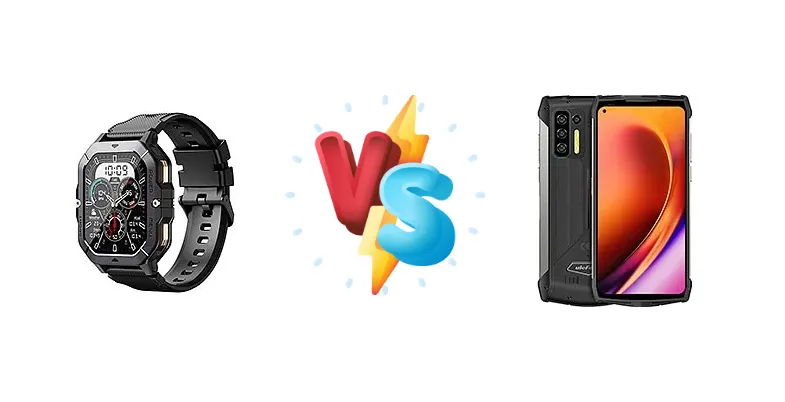
The rugged smartphone market caters to a specific user – those needing durability and extended battery life. We pit the Ulefone Power Armor 13, a known champion of endurance, against the Cubot C28, a device with limited publicly available specifications, to determine which offers the best value for those demanding a phone that can withstand the elements.
🏆 Quick Verdict
For users prioritizing proven battery life and a feature-rich experience, the Ulefone Power Armor 13 is the clear winner. Its 296-hour endurance rating, coupled with 33W wired and 15W wireless charging, significantly outperforms the Cubot C28, which lacks detailed specifications for a meaningful comparison.
| Network |
|---|
| 2G bands | N/A | GSM 850 / 900 / 1800 / 1900 |
| 3G bands | N/A | HSDPA 850 / 900 / 1700(AWS) / 1900 / 2100 |
| 4G bands | N/A | 1, 2, 3, 4, 5, 7, 8, 12, 13, 17, 18, 19, 20, 25, 26, 28, 38, 40, 66 |
| EDGE | No | - |
| GPRS | No | - |
| Speed | No | HSPA 42.2/11.5 Mbps, LTE Cat12 600/150 Mbps |
| Technology | No cellular connectivity | GSM / HSPA / LTE |
| Launch |
|---|
| Announced | 2024, August | 2021, July 22 |
| Status | Available. Released 2024, August | Available. Released 2021, July 26 |
| Body |
|---|
| Build | Zinc alloy frame | - |
| Dimensions | 58.3 x 46.1 x 13.3 mm (2.30 x 1.81 x 0.52 in) | 183.7 x 85.4 x 20.8 mm (7.23 x 3.36 x 0.82 in) |
| SIM | No | Nano-SIM + Nano-SIM |
| Weight | 44.5 g (1.59 oz) | 492 g (1.08 lb) |
| | - | IP68 dust/water resistant (up to 1.5m for 30 min)
Drop-to-concrete resistance from up to 1.2m
MIL-STD-810G compliant |
| Display |
|---|
| Protection | - | Corning Gorilla Glass 3 |
| Resolution | 320 x 390 pixels (~250 ppi density) | 1080 x 2400 pixels, 20:9 ratio (~386 ppi density) |
| Size | 2.02 inches | 6.81 inches, 112.0 cm2 (~71.4% screen-to-body ratio) |
| Type | TFT LCD | IPS LCD |
| Platform |
|---|
| CPU | - | Octa-core (2x2.05 GHz Cortex-A76 & 6x2.0 GHz Cortex-A55) |
| Chipset | - | Mediatek MT6785V/CD Helio G95 (12 nm) |
| GPU | - | Mali-G76 MC4 |
| OS | Proprietary OS | Android 11 |
| Memory |
|---|
| Card slot | No | microSDXC (uses shared SIM slot) |
| Internal | 128Mb | 256GB 8GB RAM |
| Main Camera |
|---|
| Features | - | Quad-LED flash, HDR, panorama |
| Penta | - | 48 MP, f/1.8, 26mm (wide), 1/2.0", 0.8µm, PDAF
8 MP, f/2.2, (ultrawide)
2 MP (macro)
Auxiliary lens |
| Video | - | 4K@30fps, 1080p@30fps |
| Selfie camera |
|---|
| Features | - | HDR, panorama |
| Single | - | 16 MP, f/2.2 |
| Video | - | 1080p@30fps |
| Sound |
|---|
| 3.5mm jack | - | Yes |
| 35mm jack | No | Yes |
| Loudspeaker | Yes | Yes |
| Comms |
|---|
| Bluetooth | Yes | 5.0, A2DP, LE |
| NFC | No | Yes |
| Positioning | No | GPS, GLONASS, GALILEO, BDS |
| Radio | No | FM radio, RDS, recording |
| USB | No | - |
| WLAN | No | Wi-Fi 802.11 a/b/g/n/ac, dual-band |
| Features |
|---|
| Sensors | Accelerometer, heart rate, SpO2, blood pressure | Fingerprint (side-mounted), accelerometer, gyro, proximity, compass, baroceptor, coulombmeter |
| | - | Infrared distance measure (error range: 1~20m, ±10mm; 20~40m, ±25mm) |
| Battery |
|---|
| Charging | - | 33W wired
15W wireless
5W reverse wireless |
| Type | 410 mAh | Li-Po 13200 mAh |
| Misc |
|---|
| Colors | Black, Green | Black |
| Price | - | About 300 EUR |
| Tests |
|---|
| Battery life | - |
Endurance rating 296h
|
| Camera | - |
Photo / Video |
| Display | - |
Contrast ratio: 1306:1 (nominal) |
| Loudspeaker | - |
-28.3 LUFS (Average)
|
| Performance | - |
AnTuTu: 294194 (v8), 351678 (v9)
GeekBench: 1610 (v5.1)
GFXBench: 18fps (ES 3.1 onscreen) |
Cubot C28
- Unknown specs may translate to a lower price point.
- Rugged design expected based on brand positioning.
- Lack of publicly available specifications.
- Performance and camera quality are uncertain.
Ulefone Power Armor 13
- Exceptional 296-hour battery life.
- Fast 33W wired and 15W wireless charging.
- Robust Mediatek Helio G95 processor.
- Display brightness is not exceptional.
- Camera specifications are not flagship-level.
Display Comparison
The Ulefone Power Armor 13 boasts a display with a measured peak brightness of 401 nits and a 1306:1 contrast ratio. While not class-leading, this provides adequate visibility outdoors. The Cubot C28’s display specifications are unavailable, making a direct comparison impossible. However, given its likely lower price point, it’s reasonable to expect a less vibrant and potentially lower-resolution panel. The contrast ratio of the Ulefone suggests a decent viewing experience, though it lacks modern features like LTPO for variable refresh rates.
Camera Comparison
Both devices list 'Photo / Video' capabilities, but lack specific details regarding sensor size, aperture, or image processing. The absence of detailed camera specs for the Cubot C28 is particularly concerning. The Ulefone Power Armor 13, while not a camera-focused device, likely benefits from Mediatek’s ISP (Image Signal Processor) within the Helio G95, offering reasonable image quality in good lighting conditions. The lack of information on the Cubot makes it difficult to assess its photographic capabilities, and it's likely to be a basic camera setup.
Performance
The Ulefone Power Armor 13 is powered by the Mediatek Helio G95 chipset, featuring an octa-core CPU configuration (2x2.05 GHz Cortex-A76 & 6x2.0 GHz Cortex-A55). This 12nm processor offers a solid mid-range performance, suitable for everyday tasks and moderate gaming. The Cubot C28’s processor is unknown. Without this information, assessing its performance capabilities is impossible. The G95 in the Ulefone benefits from a mature software ecosystem and optimization, potentially offering a smoother experience than an unknown chipset in the Cubot.
Battery Life
The Ulefone Power Armor 13 shines with an impressive endurance rating of 296 hours. This is coupled with versatile charging options: 33W wired, 15W wireless, and even 5W reverse wireless charging. The Cubot C28’s battery capacity and charging speeds are unknown. The Ulefone’s charging speeds are significantly faster than what is typically found in budget rugged phones, allowing for quicker top-ups. The reverse wireless charging is a useful feature for powering accessories in the field.
Buying Guide
Buy the Cubot C28 if you need a basic, potentially affordable rugged phone and are willing to accept limited information about its capabilities. Buy the Ulefone Power Armor 13 if you prioritize long-lasting battery life, fast charging (including wireless), and a more comprehensively specified feature set, even at a potentially higher price point. The Power Armor 13 is geared towards professionals and outdoor enthusiasts.
Frequently Asked Questions
❓ Given the Ulefone Power Armor 13's focus on battery life, how does it perform under sustained load, like GPS navigation and video recording?
The Ulefone Power Armor 13's large battery and efficient Helio G95 chipset allow for extended use with power-intensive applications. While the G95 isn't a flagship processor, it's well-suited for tasks like GPS navigation and 1080p video recording for several hours before requiring a recharge. Thermal throttling is unlikely to be a significant issue due to the chipset's 12nm process and the phone's rugged design, which provides ample space for heat dissipation.
❓ Is the Ulefone Power Armor 13's ruggedness certification (IP68/IP69K) truly meaningful, or is it just marketing?
The Ulefone Power Armor 13's IP68/IP69K certifications are genuinely meaningful. IP68 signifies dust-tight protection and the ability to withstand immersion in 1.5 meters of freshwater for up to 30 minutes. IP69K adds protection against close-range, high-pressure, high-temperature spray downs, making it suitable for demanding work environments. These certifications are independently verified, ensuring the phone can withstand harsh conditions.
❓ With limited information on the Cubot C28, what should a potential buyer look for in independent reviews before purchasing?
If considering the Cubot C28, prioritize reviews that specifically address battery life, display quality, and performance under load. Pay close attention to any tests involving drop resistance or water exposure to verify its ruggedness claims. Given the lack of official specifications, user feedback and independent testing are crucial for assessing its real-world capabilities.