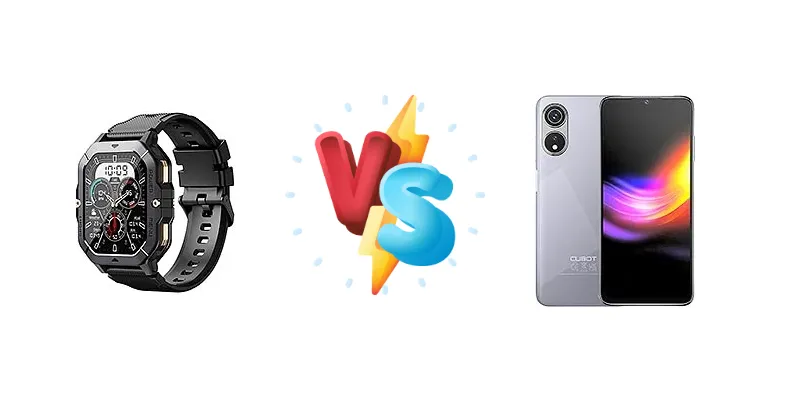
Cubot consistently targets the ultra-budget smartphone market, and the C28 and P60 represent two of their recent offerings. While both aim to deliver affordability, they differ significantly in internal hardware. This comparison focuses on the key distinctions, particularly the P60’s Mediatek Helio P35 chipset, to help you determine which device best suits your needs.
🏆 Quick Verdict
For most users, the Cubot P60 is the superior choice. Its Mediatek Helio P35 chipset provides a noticeable performance boost over the C28 (which lacks published specs), making it more capable for everyday tasks and light gaming. While the C28 may be cheaper, the P60’s improved processing power justifies the likely price difference.
| Network |
|---|
| 2G bands | N/A | GSM 850 / 900 / 1800 / 1900 |
| 3G bands | N/A | HSDPA 900 / 2100 |
| 4G bands | N/A | 1, 3, 5, 7, 8, 19, 20, 40 |
| EDGE | No | - |
| GPRS | No | - |
| Speed | No | HSPA, LTE |
| Technology | No cellular connectivity | GSM / HSPA / LTE |
| Launch |
|---|
| Announced | 2024, August | 2022 |
| Status | Available. Released 2024, August | Available. Released 2022 |
| Body |
|---|
| Build | Zinc alloy frame | - |
| Dimensions | 58.3 x 46.1 x 13.3 mm (2.30 x 1.81 x 0.52 in) | 165 x 76.3 x 9 mm (6.50 x 3.00 x 0.35 in) |
| SIM | No | Nano-SIM + Nano-SIM |
| Weight | 44.5 g (1.59 oz) | 198.6 g (7.02 oz) |
| Display |
|---|
| Resolution | 320 x 390 pixels (~250 ppi density) | 720 x 1600 pixels, 20:9 ratio (~269 ppi density) |
| Size | 2.02 inches | 6.52 inches, 102.6 cm2 (~81.5% screen-to-body ratio) |
| Type | TFT LCD | IPS LCD |
| Platform |
|---|
| CPU | - | Octa-core (4x2.35 GHz Cortex-A53 & 4x1.8 GHz Cortex-A53) |
| Chipset | - | Mediatek MT6765 Helio P35 (12 nm) |
| GPU | - | PowerVR GE8320 |
| OS | Proprietary OS | Android 12 |
| Memory |
|---|
| Card slot | No | microSDXC (uses shared SIM slot) |
| Internal | 128Mb | 128GB 6GB RAM |
| Main Camera |
|---|
| Dual | - | 20 MP, (wide), 1/2.8", 1.0µm
0.3 MP |
| Features | - | LED flash |
| Video | - | Yes |
| Selfie camera |
|---|
| Single | - | 8 MP |
| Video | - | Yes |
| Sound |
|---|
| 35mm jack | No | Unspecified |
| Loudspeaker | Yes | Yes |
| Comms |
|---|
| Bluetooth | Yes | 5.0, A2DP, LE |
| NFC | No | No |
| Positioning | No | GPS, GLONASS, GALILEO, BDS |
| Radio | No | Unspecified |
| USB | No | USB Type-C, OTG |
| WLAN | No | Wi-Fi 802.11 a/b/g/n |
| Features |
|---|
| Sensors | Accelerometer, heart rate, SpO2, blood pressure | Fingerprint (side-mounted), accelerometer, proximity |
| Battery |
|---|
| Type | 410 mAh | 5000 mAh |
| Misc |
|---|
| Colors | Black, Green | Black, White |
Cubot C28
- Potentially lower price point
- May be more compact due to simpler hardware
- Basic functionality for essential tasks
- Significantly lower performance
- Limited features and capabilities
- Unknown display and camera quality
Cubot P60
- Mediatek Helio P35 provides better performance
- More responsive user experience
- Potentially better camera performance (though still basic)
- Likely a slightly higher price
- Display quality is likely average
- Limited gaming capabilities
Display Comparison
Unfortunately, detailed display specifications for the Cubot C28 are unavailable. The Cubot P60’s display details are also limited, but we can infer it’s likely a standard IPS LCD panel given the price point. Without knowing the resolution, brightness, or color gamut of either device, a direct comparison is impossible. However, users should expect a basic viewing experience on both, prioritizing visibility over color accuracy or HDR support. The absence of information on PWM dimming frequency for both devices means we cannot assess potential eye strain.
Camera Comparison
Camera details for the Cubot C28 are scarce. The Cubot P60’s camera specifications are also limited, and it’s likely to feature a primary sensor paired with auxiliary lenses of questionable utility. Without knowing the megapixel count or aperture of the P60’s main sensor, it’s difficult to assess image quality. However, given the price bracket, users should expect average performance in good lighting conditions and significant noise in low-light scenarios. The inclusion of a 2MP macro camera on the P60 is unlikely to provide substantial benefit due to the low resolution and limited detail capture.
Performance
The core difference between these two devices lies in their processing power. The Cubot P60 is equipped with the Mediatek MT6765 Helio P35, a 12nm octa-core processor featuring four Cortex-A53 cores clocked at 2.35 GHz and another four at 1.8 GHz. This configuration provides a significant advantage over the unknown chipset in the C28. The Helio P35, while not a powerhouse, is capable of handling everyday tasks like browsing, social media, and basic app usage without significant lag. The C28, lacking published specs, likely utilizes a significantly less powerful chipset, resulting in a slower and less responsive user experience. The P60’s architecture, though older, benefits from the efficiency of the 12nm process, potentially offering better sustained performance than a less-efficient, older chipset in the C28.
Battery Life
Battery capacity for both the Cubot C28 and P60 are currently unknown. However, given their budget nature, it’s reasonable to assume both devices will feature batteries in the 4000-5000 mAh range. Charging wattage is also unspecified. Without this information, it’s impossible to determine which device offers better battery life or faster charging speeds. Users should anticipate needing to charge both devices daily with moderate usage.
Buying Guide
Buy the Cubot C28 if you absolutely need the lowest possible price and your smartphone usage is limited to basic communication – calls, texts, and very light app use. Buy the Cubot P60 if you want a more responsive experience for social media, web browsing, and occasional gaming, and are willing to spend a little more for improved performance. The P60 is the better option for anyone who doesn't want to constantly fight with lag.
Frequently Asked Questions
❓ Is the Mediatek Helio P35 in the Cubot P60 powerful enough for popular social media apps like TikTok and Instagram?
Yes, the Helio P35 is sufficient for running social media apps like TikTok and Instagram. While it won't deliver a flagship-level experience, it provides enough processing power for smooth scrolling, video playback, and basic editing. Expect some loading times for more demanding features, but overall, the P60 should handle these apps without significant issues.
❓ Given the limited information on the Cubot C28, is it a viable option for someone upgrading from a feature phone?
The Cubot C28 *could* be a viable option for someone upgrading from a feature phone, but only if their needs are extremely basic. If you primarily need a device for calls, texts, and occasional light browsing, the C28 might suffice. However, be prepared for a slow and potentially frustrating experience if you attempt to run more demanding apps. The P60 is a significantly better choice for a smoother transition to a smartphone.
❓ Can the Cubot P60 handle any mobile games, or is it strictly for basic tasks?
The Cubot P60 can handle some light mobile games, but don't expect to play graphically intensive titles at high settings. Games like Candy Crush or simple puzzle games should run without issue. More demanding games like PUBG Mobile or Call of Duty Mobile may be playable at the lowest settings with reduced frame rates. The Helio P35 is not a gaming chipset, so performance will be limited.