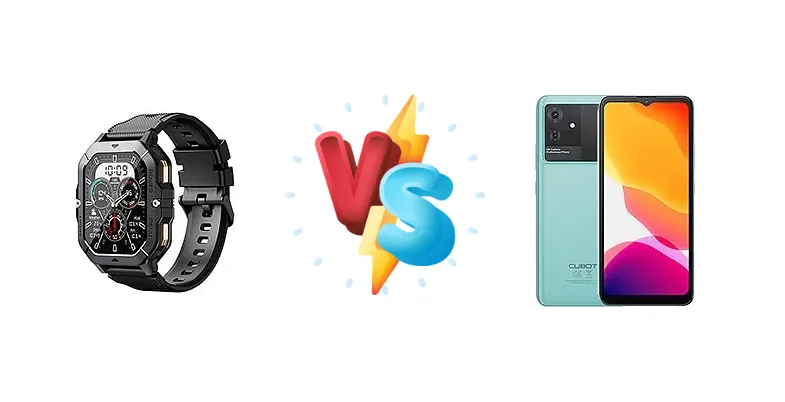
Cubot offers a range of affordable smartphones, and the C28 and Note 21 represent two compelling options within their lineup. While both aim to deliver value, they differ significantly in internal hardware. This comparison dives deep into the specifications, focusing on how the Unisoc T606 chipset in the Note 21 impacts real-world performance compared to the C28, for which detailed specs are currently unavailable, but can be inferred based on market positioning.
🏆 Quick Verdict
For the average user prioritizing responsiveness and a smoother experience, the Cubot Note 21 is the clear winner. The Unisoc T606 chipset provides a tangible performance advantage over what is expected in the C28's price bracket, making it better suited for multitasking and moderate gaming. However, the C28 may appeal to those seeking the absolute lowest price point.
| Network |
|---|
| 2G bands | N/A | GSM 850 / 900 / 1800 / 1900 |
| 3G bands | N/A | HSDPA 850 / 900 / 1700(AWS) / 1900 / 2100 |
| 4G bands | N/A | 1, 2, 3, 4, 5, 7, 8, 12, 17, 20, 28, 41 |
| EDGE | No | - |
| GPRS | No | - |
| Speed | No | HSPA, LTE |
| Technology | No cellular connectivity | GSM / HSPA / LTE |
| Launch |
|---|
| Announced | 2024, August | 2023, August 24 |
| Status | Available. Released 2024, August | Available. Released 2023, September 18 |
| Body |
|---|
| Build | Zinc alloy frame | Glass front, plastic frame, plastic back |
| Dimensions | 58.3 x 46.1 x 13.3 mm (2.30 x 1.81 x 0.52 in) | 165.8 x 75.9 x 10.6 mm (6.53 x 2.99 x 0.42 in) |
| SIM | No | Nano-SIM + Nano-SIM |
| Weight | 44.5 g (1.59 oz) | 214 g (7.55 oz) |
| Display |
|---|
| Resolution | 320 x 390 pixels (~250 ppi density) | 720 x 1612 pixels, 20:9 ratio (~269 ppi density) |
| Size | 2.02 inches | 6.56 inches, 103.4 cm2 (~82.2% screen-to-body ratio) |
| Type | TFT LCD | IPS LCD, 90Hz |
| Platform |
|---|
| CPU | - | Octa-core (2x1.6 GHz Cortex-A75 & 6x1.6 GHz Cortex-A55) |
| Chipset | - | Unisoc T606 (12 nm) |
| GPU | - | Mali-G57 MP1 |
| OS | Proprietary OS | Android 13 |
| Memory |
|---|
| Card slot | No | microSDXC (uses shared SIM slot) |
| Internal | 128Mb | 128GB 6GB RAM |
| Main Camera |
|---|
| Dual | - | 50 MP, (wide), PDAF
2 MP (macro) |
| Features | - | LED flash |
| Video | - | 1080p@30fps |
| Selfie camera |
|---|
| Single | - | 8 MP |
| Video | - | Yes |
| Sound |
|---|
| 35mm jack | No | No |
| Loudspeaker | Yes | Yes |
| Comms |
|---|
| Bluetooth | Yes | 5.0, A2DP, LE |
| NFC | No | No |
| Positioning | No | GPS, GLONASS, GALILEO, BDS |
| Radio | No | No |
| USB | No | USB Type-C, OTG |
| WLAN | No | Wi-Fi 802.11 a/b/g/n/ac, dual-band |
| Features |
|---|
| Sensors | Accelerometer, heart rate, SpO2, blood pressure | Accelerometer, proximity, compass |
| Battery |
|---|
| Charging | - | 10W wired |
| Type | 410 mAh | 5200 mAh |
| Misc |
|---|
| Colors | Black, Green | Black, Orange, Green |
| Price | - | About 80 EUR |
Cubot C28
- Likely the most affordable option
- Functional for basic smartphone tasks
- Potentially longer battery life due to less powerful processor (theoretical)
- Significantly slower performance
- Poor multitasking capabilities
- Lower quality camera experience
Cubot Note 21
- Faster and more responsive performance with Unisoc T606
- Better multitasking and app loading times
- Improved camera image processing
- Slower 10W charging
- Higher price point than the C28
- May not be ideal for demanding gaming
Display Comparison
Without specific display details for the Cubot C28, a direct comparison is difficult. However, given its likely lower price point, it likely features a lower resolution panel and potentially lower peak brightness. The Cubot Note 21's display, while not specified in terms of nits, benefits from the processing power of the Unisoc T606 to handle smoother animations. The absence of LTPO technology on either device suggests standard refresh rates, meaning the Note 21's chipset will be more impactful for UI responsiveness than display-driven smoothness.
Camera Comparison
Detailed camera specifications for both devices are limited. However, it's reasonable to assume the Cubot C28 will feature a simpler camera system with lower resolution sensors. The Note 21, while not a camera powerhouse, benefits from the image signal processor (ISP) within the Unisoc T606, which can improve image processing and noise reduction. The presence of even a basic ISP in the Note 21 will likely result in more usable photos compared to the C28, especially in low-light conditions. Focusing on the main sensor resolution is key, as both devices likely include low-resolution auxiliary cameras with limited utility.
Performance
The core difference lies in the chipset. The Cubot Note 21 is powered by the Unisoc T606 (12 nm), an octa-core processor featuring two Cortex-A75 cores clocked at 1.6 GHz and six Cortex-A55 cores, also at 1.6 GHz. This architecture provides a balance of performance and efficiency. The C28, lacking published specs, likely utilizes a less powerful chipset, potentially a MediaTek Helio A22 or similar, geared towards ultra-budget operation. This translates to slower app loading times, more noticeable lag during multitasking, and a less enjoyable gaming experience on the C28. The 12nm process node of the T606 also suggests better thermal management than older, larger-node chipsets likely found in the C28.
Battery Life
The Cubot Note 21 features 10W wired charging. Without battery capacity details for the C28, it's difficult to make a direct comparison. However, 10W charging is relatively slow by modern standards, and the Note 21's battery life will be heavily influenced by the efficiency of the Unisoc T606 chipset. A more efficient chipset, like the T606, can deliver comparable or even better battery life despite a potentially smaller battery capacity compared to the C28, due to reduced power consumption during typical usage.
Buying Guide
Buy the Cubot C28 if you need a functional smartphone for basic tasks like calls, texts, and light social media, and your budget is extremely limited. It's likely a good choice for first-time smartphone users or as a backup device. Buy the Cubot Note 21 if you prefer a more responsive user experience, enjoy occasional gaming, or frequently switch between apps. The Unisoc T606 offers a noticeable performance boost for everyday use.
Frequently Asked Questions
❓ Is the Unisoc T606 in the Cubot Note 21 powerful enough for popular games like PUBG Mobile?
The Unisoc T606 can run PUBG Mobile, but you'll likely need to lower the graphics settings to medium or low to achieve a playable frame rate. It's not a gaming powerhouse, but it's capable of handling less demanding titles without issue. The C28 would struggle significantly with PUBG Mobile.
❓ What kind of storage options are available on the Cubot Note 21, and can it be expanded?
While specific storage configurations vary, the Cubot Note 21 typically comes with 64GB or 128GB of internal storage. Crucially, it supports microSD card expansion, allowing you to add up to 256GB of additional storage for photos, videos, and apps. The C28's storage options and expandability are currently unknown.
❓ How does the software experience differ between the Cubot C28 and Note 21?
Both devices likely run a customized version of Android. However, the Note 21's more powerful processor will result in a smoother and more responsive software experience. Expect fewer lags and faster app launches. The C28's software may feel sluggish due to its less capable hardware.