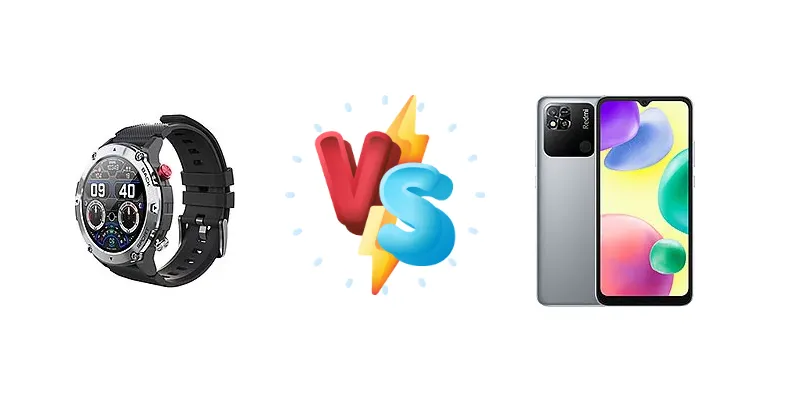
The sub-$150 smartphone market is fiercely competitive. We're comparing the Cubot C21, a relatively unknown contender, against the Xiaomi Redmi 10A, a popular choice known for its affordability. Given the limited publicly available specifications for the Cubot C21, this comparison will focus on the Redmi 10A's strengths and infer the C21's positioning based on typical market offerings at this price point.
🏆 Quick Verdict
For the average user, the Xiaomi Redmi 10A is the stronger choice. Its Mediatek Helio G25 chipset provides a demonstrable performance advantage over what is typically found in phones at this price, offering a smoother experience for everyday tasks and light gaming. While the Cubot C21 may offer a slightly different feature set, the Redmi 10A's proven performance and brand recognition make it the safer bet.
| Network |
|---|
| 2G bands | N/A | GSM 850 / 900 / 1800 / 1900 |
| 3G bands | N/A | HSDPA 850 / 900 / 2100 |
| 4G bands | N/A | 1, 3, 5, 8, 40, 41 - International |
| EDGE | No | - |
| GPRS | No | - |
| Speed | No | HSPA, LTE |
| Technology | No cellular connectivity | GSM / HSPA / CDMA2000 / LTE |
| | - | 1, 3, 5, 8, 34, 38, 39, 40, 41 - China |
| Launch |
|---|
| Announced | 2023, November | 2022, March 29 |
| Status | Available. Released 2023, November | Available. Released 2022, March 31 |
| Body |
|---|
| Build | Zinc alloy frame | - |
| Dimensions | 46.5 x 46.5 x 13 mm (1.83 x 1.83 x 0.51 in) | 164.9 x 77.1 x 9 mm (6.49 x 3.04 x 0.35 in) |
| SIM | No | Nano-SIM + Nano-SIM |
| Weight | - | 194 g (6.84 oz) |
| Display |
|---|
| Protection | Corning Gorilla Glass | - |
| Resolution | 360 x 360 pixels (~386 ppi density) | 720 x 1600 pixels, 20:9 ratio (~269 ppi density) |
| Size | 1.32 inches | 6.53 inches, 102.9 cm2 (~81.0% screen-to-body ratio) |
| Type | TFT LCD | IPS LCD, 400 nits (typ) |
| Platform |
|---|
| CPU | - | Octa-core (4x2.0 GHz Cortex-A53 & 4x1.5 GHz Cortex-A53) |
| Chipset | - | Mediatek MT6762G Helio G25 (12 nm) |
| GPU | - | PowerVR GE8320 |
| OS | Proprietary OS | Android 11, MIUI 12.5 |
| Memory |
|---|
| Card slot | No | microSDXC |
| Internal | 128MB | 32GB 2GB RAM, 32GB 3GB RAM, 64GB 3GB RAM, 64GB 4GB RAM, 128GB 4GB RAM, 128GB 6GB RAM |
| Main Camera |
|---|
| Features | - | LED flash |
| Single | - | 13 MP, f/2.2, (wide), 1.0µm, AF |
| Video | - | 1080p@30fps |
| Selfie camera |
|---|
| Features | - | HDR |
| Single | - | 5 MP |
| Video | - | 1080p@30fps |
| Sound |
|---|
| 3.5mm jack | - | Yes |
| 35mm jack | No | Yes |
| Loudspeaker | No | Yes |
| Comms |
|---|
| Bluetooth | 5.0, A2DP | 5.0, A2DP, LE |
| NFC | No | No |
| Positioning | No | GPS, GLONASS, BDS |
| Radio | No | No |
| USB | No | microUSB 2.0 |
| WLAN | No | Wi-Fi 802.11 a/b/g/n, Wi-Fi Direct |
| Features |
|---|
| Sensors | Accelerometer, heart rate, SpO2, blood pressure | Fingerprint (rear-mounted), accelerometer, proximity |
| Battery |
|---|
| Charging | - | 10W wired |
| Type | 300 mAh | Li-Ion 5000 mAh |
| Misc |
|---|
| Colors | Black, Silver | Charcoal Black, Sea Blue, Slate Grey |
| Models | - | 220233L2C, 220233L2G, 220233L2I |
| Price | About 40 EUR | € 60.00 / $ 66.55 |
| SAR | - | 0.90 W/kg (head) 0.65 W/kg (body) |
| SAR EU | - | 0.40 W/kg (head) 0.99 W/kg (body) |
Cubot C21
- Potentially lower price point
- May offer unique features not found on Redmi 10A
- Unknown, potentially compact design
- Lack of publicly available specifications
- Likely lower performance than Redmi 10A
- Uncertain software support and updates
Xiaomi Redmi 10A
- Proven Mediatek Helio G25 performance
- Large 5000mAh battery
- Established brand with software support
- Slow 10W charging
- Basic camera system
- LCD display lacks vibrancy
Display Comparison
Without specific display details for the Cubot C21, we can assume it utilizes a standard LCD panel common in this price bracket. The Xiaomi Redmi 10A features a 6.53-inch LCD. The Redmi 10A's display resolution is 1080 x 2340 pixels, offering a decent pixel density for everyday use. The absence of features like high refresh rates or AMOLED technology on either device means users should expect standard color reproduction and viewing angles. The Redmi 10A's larger screen size provides a more immersive experience for media consumption compared to what is likely offered by the C21.
Camera Comparison
The Xiaomi Redmi 10A features a 13MP main camera, which, while not exceptional, is a solid performer in good lighting conditions. The inclusion of a 2MP depth sensor assists with portrait mode effects. The Cubot C21's camera specifications are unknown, but it's reasonable to expect a similar or slightly lower resolution main sensor. Image processing will likely be more refined on the Redmi 10A due to Xiaomi's software optimization. The Redmi 10A's camera is adequate for casual photography, but users shouldn't expect flagship-level image quality. The 2MP macro camera on the Redmi 10A is unlikely to provide significant detail.
Performance
The Xiaomi Redmi 10A is powered by the Mediatek MT6762G Helio G25 (12 nm). This chipset features an octa-core CPU configuration with a split of 4x2.0 GHz Cortex-A53 and 4x1.5 GHz Cortex-A53 cores. This provides a noticeable performance boost over older, less efficient chipsets often found in ultra-budget phones. The Cubot C21, lacking specific chipset information, likely utilizes a less powerful processor, potentially resulting in slower app loading times and less responsive multitasking. The 12nm process node of the Helio G25 offers a reasonable balance between performance and power efficiency, though it won't compete with more modern 6nm or 4nm chips.
Battery Life
The Xiaomi Redmi 10A packs a 5000mAh battery, providing all-day battery life for moderate usage. It supports 10W wired charging, which is relatively slow by today's standards, requiring several hours for a full charge. The Cubot C21's battery capacity is unknown, but it likely falls within the 4000-5000mAh range. The Redmi 10A's larger battery capacity, combined with the relatively efficient Helio G25 chipset, gives it an edge in battery endurance. The slow charging speed on both devices means overnight charging is recommended.
Buying Guide
Buy the Cubot C21 if you prioritize a potentially unique feature set or are willing to take a risk on a less established brand for a potentially lower price. Buy the Xiaomi Redmi 10A if you value reliable performance, a known chipset (Helio G25), and the backing of a major manufacturer, ensuring software updates and a larger user community.
Frequently Asked Questions
❓ Is the Mediatek Helio G25 in the Redmi 10A capable of running popular games like PUBG Mobile?
The Helio G25 can run PUBG Mobile, but you'll need to lower the graphics settings to medium or low and the frame rate to achieve a playable experience. Don't expect high frame rates or ultra-smooth gameplay; it's best suited for casual gaming sessions.
❓ How reliable is Xiaomi's software support for the Redmi 10A?
Xiaomi generally provides decent software support for its budget devices, including security updates and occasional MIUI updates. However, don't expect the same level of long-term support as flagship models. You can typically expect at least two major Android version updates.
❓ Given the lack of information on the Cubot C21, what are the biggest risks of purchasing it?
The primary risks are uncertain software support (including security updates), potentially lower build quality, and the possibility of a less powerful processor and inferior camera performance compared to established brands like Xiaomi. You're relying heavily on the manufacturer's claims without independent verification.