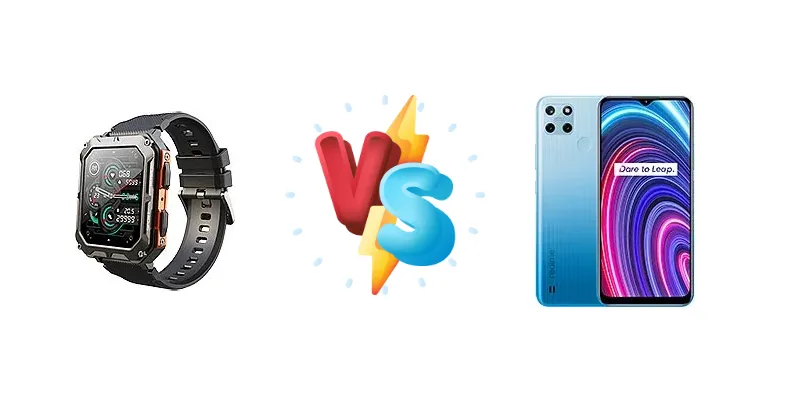
The sub-$150 smartphone market is fiercely competitive. We pit the Cubot C20 Pro against the Realme C25Y to determine which device offers the best value for users prioritizing affordability and essential smartphone functionality. The Realme C25Y enters with a known chipset, while the Cubot C20 Pro remains largely a spec sheet mystery, forcing us to rely on brand positioning and market trends.
🏆 Quick Verdict
For the average user, the Realme C25Y is the better choice. Its Unisoc T610 chipset provides a demonstrable performance boost over what we can reasonably expect from the Cubot C20 Pro, making it more responsive for daily tasks and light gaming. While the Cubot C20 Pro may offer a competitive price, performance is paramount at this level.
| Network |
|---|
| 2G bands | N/A | GSM 850 / 900 / 1800 / 1900 |
| 3G bands | N/A | HSDPA 850 / 900 / 2100 |
| 4G bands | N/A | 1, 3, 5, 8, 38, 40, 41 |
| EDGE | No | - |
| GPRS | No | - |
| Speed | No | HSPA, LTE |
| Technology | No cellular connectivity | GSM / HSPA / LTE |
| Launch |
|---|
| Announced | 2023, November | 2021, September 16 |
| Status | Available. Released 2023, November | Available. Released 2021, September 30 |
| Body |
|---|
| Build | - | Glass front, plastic back, plastic frame |
| Dimensions | 54 x 43 x 12.9 mm (2.13 x 1.69 x 0.51 in) | 164.5 x 76 x 9.1 mm (6.48 x 2.99 x 0.36 in) |
| SIM | No | Nano-SIM + Nano-SIM |
| Weight | - | 200 g (7.05 oz) |
| Display |
|---|
| Resolution | 240 x 286 pixels (~206 ppi density) | 720 x 1600 pixels, 20:9 ratio (~270 ppi density) |
| Size | 1.81 inches | 6.5 inches, 102.0 cm2 (~81.6% screen-to-body ratio) |
| Type | TFT LCD | IPS LCD, 420 nits (typ) |
| Platform |
|---|
| CPU | - | Octa-core (2x1.8 GHz Cortex-A75 & 6x1.8 GHz Cortex-A55) |
| Chipset | - | Unisoc T610 (12 nm) |
| GPU | - | Mali-G52 MP2 |
| OS | Proprietary OS | Android 11, Realme UI R |
| Memory |
|---|
| Card slot | No | microSDXC (dedicated slot) |
| Internal | 128MB | 64GB 4GB RAM, 128GB 4GB RAM, 128GB 6GB RAM |
| | - | eMMC 5.1 |
| Main Camera |
|---|
| Features | - | LED flash, HDR, panorama |
| Single | - | 8 MP, f/2.0, 26mm (wide), 1/4.0", 1.12µm |
| Triple | - | 50 MP, f/1.8, 26mm (wide), PDAF
2 MP (macro)
Auxiliary lens |
| Video | - | 1080p@30fps |
| Selfie camera |
|---|
| Features | - | HDR |
| Single | - | 8 MP, f/2.0, 26mm (wide), 1/4.0", 1.12µm |
| Video | - | 720p@30fps |
| Sound |
|---|
| 3.5mm jack | - | Yes |
| 35mm jack | No | Yes |
| Loudspeaker | No | Yes |
| Comms |
|---|
| Bluetooth | 5.0, A2DP | 5.0, A2DP, LE |
| NFC | No | No |
| Positioning | No | GPS, GLONASS, BDS |
| Radio | No | Unspecified |
| USB | No | microUSB 2.0 |
| WLAN | No | Wi-Fi 802.11 b/g/n |
| Features |
|---|
| Sensors | Accelerometer, heart rate, SpO2, blood pressure | Fingerprint (rear-mounted), accelerometer, proximity, compass |
| Battery |
|---|
| Charging | - | 18W wired |
| Type | 380 mAh | 5000 mAh |
| Misc |
|---|
| Colors | Gray, Orange | Glacier Blue, Metal Gray |
| Models | - | RMX3265, RMX3268, RMX3269 |
| Price | About 50 EUR | About 140 EUR |
Cubot C20 Pro
- Potentially lower price point
- May include features not found on the Realme C25Y (depending on configuration)
- Could offer a unique design aesthetic
- Likely inferior performance
- Uncertain software support and updates
- Potentially lower build quality
Realme C25Y
- Unisoc T610 chipset offers better performance
- 18W fast charging
- More established brand with better software support
- May be slightly more expensive
- Basic camera system
- LCD display isn't the most vibrant
Display Comparison
Without specific display details for the Cubot C20 Pro, we can only assume it utilizes a standard LCD panel common in this price bracket. The Realme C25Y likely features a similar LCD, but the focus here isn't on panel technology; it's on the chipset's ability to drive it smoothly. Bezels are likely substantial on both devices, and color accuracy will be basic. The Realme C25Y's chipset will likely provide a more consistent frame rate during scrolling and video playback.
Camera Comparison
Given the price point, both devices will feature basic camera setups. The Realme C25Y likely has a more refined image processing pipeline thanks to Realme’s software optimizations. We can anticipate the Cubot C20 Pro relying on basic computational photography, potentially resulting in less dynamic range and detail in photos. The presence of a 2MP macro camera on the Realme C25Y is largely a marketing gimmick; its utility is limited by the low resolution and lack of optical image stabilization. The Realme C25Y’s main sensor, even if modest, will likely benefit from the T610’s image signal processor (ISP).
Performance
The Realme C25Y’s Unisoc T610 (12 nm) is the clear performance leader. Its octa-core configuration, featuring two Cortex-A75 cores clocked at 1.8 GHz and six Cortex-A55 cores, provides a significant advantage over the likely MediaTek Helio A22 or similar found in the Cubot C20 Pro. The T610’s 12nm process node, while not cutting-edge, offers a reasonable balance of power and efficiency. This translates to faster app loading times, smoother multitasking, and a more responsive user interface on the Realme C25Y. The Cubot C20 Pro, lacking detailed specs, is likely to struggle with demanding applications.
Battery Life
The Realme C25Y’s 18W wired charging is a notable advantage. While battery capacity isn’t specified for the Cubot C20 Pro, it’s likely around 5000mAh, similar to the Realme C25Y. However, the faster charging speed of the Realme C25Y means less time tethered to a wall outlet. A full charge on the Realme C25Y should take around 2-3 hours, while the Cubot C20 Pro could take considerably longer. The Unisoc T610’s efficiency also contributes to potentially better battery life during moderate usage on the Realme C25Y.
Buying Guide
Buy the Cubot C20 Pro if you absolutely need the lowest possible price and are willing to compromise on performance and potentially software support. It's suited for users who primarily need a device for basic communication and minimal app usage. Buy the Realme C25Y if you prioritize a smoother user experience, better multitasking capabilities, and a more reliable chipset, even if it means spending slightly more. This phone is ideal for students, seniors, or anyone needing a dependable daily driver.
Frequently Asked Questions
❓ Is the Unisoc T610 in the Realme C25Y capable of handling popular games like PUBG Mobile?
The Unisoc T610 can run PUBG Mobile, but you'll likely need to lower the graphics settings to medium or low to achieve a playable frame rate. Don't expect a consistently smooth experience, especially in intense firefights. The Cubot C20 Pro, with its likely weaker chipset, will struggle even more with demanding games.
❓ How reliable is Realme's software support for the C25Y compared to Cubot's updates?
Realme generally provides more consistent software updates and security patches than Cubot. While the C25Y won't receive major Android version updates for years, you can expect regular security updates, improving the device's longevity and security. Cubot's update track record is less predictable.
❓ What type of charging port does the Realme C25Y use?
The Realme C25Y uses a micro-USB port for charging and data transfer. While not as modern as USB-C, it's standard for devices in this price range. The Cubot C20 Pro likely also uses micro-USB.