
Cat S62 vs. Motorola Defy 2: A Deep Dive into Rugged Smartphone Performance
| Phones Images | |||||
|---|---|---|---|---|---|
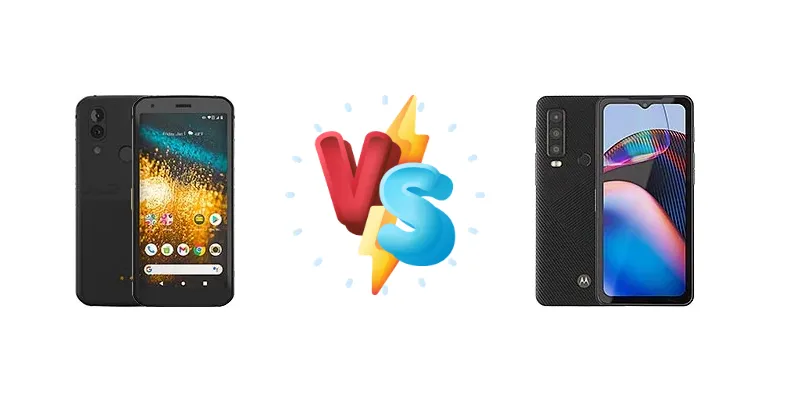
|
🏆 Quick Verdict
For the average user prioritizing future-proofing and sustained performance, the Motorola Defy 2 is the stronger choice. Its Dimensity 930 chipset, built on a 6nm process, offers a significant performance uplift and improved power efficiency compared to the Cat S62’s older Snapdragon 660. While the S62 offers wireless charging, the Defy 2’s overall package is more compelling.
| PHONES | ||
|---|---|---|
| Phone Names | Cat S62 | Motorola Defy 2 |
| Network | ||
|---|---|---|
| 2G bands | GSM 850 / 900 / 1800 / 1900 | GSM 850 / 900 / 1800 / 1900 |
| 3G bands | HSDPA 850 / 900 / 1700(AWS) / 1900 / 2100 | HSDPA 850 / 900 / 1700(AWS) / 1900 / 2100 |
| 4G bands | 1, 2, 3, 4, 5, 7, 8, 12, 13, 14, 17, 20, 25, 26, 28, 38, 39, 40, 41, 66, 71 | 1, 2, 3, 4, 5, 7, 8, 12, 13, 14, 17, 20, 25, 26, 28, 30, 38, 40, 41, 46, 48, 66, 71 |
| 5G bands | - | 2, 5, 23, 25, 26, 28, 38, 41, 48, 66, 70, 71, 77, 78, 255, 256 SA/NSA/Sub6/mmWave |
| Speed | HSPA 42.2/5.76 Mbps, LTE Cat12 600/150 Mbps | HSPA, LTE, 5G |
| Technology | GSM / CDMA / HSPA / EVDO / LTE | GSM / HSPA / LTE / 5G |
| CDMA2000 1xEV-DO | - | |
| Launch | ||
|---|---|---|
| Announced | 2021, June 18 | 2023, February 24 |
| Status | Available. Released 2021, June 18 | Available. Released 2023, October |
| Body | ||
|---|---|---|
| Build | Glass front (Gorilla Glass 6), plastic back, aluminum frame | Glass front (Gorilla Glass Victus), plastic back, aluminum frame |
| Dimensions | 157.5 x 76.2 x 12.7 mm (6.20 x 3.00 x 0.5 in) | 171 x 80 x 11.9 mm (6.73 x 3.15 x 0.47 in) |
| SIM | Nano-SIM | Nano-SIM + Nano-SIM |
| Weight | 260 g (9.17 oz) | 268 g (9.45 oz) |
| IP68/IP69 dust/water resistant (up to 1.5m for 35 min) Drop-to-concrete resistance from up to 1.8m MIL-STD-810H compliant | IP68/IP69 dust/water resistant (up to 5m for 35 min) Drop-to-concrete resistance from up to 1.8m MIL-STD-810H compliant | |
| Display | ||
|---|---|---|
| Protection | Corning Gorilla Glass 6 | Corning Gorilla Glass Victus |
| Resolution | 1080 x 2160 pixels, 18:9 ratio (~424 ppi density) | 1080 x 2408 pixels, 20:9 ratio (~400 ppi density) |
| Size | 5.7 inches, 83.8 cm2 (~69.9% screen-to-body ratio) | 6.6 inches, 104.9 cm2 (~76.7% screen-to-body ratio) |
| Type | IPS LCD | IPS LCD, 120Hz |
| Platform | ||
|---|---|---|
| CPU | Octa-core (4x2.2 GHz Kryo 260 Gold & 4x1.8 GHz Kryo 260 Silver) | Octa-core (2x2.2 GHz Cortex-A78 & 6x2.0 GHz Cortex-A55) |
| Chipset | Qualcomm SDM660 Snapdragon 660 (14 nm) | Mediatek Dimensity 930 (6 nm) |
| GPU | Adreno 512 | IMG BXM-8-256 |
| OS | Android 10, upgradable to Android 11 | Android 12 |
| Memory | ||
|---|---|---|
| Card slot | microSDXC (dedicated slot) | microSDXC (uses shared SIM slot) |
| Internal | 128GB 4GB RAM | 128GB 6GB RAM |
| Main Camera | ||
|---|---|---|
| Dual | 48 MP, (wide), PDAF 2 MP | - |
| Features | LED flash, HDR, panorama | Dual-LED flash, HDR, panorama |
| Triple | - | 50 MP, f/1.8, (wide), PDAF 8 MP, f/2.2, (ultrawide) 2 MP (macro) |
| Video | 4K@30fps, 1080p@30fps | 1080p@30fps |
| Selfie camera | ||
|---|---|---|
| Single | 8 MP | 8 MP, f/2.0, (wide) |
| Video | 1080p@30fps | 1080p@30fps |
| Sound | ||
|---|---|---|
| 3.5mm jack | Yes | No |
| 35mm jack | Yes | No |
| Loudspeaker | Yes | Yes |
| Comms | ||
|---|---|---|
| Bluetooth | 5.0, A2DP, LE | 5.1, A2DP, LE |
| NFC | Yes | Yes |
| Positioning | GPS, GLONASS, GALILEO, BDS | GPS (L1+L5), GLONASS, GALILEO, BDS |
| Radio | FM radio | Unspecified |
| USB | USB Type-C 2.0, OTG | USB Type-C 2.0, OTG |
| WLAN | Wi-Fi 802.11 a/b/g/n/ac, dual-band, Wi-Fi Direct | Wi-Fi 802.11 a/b/g/n/ac, dual-band |
| Features | ||
|---|---|---|
| Sensors | Fingerprint (rear-mounted), accelerometer, gyro, proximity, compass | Fingerprint (rear-mounted), accelerometer, gyro, proximity, compass |
| - | Emergency SOS via satellite (Bullitt Satellite Connect service) | |
| Battery | ||
|---|---|---|
| Charging | Wireless QC4 | 15W wireless |
| Type | Li-Ion 4000 mAh | Li-Po 5000 mAh |
| Misc | ||
|---|---|---|
| Colors | Black | Black |
| Models | - | BM1S1B |
| Price | About 440 EUR | About 570 EUR |
Cat S62
- Wireless Charging (QC4) provides convenient power replenishment.
- Established platform with potentially more mature software support.
- Rugged design built for demanding environments.
- Older Snapdragon 660 chipset limits performance and efficiency.
- 14nm process leads to higher heat generation and shorter battery life.
- Likely utilizes an older display technology.
Motorola Defy 2
- MediaTek Dimensity 930 offers significantly improved performance and efficiency.
- 6nm process reduces heat and extends battery life.
- More modern chipset with advanced ISP for better image processing.
- Lacks wireless charging, relying on wired charging only.
- Software support may be less mature compared to the Cat S62.
- Potentially less established brand reputation in the rugged phone market.
Display Comparison
Neither device’s display specifications are provided, so a direct comparison is limited. However, given the Cat S62’s age, it likely utilizes an older LCD panel. The Motorola Defy 2, being a more recent release, likely benefits from a more modern panel technology, potentially AMOLED, offering superior contrast and color accuracy. The absence of refresh rate data suggests neither phone targets high-refresh-rate gaming, focusing instead on durability and battery conservation. Bezels are likely substantial on both, prioritizing screen protection over a modern edge-to-edge design.
Camera Comparison
Without detailed camera specifications, a precise comparison is difficult. However, the chipset difference suggests the Defy 2 benefits from a more advanced image signal processor (ISP). This translates to better noise reduction, dynamic range, and overall image quality. The S62’s Snapdragon 660 ISP is capable, but it lacks the computational photography capabilities of the Dimensity 930. The presence of a 2MP macro camera on either device is likely a marketing gimmick, offering limited practical benefit due to the small sensor size and lack of optical image stabilization (OIS).
Performance
The core difference lies in the chipsets. The Motorola Defy 2’s MediaTek Dimensity 930 (6nm) is a substantial upgrade over the Cat S62’s Qualcomm Snapdragon 660 (14nm). The 6nm process node allows for greater transistor density and improved power efficiency, translating to less heat generation and longer battery life under load. While both CPUs feature octa-core configurations, the Defy 2’s Cortex-A78 cores offer significantly higher single-core performance than the S62’s Kryo 260 Gold cores. This impacts responsiveness in everyday tasks and improves gaming performance. The S62’s older architecture will likely exhibit more noticeable throttling during sustained workloads.
Battery Life
Battery capacity isn’t specified for either device, making a direct mAh comparison impossible. However, the Dimensity 930’s superior power efficiency gives the Defy 2 a significant advantage in real-world battery life. While the Cat S62 offers wireless charging (QC4), the Defy 2 includes 15W wireless charging. The Snapdragon 660’s 14nm process will consume more power, requiring more frequent charging. The Defy 2’s more efficient chipset will likely offset any potential capacity disadvantage.
Buying Guide
Buy the Cat S62 if you need a device with established software support and wireless charging is a must-have, and you’re comfortable with a chipset that’s several generations old. Buy the Motorola Defy 2 if you prioritize modern performance, efficient power usage, and a more responsive user experience, even if it means sacrificing wireless charging and relying on a slightly less mature software ecosystem.