
Cat S53 vs. Motorola Defy 2: A Deep Dive into Rugged Smartphone Performance
| Phones Images | |||||
|---|---|---|---|---|---|
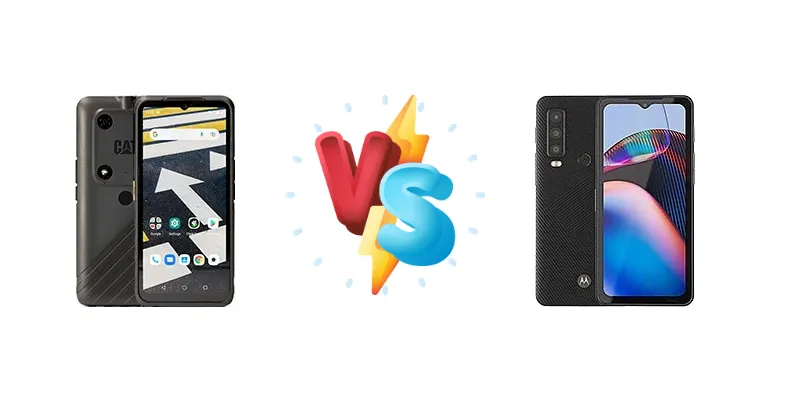
|
🏆 Quick Verdict
For the average user prioritizing raw performance and future-proofing, the Motorola Defy 2 is the clear winner. Its Dimensity 930 chipset, built on a more efficient 6nm process, offers a significant performance advantage over the Cat S53’s Snapdragon 480. However, the Cat S53’s wireless charging is a notable convenience feature.
| PHONES | ||
|---|---|---|
| Phone Names | Cat S53 | Motorola Defy 2 |
| Network | ||
|---|---|---|
| 2G bands | GSM 850 / 900 / 1800 / 1900 | GSM 850 / 900 / 1800 / 1900 |
| 3G bands | HSDPA 800 / 850 / 900 / 1700(AWS) / 1900 / 2100 | HSDPA 850 / 900 / 1700(AWS) / 1900 / 2100 |
| 4G bands | 1, 2, 3, 4, 5, 7, 8, 12, 13, 17, 18, 19, 20, 25, 26, 28, 34, 38, 39, 40, 41, 66 | 1, 2, 3, 4, 5, 7, 8, 12, 13, 14, 17, 20, 25, 26, 28, 30, 38, 40, 41, 46, 48, 66, 71 |
| 5G bands | 1, 2, 3, 5, 7, 8, 28, 41, 66, 77, 78 | 2, 5, 23, 25, 26, 28, 38, 41, 48, 66, 70, 71, 77, 78, 255, 256 SA/NSA/Sub6/mmWave |
| Speed | HSPA, LTE | HSPA, LTE, 5G |
| Technology | GSM / HSPA / LTE / 5G | GSM / HSPA / LTE / 5G |
| Launch | ||
|---|---|---|
| Announced | 2022, July 19 | 2023, February 24 |
| Status | Available. Released 2022, July 19 | Available. Released 2023, October |
| Body | ||
|---|---|---|
| Build | - | Glass front (Gorilla Glass Victus), plastic back, aluminum frame |
| Dimensions | 171 x 81 x 16 mm (6.73 x 3.19 x 0.63 in) | 171 x 80 x 11.9 mm (6.73 x 3.15 x 0.47 in) |
| SIM | Nano-SIM + Nano-SIM | Nano-SIM + Nano-SIM |
| Weight | 320 g (11.29 oz) | 268 g (9.45 oz) |
| IP68/IP69K dust/water resistant (up to 1.5m for 35 min) Drop-to-concrete resistance from up to 1.8m MIL-STD-810H compliant Dedicated flashlight | IP68/IP69 dust/water resistant (up to 5m for 35 min) Drop-to-concrete resistance from up to 1.8m MIL-STD-810H compliant | |
| Display | ||
|---|---|---|
| Protection | - | Corning Gorilla Glass Victus |
| Resolution | 720 x 1600 pixels, 20:9 ratio (~270 ppi density) | 1080 x 2408 pixels, 20:9 ratio (~400 ppi density) |
| Size | 6.5 inches, 102.0 cm2 (~73.6% screen-to-body ratio) | 6.6 inches, 104.9 cm2 (~76.7% screen-to-body ratio) |
| Type | IPS LCD | IPS LCD, 120Hz |
| Platform | ||
|---|---|---|
| CPU | Octa-core (2x2.0 GHz Kryo 460 & 6x1.8 GHz Kryo 460) | Octa-core (2x2.2 GHz Cortex-A78 & 6x2.0 GHz Cortex-A55) |
| Chipset | Qualcomm SM4350 Snapdragon 480 5G (8 nm) | Mediatek Dimensity 930 (6 nm) |
| GPU | Adreno 619 | IMG BXM-8-256 |
| OS | Android 11 | Android 12 |
| Memory | ||
|---|---|---|
| Card slot | microSDXC (uses shared SIM slot) | microSDXC (uses shared SIM slot) |
| Internal | 128GB 6GB RAM | 128GB 6GB RAM |
| Main Camera | ||
|---|---|---|
| Dual | 48 MP, f/1.8, (wide) 2 MP (macro) | - |
| Features | LED flash | Dual-LED flash, HDR, panorama |
| Single | 16 MP, f/2.0 | - |
| Triple | - | 50 MP, f/1.8, (wide), PDAF 8 MP, f/2.2, (ultrawide) 2 MP (macro) |
| Video | 1080p@30fps | 1080p@30fps |
| Selfie camera | ||
|---|---|---|
| Single | 16 MP, f/2.0 | 8 MP, f/2.0, (wide) |
| Video | 1080p@30fps | 1080p@30fps |
| Sound | ||
|---|---|---|
| 3.5mm jack | Yes | No |
| 35mm jack | Yes | No |
| Loudspeaker | Yes | Yes |
| Comms | ||
|---|---|---|
| Bluetooth | 5.1, A2DP, LE | 5.1, A2DP, LE |
| NFC | Yes | Yes |
| Positioning | GPS | GPS (L1+L5), GLONASS, GALILEO, BDS |
| Radio | No | Unspecified |
| USB | USB Type-C 3.0, OTG | USB Type-C 2.0, OTG |
| WLAN | Wi-Fi 802.11 a/b/g/n/ac, dual-band | Wi-Fi 802.11 a/b/g/n/ac, dual-band |
| Features | ||
|---|---|---|
| Sensors | Fingerprint (rear-mounted), accelerometer | Fingerprint (rear-mounted), accelerometer, gyro, proximity, compass |
| - | Emergency SOS via satellite (Bullitt Satellite Connect service) | |
| Battery | ||
|---|---|---|
| Charging | Wireless | 15W wireless |
| Type | Li-Po 5500 mAh | Li-Po 5000 mAh |
| Misc | ||
|---|---|---|
| Colors | Black | Black |
| Models | - | BM1S1B |
| Price | About 530 EUR | About 570 EUR |
Cat S53
- Wireless charging offers convenient top-ups.
- Rugged design provides excellent drop and shock protection.
- Qualcomm chipset offers reliable 5G connectivity.
- Snapdragon 480 is less powerful than the Dimensity 930.
- 8nm process is less efficient, potentially impacting battery life.
Motorola Defy 2
- Dimensity 930 provides significantly faster performance.
- 6nm process offers improved power efficiency.
- Potentially better camera capabilities due to more advanced ISP.
- Lacks wireless charging.
- 15W wireless charging is relatively slow.
Display Comparison
Display specifications are not provided, so a direct comparison is limited. However, given the market segment, both likely utilize LCD panels. The Motorola Defy 2, benefiting from a more modern chipset, may have access to more advanced display controllers, potentially leading to better color accuracy and viewing angles. The Cat S53, being a more budget-focused option, may prioritize durability over display quality.
Camera Comparison
Camera details are absent, but we can infer some differences. Given the Defy 2’s positioning, it likely features a more sophisticated camera system with a larger sensor and improved image processing capabilities. The Snapdragon 480’s ISP is capable, but the Dimensity 930’s ISP is generally more advanced, offering better noise reduction and dynamic range. The Cat S53 will likely focus on providing a functional camera for documentation purposes, while the Defy 2 aims for more versatile photography.
Performance
The core difference lies in the chipsets. The Motorola Defy 2’s MediaTek Dimensity 930 (6nm) boasts a significant architectural advantage over the Cat S53’s Qualcomm Snapdragon 480 5G (8nm). The Dimensity 930’s Cortex-A78 cores, clocked at 2.2 GHz, offer substantially higher single-core performance than the Snapdragon 480’s Kryo 460 cores at 2.0 GHz. This translates to snappier app launches and smoother multitasking. The 6nm process node of the Dimensity 930 also contributes to better thermal efficiency, reducing the likelihood of performance throttling during sustained workloads. While both are octa-core CPUs, the architectural differences make the Dimensity 930 the superior performer.
Battery Life
Battery capacity is not specified. However, the Dimensity 930’s 6nm process offers better power efficiency than the Snapdragon 480’s 8nm process. This means the Defy 2 could potentially achieve comparable or even better battery life despite having a similar or smaller battery capacity. The Cat S53’s inclusion of wireless charging is a significant advantage for convenience, but the Defy 2’s 15W wireless charging is slower than what the Cat S53 likely offers, and the efficiency loss inherent in wireless charging means a wired connection will always be faster.
Buying Guide
Buy the Cat S53 if you need a dependable, moderately-powered rugged phone with the added convenience of wireless charging and are less concerned with demanding applications. Buy the Motorola Defy 2 if you prioritize faster processing speeds, smoother multitasking, and a more responsive user experience, even if it means sacrificing wireless charging and potentially slightly shorter battery life under heavy load.