
Cat S53 vs. Blackview BV9200: A Deep Dive into Rugged Smartphone Performance
| Phones Images | |||||
|---|---|---|---|---|---|
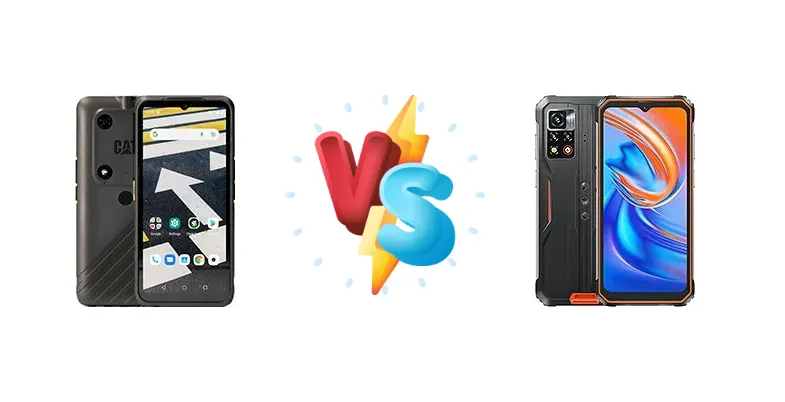
|
🏆 Quick Verdict
For the average user prioritizing 5G connectivity and a more modern chipset architecture, the Cat S53 is the better choice. However, users who frequently rely on their phone in direct sunlight and value extremely fast charging will find the Blackview BV9200 more appealing.
| PHONES | ||
|---|---|---|
| Phone Names | Cat S53 | Blackview BV9200 |
| Network | ||
|---|---|---|
| 2G bands | GSM 850 / 900 / 1800 / 1900 | GSM 850 / 900 / 1800 / 1900 |
| 3G bands | HSDPA 800 / 850 / 900 / 1700(AWS) / 1900 / 2100 | HSDPA 850 / 900 / 1700(AWS) / 1900 / 2100 |
| 4G bands | 1, 2, 3, 4, 5, 7, 8, 12, 13, 17, 18, 19, 20, 25, 26, 28, 34, 38, 39, 40, 41, 66 | 1, 2, 3, 4, 5, 7, 8, 12, 13, 17, 18, 19, 20, 25, 26, 28, 34, 38, 39, 40, 41, 66 |
| 5G bands | 1, 2, 3, 5, 7, 8, 28, 41, 66, 77, 78 | - |
| Speed | HSPA, LTE | HSPA, LTE |
| Technology | GSM / HSPA / LTE / 5G | GSM / CDMA / HSPA / LTE |
| - | CDMA 800 / 1900 | |
| Launch | ||
|---|---|---|
| Announced | 2022, July 19 | 2022, December 28 |
| Status | Available. Released 2022, July 19 | Available. Released 2023, January 09 |
| Body | ||
|---|---|---|
| Dimensions | 171 x 81 x 16 mm (6.73 x 3.19 x 0.63 in) | 174.5 x 81.8 x 13.6 mm (6.87 x 3.22 x 0.54 in) |
| SIM | Nano-SIM + Nano-SIM | Nano-SIM + Nano-SIM |
| Weight | 320 g (11.29 oz) | 310 g (10.93 oz) |
| IP68/IP69K dust/water resistant (up to 1.5m for 35 min) Drop-to-concrete resistance from up to 1.8m MIL-STD-810H compliant Dedicated flashlight | IP68/IP69K dust/water resistant (up to 1.5m for 30 min) Drop-to-concrete resistance from up to 1.8m MIL-STD-810H compliant | |
| Display | ||
|---|---|---|
| Protection | - | Corning Gorilla Glass 5 |
| Resolution | 720 x 1600 pixels, 20:9 ratio (~270 ppi density) | 1080 x 2408 pixels, 20:9 ratio (~400 ppi density) |
| Size | 6.5 inches, 102.0 cm2 (~73.6% screen-to-body ratio) | 6.6 inches, 104.9 cm2 (~73.5% screen-to-body ratio) |
| Type | IPS LCD | IPS LCD, 120Hz |
| Platform | ||
|---|---|---|
| CPU | Octa-core (2x2.0 GHz Kryo 460 & 6x1.8 GHz Kryo 460) | Octa-core (2x2.05 GHz Cortex-A76 & 6x2.0 GHz Cortex-A55) |
| Chipset | Qualcomm SM4350 Snapdragon 480 5G (8 nm) | Mediatek MT6781 Helio G96 (12 nm) |
| GPU | Adreno 619 | Mali-G52 MC2 |
| OS | Android 11 | Android 12, Doke-OS 3.1 |
| Memory | ||
|---|---|---|
| Card slot | microSDXC (uses shared SIM slot) | microSDXC (dedicated slot) |
| Internal | 128GB 6GB RAM | 256GB 8GB RAM |
| - | UFS 2.1 | |
| Main Camera | ||
|---|---|---|
| Dual | 48 MP, f/1.8, (wide) 2 MP (macro) | - |
| Features | LED flash | LED flash, HDR, panorama |
| Single | 16 MP, f/2.0 | 16 MP, (wide), 1/3", 1.0µm |
| Triple | - | 50 MP, f/1.8, (wide), 1/2.76", 0.64µm, PDAF 8 MP, f/1.8, 120˚, (ultrawide), AF Auxiliary lens |
| Video | 1080p@30fps | 1440p@30fps, 1080p@30fps |
| Selfie camera | ||
|---|---|---|
| Single | 16 MP, f/2.0 | 16 MP, f/2.0, (wide), 1/3", 1.0µm |
| Video | 1080p@30fps | 1080p |
| Sound | ||
|---|---|---|
| 3.5mm jack | Yes | No |
| 35mm jack | Yes | No |
| Loudspeaker | Yes | Yes, with dual speakers |
| Comms | ||
|---|---|---|
| Bluetooth | 5.1, A2DP, LE | 5.2, A2DP, LE |
| NFC | Yes | Yes |
| Positioning | GPS | GPS, GLONASS, GALILEO, BDS |
| Radio | No | FM radio |
| USB | USB Type-C 3.0, OTG | USB Type-C, OTG |
| WLAN | Wi-Fi 802.11 a/b/g/n/ac, dual-band | Wi-Fi 802.11 a/b/g/n/ac, dual-band |
| Features | ||
|---|---|---|
| Sensors | Fingerprint (rear-mounted), accelerometer | Fingerprint (side-mounted), accelerometer, gyro, proximity, compass, barometer |
| Battery | ||
|---|---|---|
| Charging | Wireless | 66W wired 30W wireless |
| Type | Li-Po 5500 mAh | 5000 mAh |
| Misc | ||
|---|---|---|
| Colors | Black | Black, Orange, Green |
| Price | About 530 EUR | About 200 EUR |
Cat S53
- 5G Connectivity for faster data speeds
- More efficient 8nm Snapdragon 480 chipset
- Wireless Charging support
- Display brightness likely lower than BV9200
- Charging speed likely slower than BV9200
Blackview BV9200
- Extremely fast 66W wired charging
- Brighter display for outdoor visibility
- 30W Wireless Charging support
- Less efficient 12nm Helio G96 chipset
- Lacks 5G connectivity
Display Comparison
The Blackview BV9200 boasts a significantly brighter display, reaching a measured 481 nits, compared to the Cat S53’s unspecified brightness. This makes the BV9200 far more usable in direct sunlight. Furthermore, the BV9200’s 1423:1 contrast ratio suggests deeper blacks and a more vibrant image. While the Cat S53’s display specs are unavailable, rugged phones often prioritize durability over display quality, suggesting a potentially less impressive visual experience. The lack of LTPO technology on either device means neither will dynamically adjust refresh rates for power saving.
Camera Comparison
Without detailed camera specifications for either device, a direct comparison is difficult. However, the rugged phone market rarely prioritizes camera quality. Both devices likely feature competent, but not exceptional, camera systems. The absence of information regarding sensor size or optical image stabilization (OIS) suggests neither phone will excel in low-light photography. The focus is likely on providing a functional camera for documentation rather than artistic photography. We can assume both will include a standard wide, ultrawide, and potentially a macro lens, but image quality will likely be similar.
Performance
The Cat S53’s Qualcomm Snapdragon 480 5G, built on an 8nm process, offers a more modern architecture than the Blackview BV9200’s MediaTek Helio G96 (12nm). While the Helio G96’s Cortex-A76 cores clock slightly higher (2.05 GHz vs 2.0 GHz), the Snapdragon 480’s Kryo 460 cores and the smaller fabrication node generally translate to better power efficiency and sustained performance under load. The Snapdragon 480 also unlocks 5G connectivity, a feature absent in the BV9200. The BV9200 may show an initial performance edge in some tasks, but the S53 is likely to maintain performance longer during extended use.
Battery Life
The Blackview BV9200’s 66W wired charging is a standout feature, allowing for significantly faster charging times compared to the Cat S53’s unspecified wired charging (though it does offer wireless charging). The BV9200 also supports 30W wireless charging, a feature the S53 also has. While battery capacity isn’t specified for either device, the faster charging of the BV9200 mitigates the impact of a potentially smaller battery. Users who frequently need to top up their phone quickly will greatly benefit from the BV9200’s charging capabilities.
Buying Guide
Buy the Cat S53 if you need reliable 5G connectivity for remote work or streaming, and value a chipset built on a more efficient 8nm process for potentially better long-term performance. Buy the Blackview BV9200 if you prefer a brighter display for outdoor visibility, require exceptionally fast 66W wired charging, and are less concerned with the latest 5G technology.