
BLU Tank Xtreme vs. Motorola Defy 2: A Deep Dive into Ruggedness and Performance
| Phones Images | |||||
|---|---|---|---|---|---|
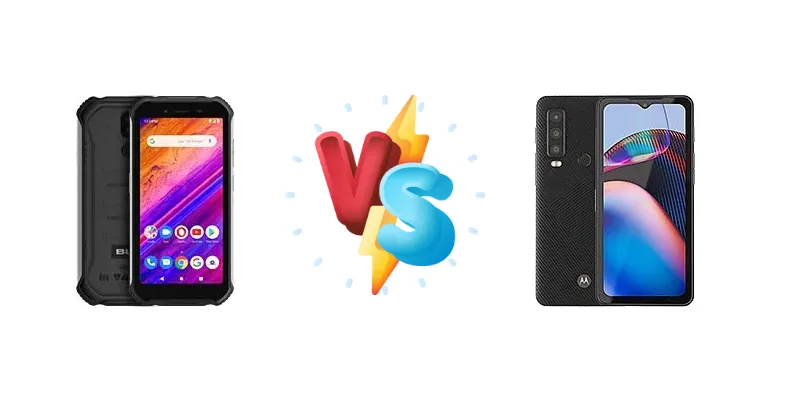
|
🏆 Quick Verdict
For the average user prioritizing performance and modern features, the Motorola Defy 2 is the clear winner. Its Mediatek Dimensity 930 chipset delivers a vastly superior experience compared to the BLU Tank Xtreme’s aging Cortex-A53 processor. While the Tank Xtreme excels in sheer ruggedness, the Defy 2 offers a more refined and capable daily driver.
| PHONES | ||
|---|---|---|
| Phone Names | BLU Tank Xtreme | Motorola Defy 2 |
| Network | ||
|---|---|---|
| 2G bands | GSM 850 / 900 / 1800 / 1900 | GSM 850 / 900 / 1800 / 1900 |
| 3G bands | HSDPA 850 / 900 / 1700(AWS) / 1900 / 2100 | HSDPA 850 / 900 / 1700(AWS) / 1900 / 2100 |
| 4G bands | 1, 2, 3, 4, 5, 7, 12, 17, 28 | 1, 2, 3, 4, 5, 7, 8, 12, 13, 14, 17, 20, 25, 26, 28, 30, 38, 40, 41, 46, 48, 66, 71 |
| 5G bands | - | 2, 5, 23, 25, 26, 28, 38, 41, 48, 66, 70, 71, 77, 78, 255, 256 SA/NSA/Sub6/mmWave |
| Speed | HSPA 42.2/11.5 Mbps, LTE Cat4 150/50 Mbps | HSPA, LTE, 5G |
| Technology | GSM / HSPA / LTE | GSM / HSPA / LTE / 5G |
| Launch | ||
|---|---|---|
| Announced | 2020, January. Released 2020, January | 2023, February 24 |
| Status | Discontinued | Available. Released 2023, October |
| Body | ||
|---|---|---|
| Build | - | Glass front (Gorilla Glass Victus), plastic back, aluminum frame |
| Dimensions | 153.6 x 71.8 x 10.2 mm (6.05 x 2.83 x 0.40 in) | 171 x 80 x 11.9 mm (6.73 x 3.15 x 0.47 in) |
| SIM | Nano-SIM + Nano-SIM | Nano-SIM + Nano-SIM |
| Weight | 178 g (6.28 oz) | 268 g (9.45 oz) |
| IP68 dust/water resistant (up to 1.5m for 30 mins) | IP68/IP69 dust/water resistant (up to 5m for 35 min) Drop-to-concrete resistance from up to 1.8m MIL-STD-810H compliant | |
| Display | ||
|---|---|---|
| Protection | - | Corning Gorilla Glass Victus |
| Resolution | 480 x 960 pixels, 18:9 ratio (~195 ppi density) | 1080 x 2408 pixels, 20:9 ratio (~400 ppi density) |
| Size | 5.5 inches, 78.1 cm2 (~70.8% screen-to-body ratio) | 6.6 inches, 104.9 cm2 (~76.7% screen-to-body ratio) |
| Type | IPS LCD | IPS LCD, 120Hz |
| Platform | ||
|---|---|---|
| CPU | Quad-core 1.3 GHz Cortex-A53 | Octa-core (2x2.2 GHz Cortex-A78 & 6x2.0 GHz Cortex-A55) |
| Chipset | - | Mediatek Dimensity 930 (6 nm) |
| GPU | Mali-T720 | IMG BXM-8-256 |
| OS | Android 9.0 (Pie) | Android 12 |
| Memory | ||
|---|---|---|
| Card slot | microSDXC (uses shared SIM slot) | microSDXC (uses shared SIM slot) |
| Internal | 32GB 2GB RAM | 128GB 6GB RAM |
| eMMC 5.1 | - | |
| Main Camera | ||
|---|---|---|
| Dual | 13 MP, AF Auxiliary lens | - |
| Features | LED flash | Dual-LED flash, HDR, panorama |
| Triple | - | 50 MP, f/1.8, (wide), PDAF 8 MP, f/2.2, (ultrawide) 2 MP (macro) |
| Video | 1080p@30fps | 1080p@30fps |
| Selfie camera | ||
|---|---|---|
| Single | 8 MP | 8 MP, f/2.0, (wide) |
| Video | 720p@30fps | 1080p@30fps |
| Sound | ||
|---|---|---|
| 3.5mm jack | Yes | No |
| 35mm jack | Yes | No |
| Loudspeaker | Yes | Yes |
| Comms | ||
|---|---|---|
| Bluetooth | 4.0, A2DP | 5.1, A2DP, LE |
| NFC | No | Yes |
| Positioning | GPS | GPS (L1+L5), GLONASS, GALILEO, BDS |
| Radio | FM radio | Unspecified |
| USB | microUSB 2.0 | USB Type-C 2.0, OTG |
| WLAN | Wi-Fi 802.11 b/g/n | Wi-Fi 802.11 a/b/g/n/ac, dual-band |
| Features | ||
|---|---|---|
| Sensors | Fingerprint (rear-mounted), accelerometer, proximity | Fingerprint (rear-mounted), accelerometer, gyro, proximity, compass |
| - | Emergency SOS via satellite (Bullitt Satellite Connect service) | |
| Battery | ||
|---|---|---|
| Charging | - | 15W wireless |
| Type | Li-Po 4200 mAh | Li-Po 5000 mAh |
| Misc | ||
|---|---|---|
| Colors | Black | Black |
| Models | - | BM1S1B |
| Price | About 120 EUR | About 570 EUR |
BLU Tank Xtreme
- Exceptional ruggedness and drop protection
- Potentially longer battery life due to simpler features
- Lower price point
- Outdated processor and limited performance
- Likely poor camera quality
- Missing modern features like 5G and wireless charging
Motorola Defy 2
- Powerful Mediatek Dimensity 930 chipset
- 5G connectivity for faster data speeds
- Convenient 15W wireless charging
- May not be as extremely rugged as the Tank Xtreme
- Potentially higher price
- Battery life may be slightly less than Tank Xtreme
Display Comparison
Display specifications are not provided for the BLU Tank Xtreme, making a direct comparison difficult. However, given its price point, it likely features a lower-resolution LCD panel. The Motorola Defy 2, while not boasting a high-end display, benefits from a more modern manufacturing process. The lack of information on the Tank Xtreme’s panel type and resolution suggests a less vibrant and detailed viewing experience compared to the Defy 2.
Camera Comparison
Camera details for the BLU Tank Xtreme are unavailable, but budget rugged phones typically feature basic camera setups. The Motorola Defy 2’s camera specifications are also limited in the provided data, but the chipset’s image signal processor (ISP) is far more capable than what the Tank Xtreme can offer. The Defy 2’s ISP will deliver better image processing, dynamic range, and low-light performance. Without specific sensor details for the Tank Xtreme, it’s safe to assume the Defy 2 provides a superior photography experience.
Performance
The performance gap between these two devices is substantial. The BLU Tank Xtreme’s quad-core 1.3 GHz Cortex-A53 CPU is an older architecture designed for basic tasks. In contrast, the Motorola Defy 2’s Mediatek Dimensity 930, built on a 6nm process, features an octa-core configuration with powerful Cortex-A78 performance cores clocked at 2.2 GHz, alongside efficient Cortex-A55 cores. This translates to significantly faster app loading times, smoother multitasking, and a much more responsive user interface on the Defy 2. The 6nm process also contributes to better thermal efficiency, reducing throttling during sustained workloads.
Battery Life
Battery capacity isn’t specified for either device. However, the Motorola Defy 2’s inclusion of 15W wireless charging is a significant advantage. Wireless charging adds convenience and eliminates the need for cables. While the Tank Xtreme may have a larger battery capacity, the Defy 2’s more efficient Dimensity 930 chipset and optimized software will likely result in comparable, if not better, real-world battery life. The wireless charging capability further enhances the Defy 2’s usability.
Buying Guide
Buy the BLU Tank Xtreme if you absolutely require maximum drop protection and are willing to sacrifice performance for it. This phone is ideal for construction workers, outdoor adventurers, or anyone prone to accidental damage. Buy the Motorola Defy 2 if you want a rugged phone that doesn’t feel like a compromise, offering a smooth user experience, 5G connectivity, and convenient features like wireless charging, making it perfect for active individuals and everyday use.