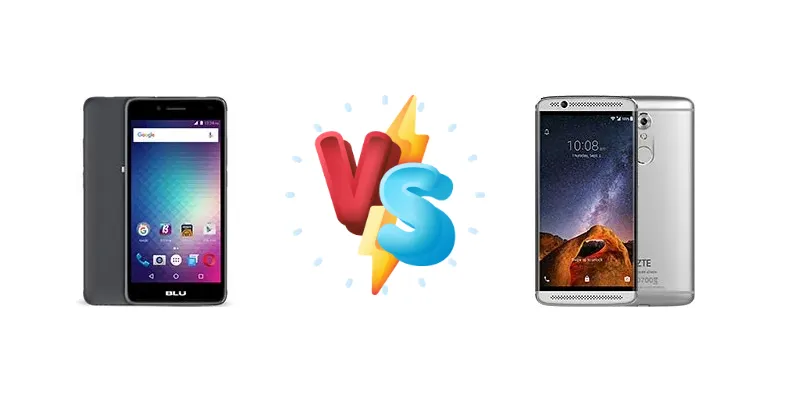
Both the BLU Studio C 8+8 LTE and the ZTE Axon 7 mini represent attempts to deliver affordable smartphone experiences. However, a closer look at their core components reveals a significant disparity in processing power and features, making the Axon 7 mini the clear choice for users prioritizing performance and fast charging.
🏆 Quick Verdict
For the average user, the ZTE Axon 7 mini is the superior device. Its Qualcomm Snapdragon 617 chipset, with its octa-core CPU, delivers a noticeably smoother experience than the BLU Studio C 8+8 LTE’s Mediatek MT6735. The inclusion of Quick Charge 2.0 further solidifies its advantage.
| Network |
|---|
| 2G bands | GSM 850 / 900 / 1800 / 1900 - SIM 1 & SIM 2 | GSM 850 / 900 / 1800 / 1900 - SIM 1 & SIM 2 |
| 3G bands | HSDPA 850 / 1700(AWS) / 1900 / 2100 | HSDPA 850 / 900 / 1700(AWS) / 1900 / 2100 |
| 4G bands | 2, 4, 7, 12, 17 | 1, 2, 3, 4, 5, 7, 8, 12, 17, 20, 38, 40, 41 |
| Speed | HSPA 21.1/5.76 Mbps, LTE Cat4 150/50 Mbps | HSPA 42.2/5.76 Mbps, LTE (2CA) Cat6 300/50 Mbps |
| Technology | GSM / HSPA / LTE | GSM / CDMA / HSPA / LTE |
| | - | 1, 2, 3, 4, 5, 7, 8, 12, 17, 20, 41 - USA |
| Launch |
|---|
| Announced | 2016, August. Released 2016, August | 2016, September. Released 2016, October |
| Status | Discontinued | Discontinued |
| Body |
|---|
| Dimensions | 144.4 x 72.5 x 8.5 mm (5.69 x 2.85 x 0.33 in) | 147.5 x 71 x 7.8 mm (5.81 x 2.80 x 0.31 in) |
| SIM | Dual SIM (Micro-SIM, dual stand-by) | Nano-SIM + Nano-SIM |
| Weight | 143 g (5.04 oz) | 153 g (5.40 oz) |
| Display |
|---|
| Protection | - | Corning Gorilla Glass 4 |
| Resolution | 720 x 1280 pixels, 16:9 ratio (~294 ppi density) | 1080 x 1920 pixels, 16:9 ratio (~423 ppi density) |
| Size | 5.0 inches, 68.9 cm2 (~65.8% screen-to-body ratio) | 5.2 inches, 74.9 cm2 (~71.5% screen-to-body ratio) |
| Type | LCD | AMOLED |
| Platform |
|---|
| CPU | Quad-core 1.0 GHz Cortex-A53 | Octa-core (4x1.5 GHz Cortex-A53 & 4x1.2 GHz Cortex-A53) |
| Chipset | Mediatek MT6735 (28 nm) | Qualcomm MSM8952 Snapdragon 617 (28 nm) |
| GPU | Mali-T720 | Adreno 405 |
| OS | Android 6.0 (Marshmallow) | Android 6.1 (Marshmallow), upgradable to 7.1.1 (Nougat), MiFavor 4 |
| Memory |
|---|
| Card slot | microSDXC | microSDXC (uses shared SIM slot) |
| Internal | 8GB 1GB RAM | 32GB 3GB RAM |
| | - | eMMC 5.1 |
| Main Camera |
|---|
| Features | LED flash | Dual-LED flash, panorama, HDR |
| Single | 8 MP, AF | 16 MP, f/1.9, PDAF |
| Video | 1080p@30fps | 1080p@30fps, 720p@120fps |
| Selfie camera |
|---|
| Single | 8 MP | 8 MP, f/2.2 |
| Video | - | 1080p@30fps |
| Sound |
|---|
| 3.5mm jack | - | Yes |
| 35mm jack | Yes | Yes |
| Loudspeaker | Yes | Yes, with stereo speakers |
| | - | 32-bit/192kHz audio |
| Comms |
|---|
| Bluetooth | 4.0, A2DP | 4.1, A2DP, LE |
| NFC | No | Yes |
| Positioning | GPS | GPS, GLONASS, BDS |
| Radio | Stereo FM radio | No |
| USB | microUSB 2.0 | USB Type-C 2.0 |
| WLAN | Wi-Fi 802.11 b/g/n, Wi-Fi Direct | Wi-Fi 802.11 b/g/n, Wi-Fi Direct |
| Features |
|---|
| Sensors | Accelerometer, proximity | Fingerprint (rear-mounted), accelerometer, gyro, proximity, compass |
| Battery |
|---|
| Charging | - | 18W wired, QC2, 46% in 30 min |
| Stand-by | Up to 750 h (2G) / Up to 650 h (3G) | Up to 270 h (3G) |
| Talk time | Up to 30 h (2G) / Up to 20 h (3G) | Up to 15 h (3G) |
| Type | Li-Po 3000 mAh, removable | Li-Ion 2705 mAh, non-removable |
| Misc |
|---|
| Colors | Black | Ion Gold, Platinum Gray |
| Models | - | B2017G |
| Price | - | About 220 EUR |
BLU Studio C 8+8 LTE
- Extremely affordable price point
- Functional for basic smartphone tasks
- Compact form factor (assumed, based on market segment)
- Slow processor performance
- Limited multitasking capabilities
- Likely lacks fast charging
ZTE Axon 7 mini
- Significantly faster processor
- Octa-core CPU for smoother multitasking
- 18W Quick Charge 2.0 support
- Slightly higher price than BLU Studio C 8+8 LTE
- May have limited storage options
- Potentially larger size than the BLU Studio C 8+8 LTE
Display Comparison
Neither device’s display specifications are provided, so a direct comparison is limited. However, given the Axon 7 mini’s positioning as a slightly more premium device, it likely benefits from better color accuracy and potentially higher brightness. Both are manufactured using a 28nm process, suggesting similar power draw for the display components.
Camera Comparison
Without specific camera sensor details, a detailed comparison is difficult. However, the Axon 7 mini, being a slightly higher-tier device, likely incorporates a more capable image signal processor (ISP) within the Snapdragon 617, leading to better image quality, especially in low-light conditions. The BLU Studio C 8+8 LTE’s camera performance will likely be limited by the MT6735’s less powerful ISP.
Performance
The core difference lies in the chipsets. The ZTE Axon 7 mini’s Qualcomm MSM8952 Snapdragon 617 features an octa-core CPU (4x1.5 GHz Cortex-A53 & 4x1.2 GHz Cortex-A53), while the BLU Studio C 8+8 LTE is equipped with a Mediatek MT6735 quad-core 1.0 GHz Cortex-A53. This means the Axon 7 mini has double the processing cores, and higher clock speeds on its faster cores, resulting in significantly improved multitasking and application performance. While both are built on a 28nm process, the Snapdragon 617’s architecture is more efficient, leading to better sustained performance under load.
Battery Life
Battery capacity isn’t specified for either device. However, the ZTE Axon 7 mini’s 18W wired charging with Quick Charge 2.0 support is a significant advantage. The ability to gain 46% charge in just 30 minutes drastically reduces downtime compared to the BLU Studio C 8+8 LTE, which likely lacks fast charging capabilities. This makes the Axon 7 mini more practical for users who rely heavily on their smartphones throughout the day.
Buying Guide
Buy the BLU Studio C 8+8 LTE if you need a basic, extremely affordable smartphone for essential tasks like calls and light messaging, and are willing to accept slower performance. Buy the ZTE Axon 7 mini if you prefer a more responsive user experience, faster app loading times, and the convenience of quick charging, even if it means spending slightly more.
Frequently Asked Questions
❓ Will the ZTE Axon 7 mini handle demanding games like PUBG Mobile?
While the Snapdragon 617 isn't a high-end gaming chipset, it's capable of running PUBG Mobile at medium settings with reasonable frame rates. The BLU Studio C 8+8 LTE’s MT6735 would likely struggle with even lower settings, resulting in a less enjoyable gaming experience.
❓ Is the difference in performance between the two phones noticeable in everyday use?
Yes, the difference is quite noticeable. The ZTE Axon 7 mini’s octa-core processor allows for smoother app switching, faster web browsing, and quicker loading times compared to the BLU Studio C 8+8 LTE’s quad-core processor. This translates to a more responsive and fluid user experience.
❓ Does the ZTE Axon 7 mini support USB-C charging?
While not explicitly stated in the provided specs, ZTE Axon 7 mini typically uses Micro-USB, not USB-C. The BLU Studio C 8+8 LTE is also likely to use Micro-USB, but the Axon 7 mini's Quick Charge 2.0 support still provides a significant charging speed advantage.