
BLU G91 Max vs Motorola Moto G Stylus 5G (2022): Which Budget 5G Phone Reigns Supreme?
| Phones Images | |||||
|---|---|---|---|---|---|
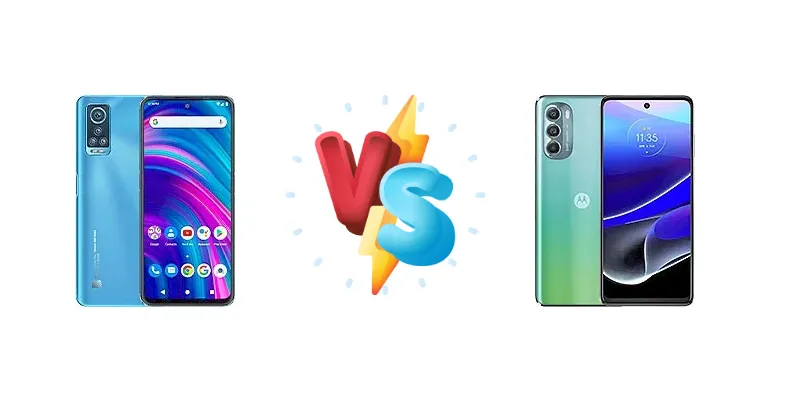
|
🏆 Quick Verdict
For the average user prioritizing efficiency and consistent performance, the Motorola Moto G Stylus 5G (2022) is the better choice. Its Snapdragon 695, built on a more modern 6nm process, offers superior power efficiency and sustained performance compared to the BLU G91 Max’s Helio G95, despite a slightly lower peak clock speed.
| PHONES | ||
|---|---|---|
| Phone Names | BLU G91 Max | Motorola Moto G Stylus 5G (2022) |
| Network | ||
|---|---|---|
| 2G bands | GSM 850 / 900 / 1800 / 1900 | GSM 850 / 900 / 1800 / 1900 |
| 3G bands | HSDPA 850 / 900 / 1700(AWS) / 1900 / 2100 | HSDPA 850 / 900 / 1700(AWS) / 1900 / 2100 |
| 4G bands | 1, 2, 3, 4, 5, 7, 8, 12, 13, 17, 28, 38 | 1, 2, 3, 4, 5, 7, 8, 12, 13, 17, 18, 19, 20, 25, 26, 28, 29, 30, 38, 39, 40, 41, 48, 66, 71 - USA |
| 5G bands | - | 1, 2, 5, 12, 14, 24, 26, 29, 30, 41, 48, 66, 70, 71, 77, 78 SA/NSA - USA |
| Speed | HSPA, LTE | HSPA, LTE, 5G |
| Technology | GSM / HSPA / LTE | GSM / HSPA / LTE / 5G |
| Launch | ||
|---|---|---|
| Announced | 2022, February 23 | 2022, April 22 |
| Status | Available. Released 2022, February 23 | Available. Released 2022, April 27 |
| Body | ||
|---|---|---|
| Build | - | Glass front, plastic frame, plastic back |
| Dimensions | 168.6 x 77 x 8.9 mm (6.64 x 3.03 x 0.35 in) | 168.9 x 75.8 x 9.3 mm (6.65 x 2.98 x 0.37 in) |
| SIM | Nano-SIM + Nano-SIM | Nano-SIM |
| Weight | 213 g (7.51 oz) | 215 g (7.58 oz) |
| - | Stylus Water-repellent design | |
| Display | ||
|---|---|---|
| Resolution | 1080 x 2460 pixels (~395 ppi density) | 1080 x 2460 pixels (~395 ppi density) |
| Size | 6.8 inches, 109.8 cm2 (~84.6% screen-to-body ratio) | 6.8 inches, 109.8 cm2 (~85.8% screen-to-body ratio) |
| Type | IPS LCD | IPS LCD, 120Hz |
| Platform | ||
|---|---|---|
| CPU | Octa-core (2x2.05 GHz Cortex-A76 & 6x2.0 GHz Cortex-A55) | Octa-core (2x2.2 GHz Kryo 660 Gold & 6x1.7 GHz Kryo 660 Silver) |
| Chipset | Mediatek MT6785V/CD Helio G95 (12 nm) | Qualcomm SM6375 Snapdragon 695 5G (6 nm) |
| GPU | Mali-G76 MC4 | Adreno 619 |
| OS | Android 11 | Android 12, planned upgrade to Android 13 |
| Memory | ||
|---|---|---|
| Card slot | microSDXC | microSDXC (dedicated slot) |
| Internal | 128GB 8GB RAM | 128GB 4GB RAM, 128GB 6GB RAM, 128GB 8GB RAM, 256GB 8GB RAM |
| Main Camera | ||
|---|---|---|
| Features | LED flash, HDR, panorama | LED flash, HDR, panorama |
| Quad | 108 MP, f/1.8, (wide) 1/1.52", 0.7µm, PDAF 5 MP, f/2.2, 115˚ (ultrawide) 2 MP (macro) Auxiliary lens | - |
| Single | 16 MP, f/2.0 | - |
| Triple | - | 50 MP, f/1.9, 26mm (wide), 0.64µm, PDAF, OIS 8 MP, f/2.2, 118˚ (ultrawide), 1/4.0, 1.12µm Auxiliary lens |
| Video | 4K@30fps, 1080p@30fps | 1080p@30/60fps; gyro-EIS |
| Selfie camera | ||
|---|---|---|
| Features | - | HDR |
| Single | 16 MP, f/2.0 | 16 MP, f/2.2, (wide), 1/3.06", 1.0µm |
| Video | 1080p@30fps | 1080p@30fps |
| Sound | ||
|---|---|---|
| 3.5mm jack | Yes | Yes |
| 35mm jack | Yes | Yes |
| Loudspeaker | Yes | Yes |
| Comms | ||
|---|---|---|
| Bluetooth | 4.1, A2DP, LE | 5.1, A2DP, LE |
| NFC | No | Yes |
| Positioning | GPS | GPS, GLONASS, BDS, GALILEO |
| Radio | FM radio | FM radio |
| USB | USB Type-C 2.0, OTG | USB Type-C 2.0 |
| WLAN | Wi-Fi 802.11 a/b/g/n, Wi-Fi Direct | Wi-Fi 802.11 a/b/g/n/ac, dual-band, Wi-Fi Direct |
| Features | ||
|---|---|---|
| Sensors | Fingerprint (side-mounted), accelerometer, gyro, proximity, compass | Fingerprint (side-mounted), accelerometer, gyro, proximity |
| Battery | ||
|---|---|---|
| Charging | 18W wired 10W wireless | 10W wired, QC3 |
| Type | Li-Po 5000 mAh | Li-Po 5000 mAh |
| Misc | ||
|---|---|---|
| Colors | Gray, Sky Blue | Steel Blue, Seafoam Green |
| Models | - | XT2215, XT2215-1, XT2215-2, XT2215-3, XT2215-4 |
| Price | About 200 EUR | $ 66.60 |
BLU G91 Max
- Wireless charging capability
- Potentially faster burst performance
- More affordable price point (likely)
- Less efficient chipset (12nm)
- Potential for thermal throttling
- Likely shorter battery life
Motorola Moto G Stylus 5G (2022)
- More efficient chipset (6nm)
- Quick Charge 3.0 support
- Better sustained performance
- Integrated Stylus
- No wireless charging
- Slower wired charging speed
- Potentially higher price
Display Comparison
Neither device boasts a standout display. Both likely utilize IPS LCD panels, a common choice in this price bracket. However, details like peak brightness and color accuracy are missing. The Moto G Stylus benefits from its larger screen size, potentially offering a more immersive viewing experience. The absence of high refresh rate panels on either device is typical for this segment, but impacts smoothness during scrolling and animations.
Camera Comparison
Without detailed camera specs beyond the chipsets, a direct comparison is limited. Both phones likely feature multi-camera setups, but image quality will heavily depend on sensor size, lens aperture, and image processing algorithms. It’s reasonable to assume Motorola’s image processing, backed by Qualcomm’s ISP, will offer more refined results. The presence of a stylus on the Moto G Stylus suggests a focus on creative tasks, potentially benefiting from software features optimized for the pen.
Performance
The core difference lies in the chipsets. The Motorola Moto G Stylus 5G (2022) utilizes the Qualcomm Snapdragon 695 5G, fabricated on a 6nm process. This smaller node size translates to significantly improved power efficiency and thermal management compared to the BLU G91 Max’s MediaTek Helio G95 (12nm). While the G95’s Cortex-A76 cores have a slightly higher peak clock speed (2.05 GHz vs 2.2 GHz on the Kryo 660 Gold), the Snapdragon 695’s architectural advantages and process node will result in more sustained performance during demanding tasks like gaming. The Snapdragon 695 also benefits from Qualcomm’s optimized software and modem integration.
Battery Life
The BLU G91 Max offers both 18W wired and 10W wireless charging, a feature absent on the Motorola Moto G Stylus 5G (2022), which is limited to 10W wired charging with Quick Charge 3.0 support. However, the Snapdragon 695’s superior efficiency means the Moto G Stylus will likely achieve comparable or even better real-world battery life despite potentially having a similar or smaller battery capacity. The 18W charging on the BLU G91 Max will offer faster top-ups, but the efficiency gains of the Motorola chip will likely offset this advantage over the course of a day.
Buying Guide
Buy the BLU G91 Max if you prioritize wireless charging and potentially burst performance for short tasks, and are comfortable with potentially shorter battery life and more thermal throttling under sustained load. Buy the Motorola Moto G Stylus 5G (2022) if you value consistent performance, longer battery life, and the convenience of Quick Charge 3.0, making it ideal for everyday use and moderate gaming.