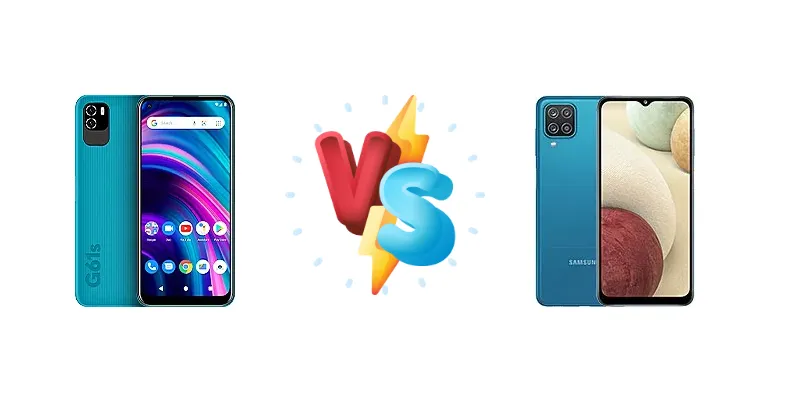
The BLU G61s and Samsung Galaxy A12 (India) represent compelling options in the ultra-budget smartphone space. While both aim to deliver essential smartphone functionality at a low price, they take different approaches to achieving this. The G61s prioritizes CPU clock speed, while the A12 leverages Samsung’s Exynos 850 chipset for a balance of performance and efficiency. This comparison dissects these differences to determine which device offers the best value.
🏆 Quick Verdict
For users prioritizing raw processing power for tasks like app loading and light multitasking, the BLU G61s offers a noticeable advantage thanks to its 2.0 GHz Cortex-A75 CPU. However, the Samsung Galaxy A12 (India) provides a more refined experience with its Exynos 850, offering better sustained performance and potentially superior power efficiency, making it the better all-around choice for most users.
| Network |
|---|
| 2G bands | GSM 850 / 900 / 1800 / 1900 | GSM 850 / 900 / 1800 / 1900 |
| 3G bands | HSDPA 850 / 900 / 1700(AWS) / 1900 / 2100 | HSDPA 850 / 900 / 2100 |
| 4G bands | 2, 3, 4, 5, 7, 12, 17, 28, 66 | 1, 3, 5, 7, 8, 20, 28, 38, 40, 41 |
| Speed | HSPA, LTE | HSPA 42.2/5.76 Mbps, LTE Cat4 150/50 Mbps |
| Technology | GSM / HSPA / LTE | GSM / HSPA / LTE |
| Launch |
|---|
| Announced | 2022, April | 2021, August 12 |
| Status | Available. Released 2022, April | Available. Released 2021, August 12 |
| Body |
|---|
| Build | - | Glass front, plastic back, plastic frame |
| Dimensions | 159.5 x 76.5 x 9.8 mm (6.28 x 3.01 x 0.39 in) | 164 x 75.8 x 8.9 mm (6.46 x 2.98 x 0.35 in) |
| SIM | Nano-SIM + Nano-SIM | · Nano-SIM· Nano-SIM + Nano-SIM |
| Weight | 164 g (5.78 oz) | 205 g (7.23 oz) |
| Display |
|---|
| Resolution | 720 x 1600 pixels, 20:9 ratio (~270 ppi density) | 720 x 1600 pixels, 20:9 ratio (~270 ppi density) |
| Size | 6.5 inches, 102.0 cm2 (~83.6% screen-to-body ratio) | 6.5 inches, 102.0 cm2 (~82.1% screen-to-body ratio) |
| Type | IPS LCD | PLS LCD |
| Platform |
|---|
| CPU | Octa-core 2.0 GHz Cortex-A75 | Octa-core (4x2.0 GHz Cortex-A55 & 4x2.0 GHz Cortex-A55) |
| Chipset | - | Exynos 850 (8 nm) |
| GPU | - | Mali-G52 |
| OS | Android 11 | Android 11, upgradable to Android 13, One UI 5.1 |
| Memory |
|---|
| Card slot | microSDXC | microSDXC (dedicated slot) |
| Internal | 64GB 4GB RAM | 64GB 4GB RAM, 128GB 4GB RAM, 128GB 6GB RAM |
| | eMMC 5.1 | eMMC 5.1 |
| Main Camera |
|---|
| Dual | 13 MP
Auxiliary lens | - |
| Features | LED flash | LED flash, panorama, HDR |
| Quad | - | 48 MP, f/2.0, 26mm (wide), AF
5 MP, f/2.2, 123˚ (ultrawide)
2 MP (macro)
Auxiliary lens |
| Single | 8 MP | - |
| Video | 1080p@30fps | 1080p@30fps |
| Selfie camera |
|---|
| Single | 8 MP | 8 MP, f/2.2 |
| Video | 1080p@30fps | 1080p@30fps |
| Sound |
|---|
| 3.5mm jack | Yes | Yes |
| 35mm jack | Yes | Yes |
| Loudspeaker | Yes | Yes |
| Comms |
|---|
| Bluetooth | 4.2, A2DP, LE | 5.0, A2DP, LE |
| NFC | No | No |
| Positioning | GPS | GPS, GLONASS, GALILEO, BDS |
| Radio | FM radio | FM radio, RDS, recording |
| USB | USB Type-C 2.0 | USB Type-C 2.0 |
| WLAN | Wi-Fi 802.11 a/b/g/n, Wi-Fi Direct | Wi-Fi 802.11 b/g/n, Wi-Fi Direct |
| Features |
|---|
| Sensors | Fingerprint (side-mounted), accelerometer, proximity | Fingerprint (side-mounted), accelerometer |
| | - | Virtual proximity sensing |
| Battery |
|---|
| Charging | - | 15W wired |
| Type | Li-Po 5000 mAh | Li-Po 5000 mAh |
| Misc |
|---|
| Colors | Bronze, Red, Green, Cyan, Black | Black, Blue, White |
| Models | - | SM-A127F, SM-A127F/DS |
| Price | - | About 160 EUR |
| SAR | - | 0.79 W/kg (head) |
BLU G61s
- Potentially faster CPU performance for single-threaded tasks
- Lower price point (likely)
- Direct access to Android without heavy skinning
- Likely poorer thermal management leading to throttling
- Less efficient CPU architecture
- Potentially inferior camera image processing
Samsung Galaxy A12 (India)
- More efficient Exynos 850 chipset
- 15W fast charging support
- Samsung’s refined software experience
- Potentially lower single-core CPU performance
- Higher price point (likely)
- Samsung’s One UI can be resource intensive
Display Comparison
Neither device’s display specifications are provided, so a direct comparison is limited. However, given the price point, both likely utilize LCD panels. Samsung typically employs better color calibration and viewing angles in its A-series, suggesting a potentially more pleasant visual experience on the A12. The absence of high refresh rate support on either device is expected in this segment.
Camera Comparison
Without detailed camera specifications, a comprehensive comparison is difficult. However, it’s safe to assume both devices feature basic camera setups geared towards casual photography. Samsung’s image processing algorithms are generally more refined, potentially resulting in more pleasing images in various lighting conditions. The inclusion of features like scene optimization and portrait mode is more likely on the A12. The G61s may rely more on raw sensor data, which could lead to less polished results. The presence of a 2MP macro camera on either device is largely a marketing tactic, offering limited practical benefit.
Performance
The core difference lies in the CPU architecture. The BLU G61s features an Octa-core 2.0 GHz Cortex-A75, a performance-focused core typically found in mid-range devices. The Samsung Galaxy A12 (India) utilizes the Exynos 850, an Octa-core processor with four Cortex-A55 cores clocked at 2.0 GHz. While the clock speeds are identical, the Cortex-A75 offers significantly higher single-core performance than the A55. However, the Exynos 850’s 8nm manufacturing process provides better power efficiency and thermal management, potentially preventing the G61s from sustaining peak performance for extended periods. The A12’s chipset is designed for balanced performance, while the G61s aims for burst performance.
Battery Life
The Samsung Galaxy A12 (India) includes 15W wired charging, a feature absent from the provided BLU G61s specifications. While battery capacity isn’t specified for either device, the Exynos 850’s 8nm process contributes to better power efficiency. This means the A12 is likely to offer comparable or better battery life despite potentially having a similar capacity to the G61s. The 15W charging on the A12 will also allow for faster top-ups when needed.
Buying Guide
Buy the BLU G61s if you need a phone that feels responsive for basic tasks and prioritize CPU speed over sustained performance or camera quality. It’s ideal for users who primarily use messaging apps, make calls, and browse the web. Buy the Samsung Galaxy A12 (India) if you prefer a more balanced experience with a potentially smoother user interface, better thermal management during extended use, and the backing of Samsung’s brand and software support.
Frequently Asked Questions
❓ Does the Exynos 850 in the Samsung Galaxy A12 (India) overheat during prolonged gaming sessions?
The Exynos 850’s 8nm process and efficient core design minimize heat generation. While it won’t deliver flagship-level gaming performance, it’s unlikely to overheat significantly during moderate gaming sessions. Thermal throttling will occur, but it should be less pronounced than on the BLU G61s due to its more efficient architecture.
❓ Is the Cortex-A75 CPU in the BLU G61s enough for smooth multitasking?
The Cortex-A75 offers strong single-core performance, which benefits app loading and switching between a few apps. However, the lack of information on RAM capacity and the potential for thermal throttling could limit its multitasking capabilities. It will likely handle basic multitasking well, but demanding users may experience slowdowns.
❓ How does the software experience differ between the BLU G61s and the Samsung Galaxy A12 (India)?
The BLU G61s likely runs a near-stock version of Android, offering a cleaner and more customizable experience. The Samsung Galaxy A12 (India) features Samsung’s One UI, which includes additional features and customization options but can also be more resource-intensive and include pre-installed bloatware.