
BLU F91 vs Google Pixel 7 Pro: A Clash of Titans
| Phones Images | |||||
|---|---|---|---|---|---|
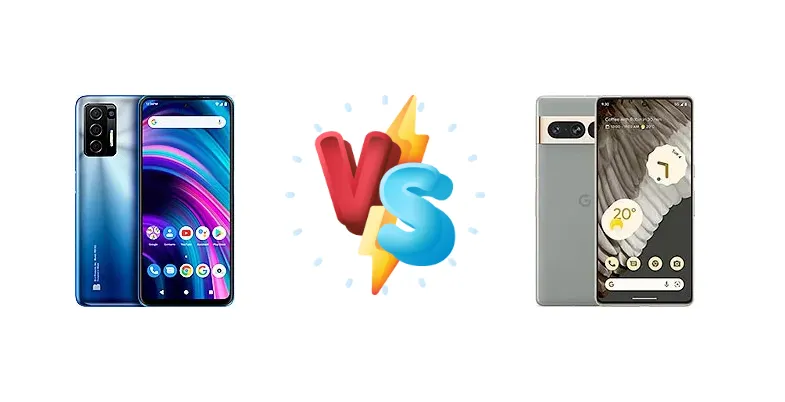
|
🏆 Quick Verdict
The Google Pixel 7 Pro is the clear winner overall, boasting superior performance, a stunning display, and an exceptional camera. However, the BLU F91 offers incredible value for its price, making it a compelling choice for budget-conscious buyers who prioritize essential features.
| PHONES | ||
|---|---|---|
| Phone Names | BLU F91 | Google Pixel 7 Pro |
| Network | ||
|---|---|---|
| 2G bands | GSM 850 / 900 / 1800 / 1900 | GSM 850 / 900 / 1800 / 1900 |
| 3G bands | HSDPA 850 / 1700(AWS) / 1900 / 2100 | HSDPA 800 / 850 / 900 / 1700(AWS) / 1900 / 2100 |
| 4G bands | 2, 4, 5, 12, 13, 17, 25, 26, 41, 66, 71 | 1, 2, 3, 4, 5, 7, 8, 12, 13, 14, 17, 18, 19, 20, 25, 26, 28, 29, 30, 38, 39, 40, 41, 42, 46, 48, 66, 71 - GE2AE |
| 5G bands | 2, 5, 25, 41, 66, 71, 77 SA/NSA/Sub6 | 1, 2, 3, 5, 7, 8, 12, 14, 20, 25, 28, 30, 38, 40, 41, 48, 66, 71, 77, 78, 257, 258, 260, 261 SA/NSA/Sub6/mmWave - GE2AE |
| Speed | HSPA, LTE, 5G | HSPA, LTE, 5G |
| Technology | GSM / HSPA / LTE / 5G | GSM / CDMA / HSPA / EVDO / LTE / 5G |
| - | 1, 2, 3, 5, 7, 8, 12, 14, 20, 25, 28, 30, 38, 40, 41, 48, 66, 71, 75, 76, 77, 78 SA/NSA/Sub6 - GP4BC | |
| Launch | ||
|---|---|---|
| Announced | 2022, April 20 | 2022, October 06 |
| Status | Available. Released 2022, April 20 | Available. Released 2022, October 13 |
| Body | ||
|---|---|---|
| Build | - | Glass front (Gorilla Glass Victus), glass back (Gorilla Glass Victus), aluminum frame |
| Dimensions | 168.7 x 76.8 x 8.9 mm (6.64 x 3.02 x 0.35 in) | 162.9 x 76.6 x 8.9 mm (6.41 x 3.02 x 0.35 in) |
| SIM | Nano-SIM + Nano-SIM | Nano-SIM + eSIM |
| Weight | 209 g (7.37 oz) | 212 g (7.48 oz) |
| - | IP68 dust/water resistant (up to 1.5m for 30 min) | |
| Display | ||
|---|---|---|
| Protection | - | Corning Gorilla Glass Victus |
| Resolution | 1080 x 2460 pixels (~395 ppi density) | 1440 x 3120 pixels, 19.5:9 ratio (~512 ppi density) |
| Size | 6.8 inches, 109.8 cm2 (~84.8% screen-to-body ratio) | 6.7 inches, 110.6 cm2 (~88.7% screen-to-body ratio) |
| Type | IPS LCD | LTPO AMOLED, 120Hz, HDR10+, 1000 nits (HBM), 1500 nits (peak) |
| - | Always-on display | |
| Platform | ||
|---|---|---|
| CPU | Octa-core (2x2.4 GHz Cortex-A76 & 6x2.0 GHz Cortex-A55) | Octa-core (2x2.85 GHz Cortex-X1 & 2x2.35 GHz Cortex-A78 & 4x1.80 GHz Cortex-A55) |
| Chipset | Mediatek Dimensity 810 (6 nm) | Google Tensor G2 (5 nm) |
| GPU | Mali-G57 MC2 | Mali-G710 MP7 |
| OS | Android 11 | Android 13, upgradable to Android 15, up to 5 major Android upgrades |
| Memory | ||
|---|---|---|
| Card slot | microSDXC | No |
| Internal | 128GB 8GB RAM | 128GB 8GB RAM, 256GB 8GB RAM, 128GB 12GB RAM, 256GB 12GB RAM, 512GB 12GB RAM |
| - | UFS 3.1 | |
| Main Camera | ||
|---|---|---|
| Features | LED flash, HDR, panorama | Laser AF, Dual-LED flash, Pixel Shift, Auto-HDR, panorama |
| Quad | 48 MP, f/1.8, (wide) 1/2.0", 0.8µm, PDAF 5 MP, f/2.2, 115˚ (ultrawide) 2 MP (macro) Auxiliary lens | - |
| Single | 16 MP, f/2.0 | 10.8 MP, f/2.2, 21mm (ultrawide), 1/3.1", 1.22µm |
| Triple | - | 50 MP, f/1.9, 25mm (wide), 1/1.31", 1.2µm, dual pixel PDAF, OIS 48 MP, f/3.5, 120mm (periscope telephoto), 1/2.55", 0.7µm, dual pixel PDAF, OIS, 5x optical zoom 12 MP, f/2.2, 126˚ (ultrawide), 1/2.9", 1.25µm, AF |
| Video | 4K@30fps, 1080p@30fps | 4K@30/60fps, 1080p@30/60/120/240fps; gyro-EIS, OIS, 10-bit HDR |
| Selfie camera | ||
|---|---|---|
| Features | - | HDR, panorama |
| Single | 16 MP, f/2.0 | 10.8 MP, f/2.2, 21mm (ultrawide), 1/3.1", 1.22µm |
| Video | 1080p@30fps | 4K@30/60fps, 1080p@30/60fps |
| Sound | ||
|---|---|---|
| 3.5mm jack | Yes | No |
| 35mm jack | Yes | No |
| Loudspeaker | Yes | Yes, with stereo speakers |
| Comms | ||
|---|---|---|
| Bluetooth | 5.1, A2DP, LE | 5.2, A2DP, LE, aptX HD |
| NFC | Yes | Yes |
| Positioning | GPS | GPS (L1+L5), GLONASS (G1), BDS (B1I+B1c+B2a), GALILEO (E1+E5a), QZSS (L1+L5) |
| Radio | FM radio | No |
| USB | USB Type-C 2.0, OTG | USB Type-C 3.2 |
| WLAN | Wi-Fi 802.11 b/g/n/ac, Wi-Fi Direct | Wi-Fi 802.11 a/b/g/n/ac/6e, tri-band, Wi-Fi Direct |
| Features | ||
|---|---|---|
| Sensors | Fingerprint (side-mounted), accelerometer, gyro, proximity, compass | Fingerprint (under display, optical), accelerometer, gyro, proximity, compass, barometer |
| - | Ultra Wideband (UWB) support | |
| Battery | ||
|---|---|---|
| Charging | 18W wired 10W wireless Reverse wired | 23W wired, PD3.0, 50% in 30 min 23W wireless Reverse wireless |
| Type | Li-Po 5000 mAh | Li-Ion 5000 mAh |
| Misc | ||
|---|---|---|
| Colors | Blue | Obsidian, Snow, Hazel |
| Models | - | GP4BC, GE2AE, GFE4J |
| Price | About 280 EUR | € 248.84 / $ 204.00 / £ 259.99 / ₹ 36,999 |
| Tests | ||
|---|---|---|
| Battery life | - | Endurance rating 83h |
| Camera | - | Photo / Video |
| Display | - | Contrast ratio: Infinite (nominal) |
| Loudspeaker | - | -24.8 LUFS (Very good) |
| Performance | - | AnTuTu: 796369 (v9) GeekBench: 3187 (v5.1) GFXBench: 34fps (ES 3.1 onscreen) |
BLU F91
- Affordable Price
- Reverse Wired Charging
- Decent Performance for the Price
- Wireless Charging
- Lower Performance than Flagships
- Less Premium Build Quality
- Average Camera Quality
- Slower Charging
Google Pixel 7 Pro
- Exceptional Camera
- Premium Display
- Powerful Performance
- Clean Android Experience
- Fast Charging
- Higher Price
- Tensor G2 can have thermal throttling
- Design can be polarizing
Display Comparison
The Pixel 7 Pro's display is a significant advantage. Its 1090 nits peak brightness and infinite contrast ratio provide vibrant colors and excellent visibility even in direct sunlight. The BLU F91 likely has a more standard display, adequate for everyday use but lacking the Pixel's premium feel and clarity. Expect a noticeable difference in viewing experience.
Camera Comparison
Google's Pixel series is renowned for its camera prowess, and the Pixel 7 Pro continues that legacy. Its advanced image processing and hardware offer exceptional photo and video quality. The BLU F91's camera is likely adequate for casual snapshots, but it won't compete with the Pixel's capabilities in terms of detail, dynamic range, and low-light performance.
Performance
The Google Tensor G2 chipset in the Pixel 7 Pro delivers significantly faster performance than the Mediatek Dimensity 810 in the BLU F91. Expect smoother multitasking, quicker app loading times, and better gaming performance on the Pixel. The Dimensity 810 is capable, but it's geared towards more basic usage.
Battery Life
Both phones boast impressive endurance ratings (83h). While the numbers are similar, the Pixel 7 Pro's faster charging speeds (23W wired, 23W wireless) provide a quicker top-up. The BLU F91's 18W wired and 10W wireless charging, along with reverse wired charging, offer decent flexibility.
Buying Guide
Who should buy the BLU F91? This phone is perfect for students, first-time smartphone users, or anyone needing a reliable device for basic tasks like calling, texting, and social media without breaking the bank. Who should buy the Google Pixel 7 Pro? If you demand top-tier performance, a class-leading camera, and a premium software experience, the Pixel 7 Pro is the way to go.