
BLU Bold N3 vs. Motorola Moto G Stylus 5G (2023): Which 5G Phone Delivers More Performance?
| Phones Images | |||||
|---|---|---|---|---|---|
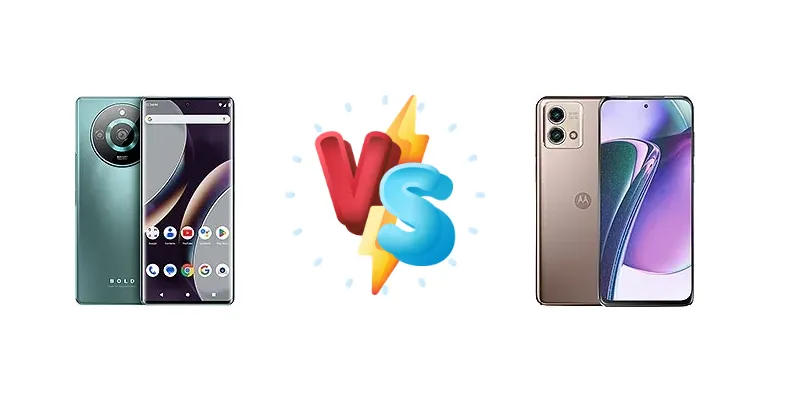
|
🏆 Quick Verdict
For users prioritizing raw performance and rapid charging, the BLU Bold N3 emerges as the winner. Its Mediatek Dimensity 7050, built on a 6nm process, offers a noticeable performance edge over the Snapdragon 6 Gen 1 in the Moto G Stylus 5G, coupled with significantly faster 66W charging. However, the Moto G Stylus retains value with its included stylus.
| PHONES | ||
|---|---|---|
| Phone Names | BLU Bold N3 | Motorola Moto G Stylus 5G (2023) |
| Network | ||
|---|---|---|
| 2G bands | GSM 850 / 900 / 1800 / 1900 | GSM 850 / 900 / 1800 / 1900 |
| 3G bands | HSDPA 850 / 1700(AWS) / 1900 / 2100 | HSDPA 850 / 900 / 1700(AWS) / 1900 / 2100 |
| 4G bands | 2, 4, 5, 12, 13, 17, 25, 26, 41, 66, 71 | 1, 2, 3, 4, 5, 7, 8, 12, 13, 14, 17, 18, 19, 20, 25, 26, 29, 30, 38, 39, 40, 41, 48, 66, 71 |
| 5G bands | 2, 5, 25, 41, 66, 71, 77 SA/NSA/Sub6 | 1, 2, 3, 5, 7, 12, 13, 14, 25, 26, 29, 30, 38, 41, 48, 66, 70, 71, 77, 78 SA/NSA |
| Speed | HSPA, LTE, 5G | HSPA, LTE, 5G |
| Technology | GSM / HSPA / LTE / 5G | GSM / HSPA / LTE / 5G |
| Launch | ||
|---|---|---|
| Announced | 2023, July | 2023, May 30 |
| Status | Available. Released 2023, August | Available. Released 2023, June 02 |
| Body | ||
|---|---|---|
| Build | Glass front, aluminum frame, glass back | Glass front, plastic frame, plastic back |
| Dimensions | 164.2 x 74.7 x 8.8 mm (6.46 x 2.94 x 0.35 in) | 162.8 x 73.8 x 9.2 mm (6.41 x 2.91 x 0.36 in) |
| SIM | Nano-SIM + Nano-SIM | Nano-SIM |
| Weight | 180 g (6.35 oz) | 202 g (7.13 oz) |
| Display | ||
|---|---|---|
| Resolution | 1080 x 2400 pixels, 20:9 ratio (~388 ppi density) | 1080 x 2400 pixels, 20:9 ratio (~399 ppi density) |
| Size | 6.78 inches, 111.0 cm2 (~90.5% screen-to-body ratio) | 6.6 inches, 105.2 cm2 (~87.5% screen-to-body ratio) |
| Type | AMOLED, 120Hz | IPS LCD, 120Hz |
| Platform | ||
|---|---|---|
| CPU | Octa-core (2x2.6 GHz Cortex-A78 & 6x2.0 GHz Cortex-A55) | Octa-core (4x2.2 GHz Cortex-A78 & 4x1.8 GHz Cortex-A55) |
| Chipset | Mediatek Dimensity 7050 (6 nm) | Qualcomm SM6450 Snapdragon 6 Gen 1 (4 nm) |
| GPU | Mali-G68 MC4 | Adreno 710 |
| OS | Android 13 | Android 13, planned upgrade to Android 14 |
| Memory | ||
|---|---|---|
| Card slot | No | microSDXC (dedicated slot) |
| Internal | 256GB 8GB RAM | 64GB 4GB RAM, 128GB 4GB RAM, 128GB 6GB RAM, 256GB 6GB RAM |
| Main Camera | ||
|---|---|---|
| Dual | - | 50 MP, f/1.9, (wide), 1.0µm, PDAF 8 MP, f/2.2, (ultrawide), 1/4.0", 1.12µm, AF |
| Features | Dual-LED flash, HDR, panorama | LED flash, HDR, panorama |
| Triple | 50 MP, f/1.9, (wide), 1/1.55", 1.0µm, PDAF 8 MP, f/2.2, 112˚ (ultrawide) 2 MP (macro) | - |
| Video | 4K@30fps, 1080p@30fps | 4K@30fps, 1080p@30/60fps |
| Selfie camera | ||
|---|---|---|
| Dual | 16 MP, f/2.5, (wide), 1/3", 1.0µm | - |
| Features | - | HDR |
| Single | - | 16 MP, f/2.5, (wide), 1.0µm |
| Video | 4K@30fps, 1080p@30fps | 1080p@30fps |
| Sound | ||
|---|---|---|
| 35mm jack | No | Yes |
| Loudspeaker | Yes | Yes, with stereo speakers |
| Comms | ||
|---|---|---|
| Bluetooth | 5.2, A2DP, LE | 5.1, A2DP, LE |
| NFC | Yes | Yes |
| Positioning | GPS | GPS (L1+L5), GALILEO |
| Radio | FM radio | FM radio |
| USB | USB Type-C 2.0, OTG | USB Type-C 2.0 |
| WLAN | Wi-Fi 802.11 a/b/g/n/ac/6, dual-band, Wi-Fi Direct | Wi-Fi 802.11 a/b/g/n/ac, dual-band |
| Features | ||
|---|---|---|
| Sensors | Fingerprint (under display, optical), accelerometer, gyro, proximity, compass | Fingerprint (side-mounted), accelerometer, gyro, proximity, compass, barometer |
| Battery | ||
|---|---|---|
| Charging | 66W wired, 100% in 39 min | 20W wired |
| Type | Li-Po 4700 mAh | Li-Po 5000 mAh |
| Misc | ||
|---|---|---|
| Colors | Sage Green | Cosmic Black, Rose Champagne |
| Models | - | XT2315-1, XT2315-4 |
| Price | About 250 EUR | $ 93.43 |
BLU Bold N3
- Faster 66W charging significantly reduces downtime.
- Mediatek Dimensity 7050 offers superior CPU performance.
- Potentially better gaming performance due to higher CPU clock speeds.
- BLU’s software update track record is less consistent than Motorola’s.
- Camera specs are unknown, potentially lagging behind competitors.
Motorola Moto G Stylus 5G (2023)
- Integrated stylus adds functionality for note-taking and creativity.
- Motorola’s near-stock Android experience is generally clean and user-friendly.
- Established brand with a generally reliable software update policy.
- Slower 20W charging is a significant inconvenience.
- Snapdragon 6 Gen 1 offers less raw processing power than the Dimensity 7050.
- 2MP macro camera is likely of limited practical use.
Display Comparison
Neither device boasts a standout display. While specific panel details (like peak brightness or color gamut coverage) are absent, the focus here is on processing power. Bezels are likely comparable given the price points. The absence of high refresh rates on both devices suggests a focus on efficiency rather than visual fluidity.
Camera Comparison
Without detailed camera specs, a direct comparison is difficult. However, given the price segment, both phones likely employ similar sensor sizes and image processing techniques. The presence of a 2MP macro camera on the Moto G Stylus is a common, but often underwhelming, feature. The larger sensor, if present on the BLU Bold N3, would be the key differentiator, but this information is unavailable. Image processing algorithms will play a significant role in the final image quality.
Performance
The core difference lies in the chipsets. The BLU Bold N3’s Mediatek Dimensity 7050 (6nm) features a 2x2.6 GHz Cortex-A78 and 6x2.0 GHz Cortex-A55 configuration. This contrasts with the Motorola’s Qualcomm SM6450 Snapdragon 6 Gen 1 (4nm) with its 4x2.2 GHz Cortex-A78 and 4x1.8 GHz Cortex-A55 setup. The Dimensity 7050’s higher clock speeds on the prime cores suggest superior single-core performance, beneficial for responsive app launches and smoother UI navigation. The 6nm process of the Dimensity 7050, while not as advanced as the Snapdragon’s 4nm, still provides a good balance of performance and efficiency. The Snapdragon 6 Gen 1’s 4nm node *should* offer better power efficiency, but the Dimensity 7050’s core configuration appears to offset this advantage with raw processing power. Both devices likely utilize LPDDR4X RAM, limiting memory bandwidth.
Battery Life
The Motorola Moto G Stylus 5G’s 20W charging is a significant drawback compared to the BLU Bold N3’s 66W charging. The BLU Bold N3 claims a full charge in 39 minutes, a substantial time saving. While battery capacity isn’t specified, the faster charging speed of the BLU Bold N3 mitigates any potential disadvantage from a slightly smaller battery. Users who frequently top up their phones will greatly benefit from the BLU’s charging capabilities.
Buying Guide
Buy the BLU Bold N3 if you need a phone that can handle demanding apps and games with greater ease, and if minimizing charging downtime is a priority. The 66W charging is a game-changer in this price bracket. Buy the Motorola Moto G Stylus 5G (2023) if you frequently use a stylus for note-taking, sketching, or precise navigation, and if you prioritize a well-established brand with a history of software support, even at the cost of some performance.