
Blackview Xplore 2 vs. Doogee S96 Pro: A Deep Dive into Rugged Performance
| Phones Images | |||||
|---|---|---|---|---|---|
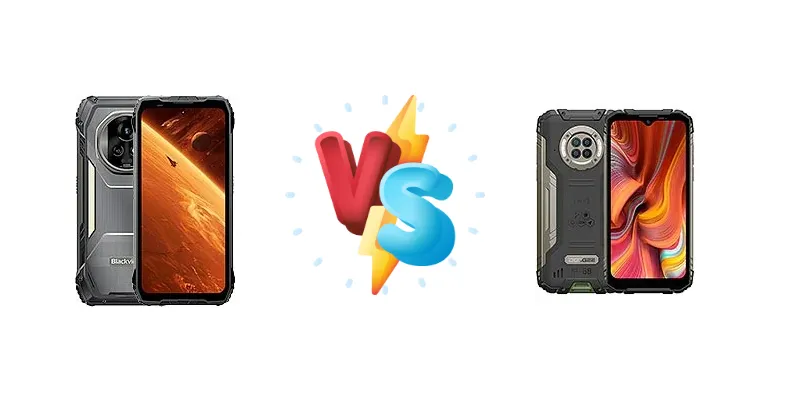
|
🏆 Quick Verdict
For users prioritizing raw performance and future-proofing, the Blackview Xplore 2 is the clear winner. Its Dimensity 8300 chipset offers a substantial upgrade over the Doogee S96 Pro’s Helio G90. However, the Doogee S96 Pro remains a viable option for budget-conscious gamers who don't need the absolute latest processing power.
| PHONES | ||
|---|---|---|
| Phone Names | Blackview Xplore 2 | Doogee S96 Pro |
| Network | ||
|---|---|---|
| 2G bands | GSM 850 / 900 / 1800 / 1900 | GSM 850 / 900 / 1800 / 1900 |
| 3G bands | HSDPA 800 / 850 / 900 / 1700(AWS) / 1800 / 1900 / 2100 | HSDPA 800 / 850 / 900 / 1700(AWS) / 1900 / 2100 |
| 4G bands | 1, 2, 3, 4, 5, 7, 8, 12, 13, 17, 18, 19, 20, 25, 26, 28, 30, 34, 38, 39, 40, 41, 66 | 1, 2, 3, 4, 5, 7, 8, 12, 13, 17, 18, 19, 20, 25, 26, 28, 38, 40, 66 |
| 5G bands | 1, 3, 5, 7, 8, 20, 28, 38, 40, 41, 77, 78, 79 SA/NSA | - |
| Speed | HSPA, LTE, 5G | HSPA, LTE |
| Technology | GSM / CDMA / HSPA / LTE / 5G | GSM / CDMA / HSPA / LTE |
| Launch | ||
|---|---|---|
| Announced | 2025, September 25 | 2020, October 26. Released 2020, November |
| Status | Available. Released 2025, October | Discontinued |
| Body | ||
|---|---|---|
| Dimensions | 186 x 87.8 x 29 mm (7.32 x 3.46 x 1.14 in) | 167 x 81.4 x 15.5 mm (6.57 x 3.20 x 0.61 in) |
| SIM | Nano-SIM + Nano-SIM | Nano-SIM + Nano-SIM |
| Weight | 670 g (1.48 lb) | 310 g (10.93 oz) |
| Display | ||
|---|---|---|
| Protection | Corning Gorilla Glass 5, Mohs level 5 | Corning Gorilla Glass |
| Resolution | 1440 x 3200 pixels, 20:9 ratio (~521 ppi density) | 720 x 1520 pixels, 19:9 ratio (~270 ppi density) |
| Size | 6.73 inches, 109.4 cm2 (~67.0% screen-to-body ratio) | 6.22 inches, 96.6 cm2 (~71.0% screen-to-body ratio) |
| Type | LTPO AMOLED, 68B colors, 120Hz, HDR, 500 nits (typ), 1300 nits (HBM), 2600 nits (peak) | IPS LCD |
| Platform | ||
|---|---|---|
| CPU | Octa-core (1x3.35 GHz Cortex-A715 & 3x3.20 GHz Cortex-A715 & 4x2.20 GHz Cortex-A510) | Octa-core (2x2.0 GHz Cortex-A76 & 6x2.0 GHz Cortex-A55) |
| Chipset | Mediatek Dimensity 8300 (4 nm) | Mediatek MT6785 Helio G90 (12 nm) |
| GPU | Mali G615-MC6 | Mali-G76 MC4 |
| OS | Android 15, up to 3 major Android upgrades, DokeOS 4.2 | Android 10 |
| Memory | ||
|---|---|---|
| Card slot | microSDXC (uses shared SIM slot) | microSDXC (dedicated slot) |
| Internal | 256GB 12GB RAM, 1TB 16GB RAM | 128GB 8GB RAM |
| Main Camera | ||
|---|---|---|
| Dual | 50 MP, f/1.9, (wide), 1/1.57", PDAF, OIS 20 MP, f/1.8, (night vision), 1/2.8", 2 infrared night vision lights | - |
| Features | LED flash, HDR, panorama | Quad-LED flash, HDR, panorama |
| Quad | - | 48 MP, f/1.8, (wide), PDAF 8 MP, f/2.2, 130˚, (ultrawide) 20 MP, f/2.8, (night vision), 4 infrared night vision lights 2 MP (macro) |
| Video | 4K@30/60fps, HDR10+ | 1080p |
| Selfie camera | ||
|---|---|---|
| Single | 50 MP, f/2.5, (wide), 1/2.76" | 16 MP, f/2.0, (wide) |
| Video | 4K@30/60fps, HDR10+ | 1080p |
| Sound | ||
|---|---|---|
| 35mm jack | No | Yes |
| Loudspeaker | Yes, with stereo speakers | Yes |
| Comms | ||
|---|---|---|
| Bluetooth | 5.4, A2DP, LE | 5.0, A2DP, LE |
| Infrared port | Yes | - |
| NFC | Yes | Yes |
| Positioning | GPS (L1+L5), GLONASS, GALILEO, BDS, QZSS | GPS, GLONASS, BDS, GALILEO |
| Radio | FM radio | FM radio |
| USB | USB Type-C, OTG | USB Type-C 2.0, OTG |
| WLAN | Wi-Fi 802.11 a/b/g/n/ac/6e, tri-band | Wi-Fi 802.11 a/b/g/n/ac, dual-band |
| Features | ||
|---|---|---|
| Sensors | Fingerprint (side-mounted), accelerometer, gyro, proximity, compass, barometer | Fingerprint (side-mounted), accelerometer, gyro, proximity, compass |
| Battery | ||
|---|---|---|
| Charging | 120W wired 10W reverse wired | 24W wired 10W wireless |
| Type | 20000 mAh | 6350 mAh |
| Misc | ||
|---|---|---|
| Colors | Black | Black, Orange, Green |
| Price | € 569.99 / $ 348.93 / £ 424.99 | About 280 EUR |
| EU LABEL | ||
|---|---|---|
| Battery | 188:00h endurance, 800 cycles | - |
| Energy | Class F | - |
| Free fall | Class A (270 falls) | - |
| Repairability | Class B | - |
Blackview Xplore 2
- Significantly faster processor (Dimensity 8300)
- Ultra-fast 120W wired charging
- Long battery life and 800 charge cycles
- Likely higher price point
- Potentially larger size/weight due to larger battery and cooling system
Doogee S96 Pro
- More affordable price
- Wireless charging support
- Compact and lightweight design (likely)
- Outdated Helio G90 chipset
- Slow charging speeds (24W wired)
- Lower overall performance
Display Comparison
While display specs aren't provided, the Xplore 2's higher processing power suggests it's likely paired with a higher resolution and refresh rate panel. The Doogee S96 Pro, given its chipset, likely features a standard 60Hz display. The Xplore 2's chipset could also support more advanced display features like LTPO for variable refresh rates, improving battery efficiency. Rugged phones prioritize durability, so expect both to have reinforced glass, but the Xplore 2 likely has a more vibrant and responsive visual experience.
Camera Comparison
Camera details are absent, but the Xplore 2’s superior processing power suggests a more capable image signal processor (ISP). This allows for faster image processing, better noise reduction, and more advanced computational photography features. While both phones likely feature multiple cameras, the Xplore 2 is more likely to offer features like 4K video recording at higher frame rates and improved low-light performance. The Doogee S96 Pro will likely focus on providing adequate image quality for social media sharing, but won't compete with the Xplore 2 in demanding scenarios.
Performance
The performance gap between these two devices is substantial. The Blackview Xplore 2’s Mediatek Dimensity 8300 (4nm) is a flagship-level chipset with a complex core configuration – 1x3.35 GHz Cortex-A715, 3x3.20 GHz Cortex-A715, and 4x2.20 GHz Cortex-A510 – designed for peak performance and efficiency. In contrast, the Doogee S96 Pro’s Helio G90 (12nm) utilizes a 2x2.0 GHz Cortex-A76 and 6x2.0 GHz Cortex-A55 configuration, representing an older generation of mobile processing. The 4nm process node of the Dimensity 8300 translates to significantly better thermal efficiency, reducing throttling during sustained workloads like gaming. This means the Xplore 2 will maintain higher clock speeds for longer periods, delivering a smoother and more consistent experience.
Battery Life
The Blackview Xplore 2 boasts an impressive 188-hour endurance rating and 800 charge cycles, indicating a focus on long-term battery health and usability. Its 120W wired charging is a game-changer, allowing for incredibly fast top-ups. The Doogee S96 Pro’s 24W wired and 10W wireless charging are considerably slower. While the exact battery capacity isn't specified, the Xplore 2’s endurance suggests a well-optimized power management system coupled with a large battery. The 800 charge cycles also suggest a battery designed to last for years, even with frequent fast charging.
Buying Guide
Buy the Blackview Xplore 2 if you need a phone capable of handling demanding tasks like video editing, high-end gaming, and multitasking without compromise. Its 120W charging and 800 charge cycles also provide long-term convenience. Buy the Doogee S96 Pro if you prefer a more affordable rugged phone primarily for basic gaming, everyday tasks, and appreciate wireless charging, accepting a trade-off in processing power and charging speed.