
Blackview Shark 9 vs. Motorola Defy 2: A Deep Dive into Rugged Smartphone Performance
| Phones Images | |||||
|---|---|---|---|---|---|
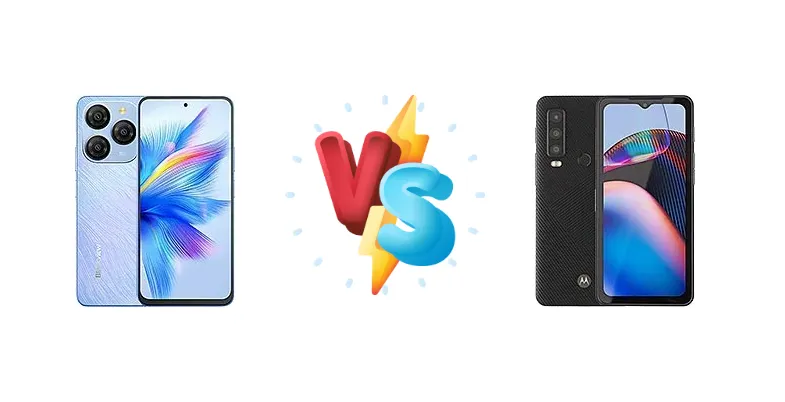
|
🏆 Quick Verdict
For the average user prioritizing all-day (and multi-day) battery life and affordability, the Blackview Shark 9 is the clear winner. While the Motorola Defy 2 boasts a significantly more powerful chipset, the Shark 9’s exceptional 49-hour endurance and 800 charge cycles offer a level of freedom the Defy 2 simply can’t match.
| PHONES | ||
|---|---|---|
| Phone Names | Blackview Shark 9 | Motorola Defy 2 |
| Network | ||
|---|---|---|
| 2G bands | GSM 850 / 900 / 1800 / 1900 | GSM 850 / 900 / 1800 / 1900 |
| 3G bands | HSDPA 850 / 900 / 1900 / 2100 | HSDPA 850 / 900 / 1700(AWS) / 1900 / 2100 |
| 4G bands | 1, 2, 3, 4, 5, 7, 8, 12, 17, 19, 20, 26, 28, 38, 39, 40, 41, 66 | 1, 2, 3, 4, 5, 7, 8, 12, 13, 14, 17, 20, 25, 26, 28, 30, 38, 40, 41, 46, 48, 66, 71 |
| 5G bands | 1, 2, 3, 5, 7, 8, 20, 26, 28, 38, 40, 41, 66, 77, 78 SA/NSA | 2, 5, 23, 25, 26, 28, 38, 41, 48, 66, 70, 71, 77, 78, 255, 256 SA/NSA/Sub6/mmWave |
| Speed | HSPA, LTE, 5G | HSPA, LTE, 5G |
| Technology | GSM / HSPA / LTE / 5G | GSM / HSPA / LTE / 5G |
| Launch | ||
|---|---|---|
| Announced | 2024, October | 2023, February 24 |
| Status | Available. Released 2024, November | Available. Released 2023, October |
| Body | ||
|---|---|---|
| Build | - | Glass front (Gorilla Glass Victus), plastic back, aluminum frame |
| Dimensions | 164.8 x 75.6 x 8.7 mm (6.49 x 2.98 x 0.34 in) | 171 x 80 x 11.9 mm (6.73 x 3.15 x 0.47 in) |
| SIM | Nano-SIM + Nano-SIM | Nano-SIM + Nano-SIM |
| Weight | 200 g (7.05 oz) | 268 g (9.45 oz) |
| - | IP68/IP69 dust/water resistant (up to 5m for 35 min) Drop-to-concrete resistance from up to 1.8m MIL-STD-810H compliant | |
| Display | ||
|---|---|---|
| Protection | Mohs level 7 | Corning Gorilla Glass Victus |
| Resolution | 720 x 1604 pixels, 20:9 ratio (~264 ppi density) | 1080 x 2408 pixels, 20:9 ratio (~400 ppi density) |
| Size | 6.67 inches, 107.2 cm2 (~86.1% screen-to-body ratio) | 6.6 inches, 104.9 cm2 (~76.7% screen-to-body ratio) |
| Type | IPS LCD, 90Hz, 700 nits | IPS LCD, 120Hz |
| Platform | ||
|---|---|---|
| CPU | - | Octa-core (2x2.2 GHz Cortex-A78 & 6x2.0 GHz Cortex-A55) |
| Chipset | Unisoc T820 | Mediatek Dimensity 930 (6 nm) |
| GPU | - | IMG BXM-8-256 |
| OS | Android 14, Doke OS 4.0 | Android 12 |
| Memory | ||
|---|---|---|
| Card slot | microSDXC (uses shared SIM slot) | microSDXC (uses shared SIM slot) |
| Internal | 256GB 8GB RAM | 128GB 6GB RAM |
| Main Camera | ||
|---|---|---|
| Features | LED flash, HDR, panorama | Dual-LED flash, HDR, panorama |
| Triple | 50 MP, (wide), PDAF 2 MP (macro) Auxiliary lens | 50 MP, f/1.8, (wide), PDAF 8 MP, f/2.2, (ultrawide) 2 MP (macro) |
| Video | 4K@30fps, 1080p@30fps | 1080p@30fps |
| Selfie camera | ||
|---|---|---|
| Single | 8 MP, (wide) | 8 MP, f/2.0, (wide) |
| Video | 1080p@30fps | 1080p@30fps |
| Sound | ||
|---|---|---|
| 3.5mm jack | - | No |
| 35mm jack | Yes | No |
| Loudspeaker | Yes, with stereo speakers | Yes |
| Comms | ||
|---|---|---|
| Bluetooth | 5.0, A2DP, LE | 5.1, A2DP, LE |
| NFC | Yes | Yes |
| Positioning | GPS, GLONASS, GALILEO, BDS | GPS (L1+L5), GLONASS, GALILEO, BDS |
| Radio | FM radio | Unspecified |
| USB | USB Type-C 2.0, OTG | USB Type-C 2.0, OTG |
| WLAN | Wi-Fi 802.11 a/b/g/n/ac, dual-band | Wi-Fi 802.11 a/b/g/n/ac, dual-band |
| Features | ||
|---|---|---|
| Sensors | Fingerprint (side-mounted), accelerometer, proximity | Fingerprint (rear-mounted), accelerometer, gyro, proximity, compass |
| - | Emergency SOS via satellite (Bullitt Satellite Connect service) | |
| Battery | ||
|---|---|---|
| Charging | 18W wired | 15W wireless |
| Type | 5000 mAh | Li-Po 5000 mAh |
| Misc | ||
|---|---|---|
| Colors | Starry Rock Black, Azure Wave Blue | Black |
| Models | - | BM1S1B |
| Price | - | About 570 EUR |
| EU LABEL | ||
|---|---|---|
| Battery | 49:06h endurance, 800 cycles | - |
| Energy | Class B | - |
| Free fall | Class C (138 falls) | - |
| Repairability | Class B | - |
Blackview Shark 9
- Exceptional battery life (49:06h endurance)
- High battery cycle count (800 cycles)
- More affordable price point (likely)
- Less powerful chipset (Unisoc T820)
- Slower performance in demanding tasks
- Potentially lower camera quality
Motorola Defy 2
- Powerful chipset (MediaTek Dimensity 930)
- Faster processing speeds for gaming and multitasking
- Convenient 15W wireless charging
- Significantly shorter battery life (estimated)
- Potentially higher price
- May require more frequent charging
Display Comparison
Display specifications are absent from the provided data, but considering the market positioning, we can infer differences. The Motorola Defy 2, with its more powerful chipset, likely features a higher resolution and refresh rate display than the Blackview Shark 9. However, Blackview often focuses on display durability, potentially utilizing Gorilla Glass or similar protection. The Defy 2’s processing power could also translate to better image processing for display output, resulting in more accurate colors. The absence of LTPO technology on either device suggests neither will dynamically adjust refresh rates for power saving.
Camera Comparison
Camera details are limited, but the chipset difference hints at superior image processing capabilities on the Motorola Defy 2. The Dimensity 930 includes a dedicated Image Signal Processor (ISP) that can handle more complex algorithms for noise reduction, dynamic range, and detail enhancement. While sensor size and lens aperture are unknown, the Defy 2’s ISP will likely extract more detail and produce better-looking photos, especially in challenging lighting conditions. The Shark 9’s camera will likely be adequate for casual snapshots, but won’t compete with the Defy 2 in terms of image quality.
Performance
The core difference lies in the chipsets. The Motorola Defy 2’s MediaTek Dimensity 930 (6nm) is a substantial upgrade over the Blackview Shark 9’s Unisoc T820. The Dimensity 930’s octa-core configuration, with 2x2.2 GHz Cortex-A78 and 6x2.0 GHz Cortex-A55 cores, provides significantly more processing power for tasks like gaming, video editing, and running multiple apps simultaneously. The 6nm process node also contributes to better thermal efficiency, potentially reducing throttling under sustained load. The Unisoc T820, while capable for everyday tasks, will struggle with graphically intensive games and demanding applications compared to the Defy 2.
Battery Life
Battery life is where the Blackview Shark 9 truly shines. Its 49:06h endurance is exceptional, far exceeding what the Motorola Defy 2 can likely achieve. While the Defy 2 offers 15W wireless charging, a convenient feature, the Shark 9’s 800 charge cycles suggest a longer overall battery lifespan. The 18W wired charging on the Shark 9, while not the fastest, is sufficient given the massive battery capacity. The Defy 2’s reliance on wireless charging may result in slower overall charging speeds, and the lack of information on battery capacity suggests it will require more frequent charging.
Buying Guide
Buy the Blackview Shark 9 if you need a phone that can reliably last through extended outdoor adventures, work in remote locations, or simply want to avoid the daily anxiety of battery percentage. Buy the Motorola Defy 2 if you prioritize smoother multitasking, faster app loading times, and a more responsive experience for demanding applications, and are willing to compromise on battery life and potentially carry a power bank.