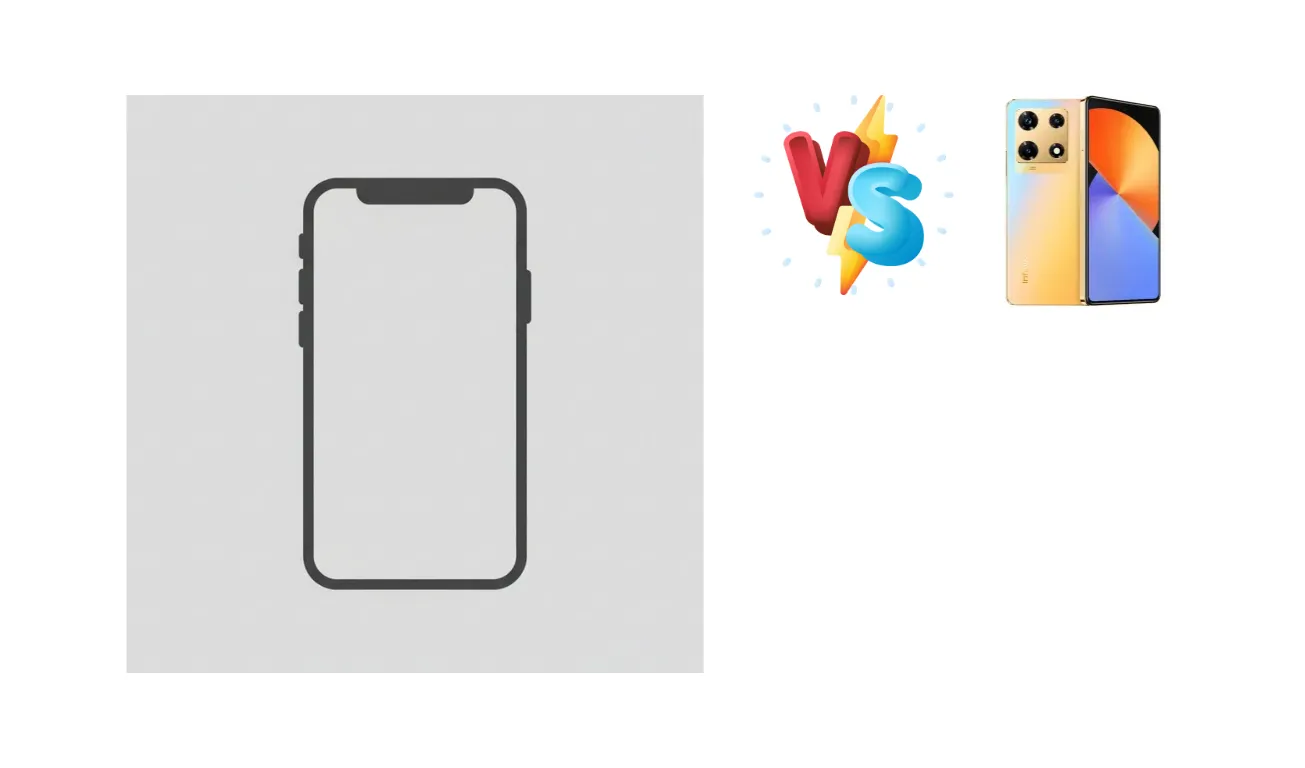
The sub-$200 smartphone market is fiercely competitive. The Blackview Oscal C80 aims to provide essential functionality at an incredibly low price point, while the Infinix Note 30 Pro attempts to bridge the gap between affordability and modern features, particularly in charging speed and processing power. This comparison dissects their key differences to determine which device best suits your needs.
🏆 Quick Verdict
For the average user prioritizing performance and convenience, the Infinix Note 30 Pro is the clear winner. Its Mediatek Helio G99 chipset and blazing-fast 68W charging significantly outperform the Blackview Oscal C80’s Unisoc T606 and 18W charging, justifying the potential price difference.
| Network |
|---|
| 2G bands | GSM 850 / 900 / 1800 / 1900 - SIM 1 & SIM 2 | GSM 850 / 900 / 1800 / 1900 |
| 3G bands | HSDPA 900 / 2100 | HSDPA 850 / 900 / 1700(AWS) / 1900 / 2100 |
| 4G bands | 1, 3, 7, 8, 20, 40 | 1, 2, 3, 4, 5, 7, 8, 12, 17, 20, 28, 38, 40, 41, 66 |
| Speed | HSPA, LTE | HSPA, LTE |
| Technology | GSM / HSPA / LTE | GSM / HSPA / LTE |
| Launch |
|---|
| Announced | 2022, September 07 | 2023, May 22 |
| Status | Available. Released 2022, September 14 | Available. Released 2023, May 22 |
| Body |
|---|
| Build | - | Glass front, plastic frame, glass back |
| Dimensions | 164.2 x 76 x 8.6 mm (6.46 x 2.99 x 0.34 in) | 162.7 x 76 x 8.2 mm (6.41 x 2.99 x 0.32 in) |
| SIM | Hybrid Dual SIM (Nano-SIM, dual stand-by) | Nano-SIM + Nano-SIM |
| Weight | 188 g (6.63 oz) | 203 g (7.16 oz) |
| | - | IP53 |
| Display |
|---|
| Resolution | 720 x 1600 pixels, 20:9 ratio (~270 ppi density) | 1080 x 2400 pixels, 20:9 ratio (~395 ppi density) |
| Size | 6.5 inches, 102.0 cm2 (~81.7% screen-to-body ratio) | 6.67 inches, 107.4 cm2 (~86.9% screen-to-body ratio) |
| Type | IPS LCD, 90Hz | AMOLED, 1B colors, 120Hz, 900 nits (peak) |
| | - | * the display diagonal size and resolution is unconfirmed |
| Platform |
|---|
| CPU | Octa-core (2x1.6 GHz Cortex-A75 & 6x1.6 GHz Cortex-A55) | Octa-core (2x2.2 GHz Cortex-A76 & 6x2.0 GHz Cortex-A55) |
| Chipset | Unisoc T606 (12 nm) | Mediatek Helio G99 (6 nm) |
| GPU | Mali-G57 MP1 | Mali-G57 MC2 |
| OS | Android 12, Doke-OS 3.0 | Android 13, XOS 13 |
| Memory |
|---|
| Card slot | microSDXC (uses shared SIM slot) | microSDXC (dedicated slot) |
| Internal | 128GB 8GB RAM | 256GB 8GB RAM |
| | UFS 2.1 | - |
| Main Camera |
|---|
| Dual | 50 MP, (wide), 1.2µm, PDAF
0.3 MP, (depth) | - |
| Features | LED flash, HDR, panorama | Quad-LED flash, HDR, panorama |
| Single | 8 MP | - |
| Triple | - | 108 MP, (wide), 1/1.67", PDAF
2 MP (macro)
Auxiliary lens |
| Video | 1080p@30fps | 1440p@30fps, 1080p@30fps |
| Selfie camera |
|---|
| Features | - | LED flash, HDR |
| Single | 8 MP | 32 MP, f/2.0, (wide), 1/2.8" |
| Video | 1080p@30fps | 1080p@30fps |
| Sound |
|---|
| 3.5mm jack | Yes | Yes |
| 35mm jack | - | Yes |
| Loudspeaker | Yes | Yes, with dual speakers |
| | - | Sound by JBL
24-bit/192kHz audio |
| Comms |
|---|
| Bluetooth | 5.0, A2DP, LE | Yes |
| NFC | No | Yes (market/region dependent) |
| Positioning | GPS, GLONASS, GALILEO, BDS | GPS |
| Radio | FM radio | FM radio |
| USB | USB Type-C, OTG | USB Type-C 2.0, OTG |
| WLAN | Wi-Fi 802.11 a/b/g/n/ac, dual-band | Wi-Fi 802.11 a/b/g/n/ac, dual-band, Wi-Fi Direct |
| Features |
|---|
| Sensors | Fingerprint (side-mounted), accelerometer, gyro, compass | Fingerprint (side-mounted), accelerometer, gyro, proximity, compass |
| Battery |
|---|
| Charging | 18W wired | 68W wired, PD3.0, 80% in 30 min
15W wireless
Reverse wireless |
| Type | Li-Ion 5180 mAh, non-removable | 5000 mAh |
| Misc |
|---|
| Colors | Early Sunny Snow, Midnight Black, Navy Blue | Magic Black, Variable Gold |
| Models | - | X678B |
| Price | About 130 EUR | - |
Blackview Oscal C80
- Extremely affordable price point
- Functional for basic smartphone tasks
- Potentially longer battery life due to less demanding processor (depending on capacity)
- Slow 18W charging
- Underpowered Unisoc T606 chipset
- Likely limited camera performance
Infinix Note 30 Pro
- Significantly faster 68W charging with wireless options
- More powerful Mediatek Helio G99 processor
- Better image processing capabilities
- Higher price compared to the Oscal C80
- May require more frequent charging depending on usage
- Potential for slightly more heat under heavy load
Display Comparison
Neither device boasts a standout display. While specific display specs (resolution, panel type) are missing for the Oscal C80, its lower price suggests a basic LCD panel. The Infinix Note 30 Pro, while also likely LCD, benefits from a more powerful processor to drive potentially higher refresh rates (not specified). The real differentiator here is likely image processing, where the Helio G99’s ISP will offer better color accuracy and dynamic range. Bezels are expected to be similar on both, reflecting their budget positioning.
Camera Comparison
Camera performance is likely to be a weak point on both devices, but the Infinix Note 30 Pro has the potential to deliver slightly better results. While both likely feature a primary camera and multiple auxiliary lenses (often 2MP macro lenses of limited utility), the Helio G99’s image signal processor (ISP) will offer superior image processing capabilities. Sensor size is unknown for both, but the G99’s ISP can compensate for a smaller sensor to some extent. Expect decent daylight photos from the Note 30 Pro, while the Oscal C80 will likely struggle in low-light conditions.
Performance
The performance gap is substantial. The Infinix Note 30 Pro’s Mediatek Helio G99, fabricated on a 6nm process, is a significant upgrade over the Blackview Oscal C80’s Unisoc T606 (12nm). The G99’s Cortex-A76 cores, clocked at 2.2 GHz, offer a noticeable performance boost over the T606’s Cortex-A75 cores at 1.6 GHz. This translates to snappier app launches, smoother multitasking, and a more enjoyable gaming experience. The 6nm process also contributes to better thermal efficiency, reducing the likelihood of throttling during sustained workloads. The Oscal C80 will handle basic tasks, but will struggle with demanding applications.
Battery Life
The Infinix Note 30 Pro’s charging capabilities are a game-changer. 68W wired charging, with claims of 80% charge in 30 minutes, is significantly faster than the Blackview Oscal C80’s 18W charging. The Note 30 Pro also adds 15W wireless charging and reverse wireless charging, features absent on the Oscal C80. While battery capacity isn’t specified for the Oscal C80, the Note 30 Pro’s faster charging mitigates the impact of a potentially smaller battery, ensuring less downtime. The convenience of rapid charging is a major advantage for the Note 30 Pro.
Buying Guide
Buy the Blackview Oscal C80 if you need a basic, functional smartphone for essential tasks like calls, messaging, and light social media use, and your budget is extremely limited. Buy the Infinix Note 30 Pro if you prioritize smoother multitasking, occasional gaming, significantly faster charging, and a more future-proofed processor, even if it means spending a bit more.
Frequently Asked Questions
❓ Will the Helio G99 in the Infinix Note 30 Pro overheat during prolonged gaming sessions?
While the Helio G99 is a capable processor, sustained gaming will generate heat. However, the 6nm fabrication process and Infinix’s thermal management design should prevent significant throttling, allowing for reasonably long gaming sessions without drastic performance drops. It won't match a flagship, but it's a solid performer for its class.
❓ Is the 18W charging on the Blackview Oscal C80 slow enough to be a major inconvenience?
Yes, 18W charging is considerably slower than the 68W on the Infinix Note 30 Pro. Expect several hours to fully charge the Oscal C80, making it less convenient for users who need a quick top-up. This is a significant trade-off for the lower price.
❓ Does the Infinix Note 30 Pro support fast charging with any standard USB-PD chargers?
Yes, the Infinix Note 30 Pro supports PD3.0 charging, meaning it will work with many standard USB-PD chargers to achieve fast charging speeds. However, to get the full 68W charging speed, you'll need a charger specifically rated for that wattage.
❓ How does the Unisoc T606 handle multitasking compared to the Helio G99?
The Unisoc T606 will struggle with heavy multitasking. While it can handle a few apps simultaneously, switching between them will likely be slow and laggy. The Helio G99, with its more powerful cores and increased memory bandwidth, offers a much smoother multitasking experience.