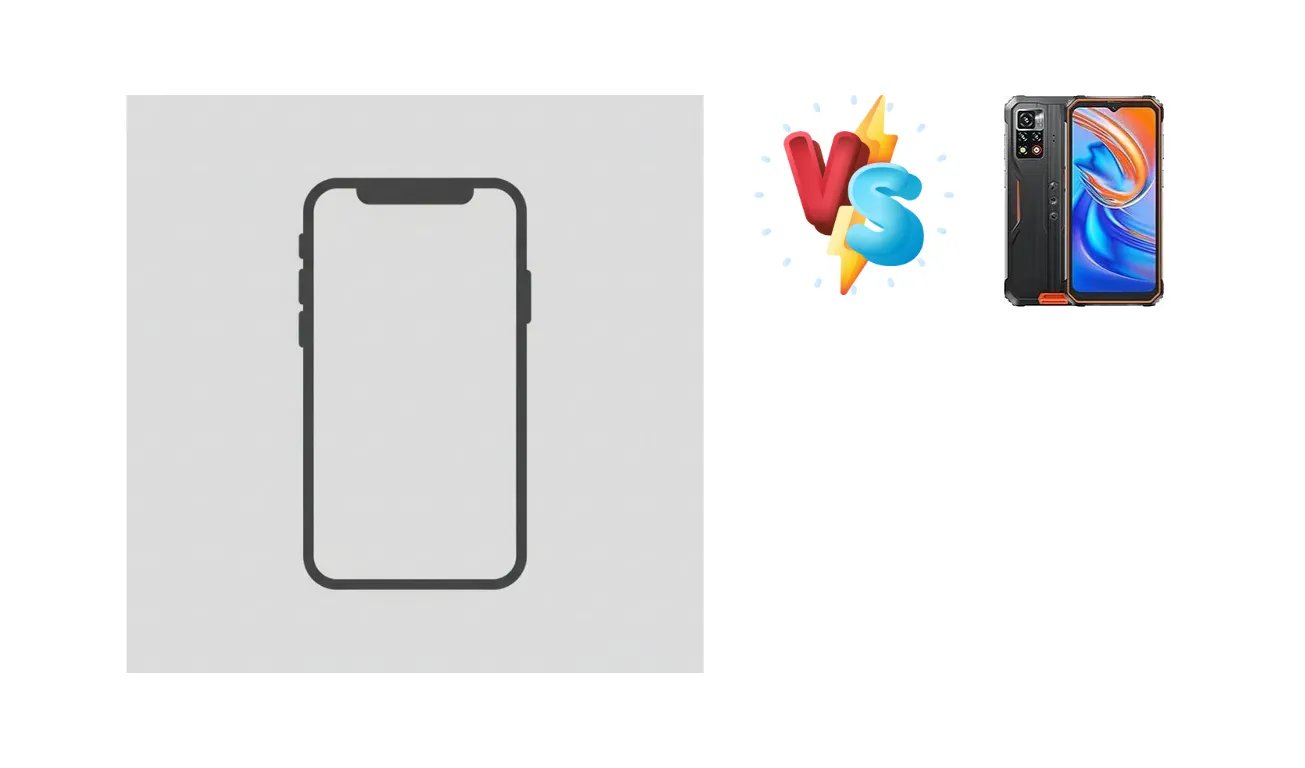
Blackview is making waves in the rugged smartphone market, offering durable devices at competitive prices. Two popular contenders are the Oscal C80 and the BV9200. But which one is right for you? This comprehensive comparison breaks down their key features to help you decide.
🏆 Quick Verdict
The Blackview BV9200 is the clear winner, boasting significantly faster performance thanks to the Helio G96 chipset, a brighter display, and incredibly fast 66W wired and 30W wireless charging. While the Oscal C80 is more budget-friendly, the BV9200 offers a superior overall experience.
| Network |
|---|
| 2G bands | GSM 850 / 900 / 1800 / 1900 - SIM 1 & SIM 2 | GSM 850 / 900 / 1800 / 1900 |
| 3G bands | HSDPA 900 / 2100 | HSDPA 850 / 900 / 1700(AWS) / 1900 / 2100 |
| 4G bands | 1, 3, 7, 8, 20, 40 | 1, 2, 3, 4, 5, 7, 8, 12, 13, 17, 18, 19, 20, 25, 26, 28, 34, 38, 39, 40, 41, 66 |
| Speed | HSPA, LTE | HSPA, LTE |
| Technology | GSM / HSPA / LTE | GSM / CDMA / HSPA / LTE |
| | - | CDMA 800 / 1900 |
| Launch |
|---|
| Announced | 2022, September 07 | 2022, December 28 |
| Status | Available. Released 2022, September 14 | Available. Released 2023, January 09 |
| Body |
|---|
| Dimensions | 164.2 x 76 x 8.6 mm (6.46 x 2.99 x 0.34 in) | 174.5 x 81.8 x 13.6 mm (6.87 x 3.22 x 0.54 in) |
| SIM | Hybrid Dual SIM (Nano-SIM, dual stand-by) | Nano-SIM + Nano-SIM |
| Weight | 188 g (6.63 oz) | 310 g (10.93 oz) |
| | - | IP68/IP69K dust/water resistant (up to 1.5m for 30 min)
Drop-to-concrete resistance from up to 1.8m
MIL-STD-810H compliant |
| Display |
|---|
| Protection | - | Corning Gorilla Glass 5 |
| Resolution | 720 x 1600 pixels, 20:9 ratio (~270 ppi density) | 1080 x 2408 pixels, 20:9 ratio (~400 ppi density) |
| Size | 6.5 inches, 102.0 cm2 (~81.7% screen-to-body ratio) | 6.6 inches, 104.9 cm2 (~73.5% screen-to-body ratio) |
| Type | IPS LCD, 90Hz | IPS LCD, 120Hz |
| Platform |
|---|
| CPU | Octa-core (2x1.6 GHz Cortex-A75 & 6x1.6 GHz Cortex-A55) | Octa-core (2x2.05 GHz Cortex-A76 & 6x2.0 GHz Cortex-A55) |
| Chipset | Unisoc T606 (12 nm) | Mediatek MT6781 Helio G96 (12 nm) |
| GPU | Mali-G57 MP1 | Mali-G52 MC2 |
| OS | Android 12, Doke-OS 3.0 | Android 12, Doke-OS 3.1 |
| Memory |
|---|
| Card slot | microSDXC (uses shared SIM slot) | microSDXC (dedicated slot) |
| Internal | 128GB 8GB RAM | 256GB 8GB RAM |
| | UFS 2.1 | UFS 2.1 |
| Main Camera |
|---|
| Dual | 50 MP, (wide), 1.2µm, PDAF
0.3 MP, (depth) | - |
| Features | LED flash, HDR, panorama | LED flash, HDR, panorama |
| Single | 8 MP | 16 MP, (wide), 1/3", 1.0µm |
| Triple | - | 50 MP, f/1.8, (wide), 1/2.76", 0.64µm, PDAF
8 MP, f/1.8, 120˚, (ultrawide), AF
Auxiliary lens |
| Video | 1080p@30fps | 1440p@30fps, 1080p@30fps |
| Selfie camera |
|---|
| Single | 8 MP | 16 MP, f/2.0, (wide), 1/3", 1.0µm |
| Video | 1080p@30fps | 1080p |
| Sound |
|---|
| 3.5mm jack | Yes | No |
| 35mm jack | - | No |
| Loudspeaker | Yes | Yes, with dual speakers |
| Comms |
|---|
| Bluetooth | 5.0, A2DP, LE | 5.2, A2DP, LE |
| NFC | No | Yes |
| Positioning | GPS, GLONASS, GALILEO, BDS | GPS, GLONASS, GALILEO, BDS |
| Radio | FM radio | FM radio |
| USB | USB Type-C, OTG | USB Type-C, OTG |
| WLAN | Wi-Fi 802.11 a/b/g/n/ac, dual-band | Wi-Fi 802.11 a/b/g/n/ac, dual-band |
| Features |
|---|
| Sensors | Fingerprint (side-mounted), accelerometer, gyro, compass | Fingerprint (side-mounted), accelerometer, gyro, proximity, compass, barometer |
| Battery |
|---|
| Charging | 18W wired | 66W wired
30W wireless |
| Type | Li-Ion 5180 mAh, non-removable | 5000 mAh |
| Misc |
|---|
| Colors | Early Sunny Snow, Midnight Black, Navy Blue | Black, Orange, Green |
| Price | About 130 EUR | About 200 EUR |
Blackview Oscal C80
- More affordable
- Rugged design
- Decent battery life (assumed)
- Slower performance
- Less bright display
- Slower charging
- Older chipset
Blackview BV9200
- Faster performance (Helio G96)
- Brighter display
- Fast charging (66W wired, 30W wireless)
- More premium feel
- More expensive
- Potentially larger/heavier
Display Comparison
The BV9200's display shines with a measured 481 nits of brightness and a 1423:1 contrast ratio, offering a noticeably more vibrant and readable experience, especially outdoors. The Oscal C80's display is likely adequate but lacks the same level of brightness and contrast, potentially making it less enjoyable in direct sunlight. Resolution and panel type are assumed to be similar, but the BV9200's superior brightness is a key advantage.
Camera Comparison
While specific camera specs are not fully detailed, the BV9200 likely has a more capable camera system due to its more powerful chipset. Expect better image processing and potentially higher resolution sensors. Both phones likely feature ruggedized camera designs to withstand harsh conditions.
Performance
The BV9200's Mediatek Helio G96 chipset is a significant upgrade over the Oscal C80's Unisoc T606. The G96 features Cortex-A76 cores, offering substantially better CPU performance for demanding tasks like gaming and multitasking. The Oscal C80 will handle everyday tasks adequately, but the BV9200 provides a smoother and more responsive experience.
Battery Life
The BV9200's 66W wired and 30W wireless charging capabilities are a game-changer. It can charge much faster than the Oscal C80's 18W wired charging. Battery capacity is assumed to be similar (around 5000-6000mAh), but the BV9200's faster charging makes it the clear winner in this category.
Buying Guide
The Blackview Oscal C80 is ideal for budget-conscious users who prioritize affordability and basic functionality in a rugged phone. The Blackview BV9200 is perfect for those needing high performance, a vibrant display, fast charging, and a more premium rugged experience, even if it comes at a higher price.
Frequently Asked Questions
❓ Is the Blackview Oscal C80 good for gaming?
The Oscal C80's Unisoc T606 chipset is adequate for basic games, but it will struggle with more demanding titles. The BV9200 is a much better choice for gaming.
❓ How durable are these phones?
Both phones are designed to be rugged and can withstand drops, dust, and water. However, the BV9200 likely has more robust construction and certifications.