
Blackview BV8200 vs Cubot KingKong 7: A Deep Dive into Rugged Smartphone Performance
| Phones Images | |||||
|---|---|---|---|---|---|
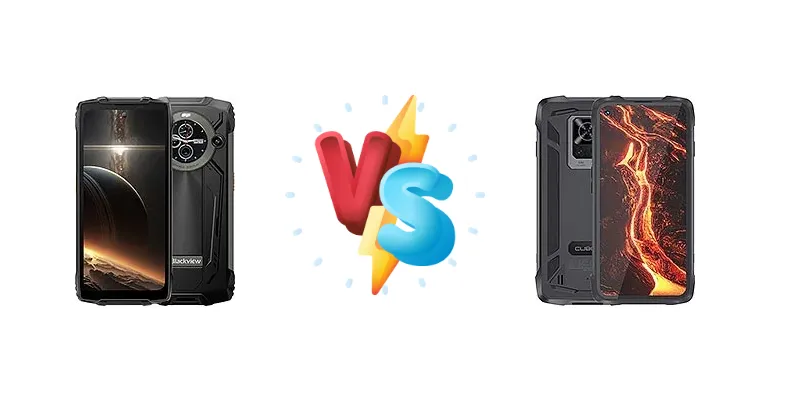
|
🏆 Quick Verdict
For most users, the Blackview BV8200 emerges as the superior choice. Its newer Mediatek Helio G100 chipset, built on a 6nm process, provides a significant performance advantage and improved efficiency over the Cubot KingKong 7’s older Helio P60. The BV8200’s impressive 118:45h endurance further solidifies its position as the better all-rounder.
| PHONES | ||
|---|---|---|
| Phone Names | Blackview BV8200 | Cubot KingKong 7 |
| Network | ||
|---|---|---|
| 2G bands | GSM 850 / 900 / 1800 / 1900 | GSM 850 / 900 / 1800 / 1900 |
| 3G bands | HSDPA 850 / 900 / 1700(AWS) / 1900 / 2100 | HSDPA 850 / 900 / 1700(AWS) / 1900 / 2100 |
| 4G bands | 1, 2, 3, 4, 5, 7, 8, 12, 13, 17, 18, 19, 20, 25, 26, 28, 30, 34, 38, 39, 40, 41, 66 | 1, 2, 3, 4, 5, 7, 8, 12, 13, 17, 18, 19, 20, 25, 26, 28, 38, 40, 41, 66 |
| Speed | HSPA, LTE | HSPA, LTE |
| Technology | GSM / CDMA / HSPA / LTE | GSM / CDMA / HSPA / LTE |
| Launch | ||
|---|---|---|
| Announced | 2024, December 31 | 2022 |
| Status | Available. Released 2024, December 31 | Available. Released 2022 |
| Body | ||
|---|---|---|
| Dimensions | 174.6 x 81.1 x 16.5 mm (6.87 x 3.19 x 0.65 in) | 166.8 x 83.5 x 14 mm (6.57 x 3.29 x 0.55 in) |
| SIM | Nano-SIM + Nano-SIM | Nano-SIM + Nano-SIM |
| Weight | 370 g (13.05 oz) | 267 g (9.42 oz) |
| Display | ||
|---|---|---|
| Protection | Corning Gorilla Glass 5, Mohs level 5 | - |
| Resolution | 1080 x 2400 pixels, 20:9 ratio (~405 ppi density) | 1080 x 2300 pixels (~400 ppi density) |
| Size | 6.5 inches, 102.0 cm2 (~72.0% screen-to-body ratio) | 6.36 inches, 100.4 cm2 (~72.1% screen-to-body ratio) |
| Type | IPS LCD, 120Hz, 500 nits | IPS LCD |
| Platform | ||
|---|---|---|
| CPU | Octa-core (2x2.2 GHz Cortex-A76 & 6x2.0 GHz Cortex-A55) | Octa-core (4x2.0 GHz Cortex-A73 & 4x2.0 GHz Cortex-A53) |
| Chipset | Mediatek Helio G100 (6 nm) | Mediatek MT6771V/CA Helio P60 (12 nm) |
| GPU | Mali-G57 MC2 | Mali-G72 MP3 |
| OS | Android 14, Doke OS 4.0 | Android 11 |
| Memory | ||
|---|---|---|
| Card slot | microSDXC (dedicated slot) | microSDXC (uses shared SIM slot) |
| Internal | 256GB 12GB RAM | 128GB 8GB RAM |
| Main Camera | ||
|---|---|---|
| Dual | 50 MP, f/1.9, (wide), 1/1.57", PDAF, OIS 13 MP, f/2.2, (ultrawide), 1/3.0" | - |
| Features | LED flash, HDR | LED flash |
| Triple | - | 64 MP, (wide), AF 16 MP, (ultrawide) 5 MP (macro) |
| Video | 1440p@30fps, 1080p@30fps | Yes |
| Selfie camera | ||
|---|---|---|
| Features | HDR | - |
| Single | 32 MP, f/2.2, (wide), 1/3.1" | 32 MP |
| Video | 1080p@30fps | Yes |
| Sound | ||
|---|---|---|
| 35mm jack | No | Unspecified |
| Loudspeaker | Yes | Yes |
| Comms | ||
|---|---|---|
| Bluetooth | 5.1, A2DP, LE | 4.2, A2DP |
| NFC | Yes | Yes |
| Positioning | GPS, GLONASS, GALILEO, BDS | GPS, GLONASS, BDS |
| Radio | FM radio | Unspecified |
| USB | USB Type-C, OTG | USB Type-C, OTG |
| WLAN | Wi-Fi 802.11 a/b/g/n/ac, dual-band | Wi-Fi 802.11 a/b/g/n |
| Features | ||
|---|---|---|
| Sensors | Fingerprint (side-mounted), accelerometer, gyro, proximity, compass | Fingerprint (rear-mounted), accelerometer, gyro, proximity, compass |
| Battery | ||
|---|---|---|
| Charging | 45W wired 5W reverse wired | - |
| Type | 8800 mAh | 5000 mAh |
| Misc | ||
|---|---|---|
| Colors | Black, Green, Orange | Black |
| Price | About 290 EUR | - |
| EU LABEL | ||
|---|---|---|
| Battery | 118:45h endurance, 800 cycles | - |
| Energy | Class A | - |
| Free fall | Class A (270 falls) | - |
| Repairability | Class B | - |
Blackview BV8200
- Superior performance with the Helio G100 chipset
- Exceptional battery life (118:45h endurance)
- Faster 45W wired charging
- More efficient 6nm process
- Display specifications are unknown
- Rugged design may result in a bulkier form factor
Cubot KingKong 7
- More affordable price point (likely)
- Rugged design for durability
- Functional for basic smartphone tasks
- Potentially lighter weight (due to older components)
- Outdated Helio P60 chipset
- Lower performance and efficiency
- Likely shorter battery life
- Slower charging speeds (unspecified)
Display Comparison
Neither device’s display specifications are provided, so a direct comparison is limited. However, given the market segment, both likely feature LCD panels optimized for outdoor visibility. The BV8200’s newer chipset *suggests* a higher probability of supporting a higher refresh rate, potentially offering smoother scrolling and animations. The KingKong 7, being an older model, likely sticks to a standard 60Hz panel. Bezels are expected to be substantial on both, prioritizing durability over a sleek aesthetic.
Camera Comparison
Without detailed camera specifications, a comprehensive comparison is impossible. However, it’s reasonable to assume both phones prioritize practicality over photographic excellence. The focus will likely be on providing functional cameras for documentation and basic photography in challenging conditions. The absence of information regarding sensor size or optical image stabilization (OIS) suggests neither device will excel in low-light photography. Any 2MP macro lenses included on either device are likely to offer minimal practical benefit.
Performance
The core difference lies in the chipsets. The Blackview BV8200’s Mediatek Helio G100 (6nm) is a substantial upgrade over the Cubot KingKong 7’s Helio P60 (12nm). The 6nm process allows for greater transistor density and improved power efficiency, translating to better sustained performance and less heat generation. The G100’s CPU configuration – 2x2.2 GHz Cortex-A76 & 6x2.0 GHz Cortex-A55 – is architecturally superior to the P60’s 4x2.0 GHz Cortex-A73 & 4x2.0 GHz Cortex-A53. The A76 cores in the G100 offer a noticeable performance boost in single-core tasks, while the combination of A76 and A55 cores provides a more balanced approach to multi-core workloads. This means the BV8200 will handle multitasking and demanding apps with greater ease.
Battery Life
The Blackview BV8200 boasts an impressive 118:45h endurance rating, indicating exceptional battery life. While the exact battery capacity isn’t specified, this endurance suggests a larger battery combined with the efficiency of the Helio G100 chipset. The 45W wired charging is significantly faster than what’s typically found in this price range, allowing for quicker top-ups. The 5W reverse wired charging is a useful addition for emergency charging of other devices. The Cubot KingKong 7’s battery capacity and charging speed are not provided, but given the older chipset and larger process node, it’s likely to offer significantly less endurance and slower charging times.
Buying Guide
Buy the Blackview BV8200 if you prioritize performance for tasks beyond basic communication, such as moderate gaming or running demanding applications, and value extended battery life. Buy the Cubot KingKong 7 if your primary needs are basic smartphone functionality – calls, texts, and light app usage – and you’re seeking a more budget-friendly rugged option, accepting a performance compromise.