
Blackview BV7300 vs Doogee S96 Pro: A Deep Dive into Rugged Smartphone Performance
| Phones Images | |||||
|---|---|---|---|---|---|
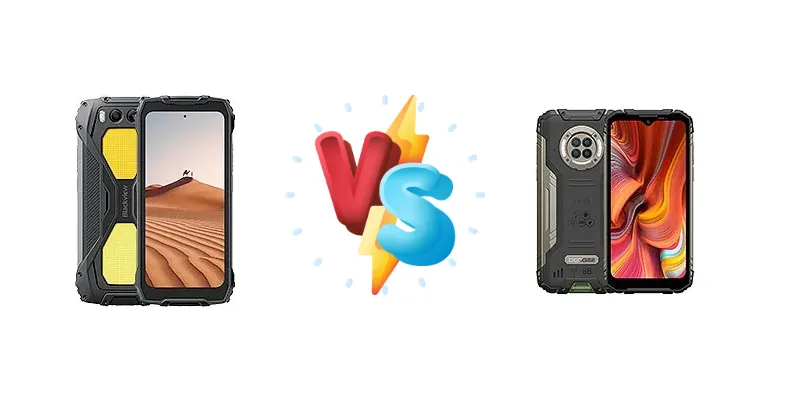
|
🏆 Quick Verdict
For the average user prioritizing sustained performance and faster charging, the Doogee S96 Pro emerges as the stronger contender. Its Helio G90 chipset, featuring Cortex-A76 cores, provides a noticeable performance edge over the BV7300’s Helio G81. However, the BV7300’s exceptional battery endurance and 45W charging are significant advantages for those needing multi-day battery life.
| PHONES | ||
|---|---|---|
| Phone Names | Blackview BV7300 | Doogee S96 Pro |
| Network | ||
|---|---|---|
| 2G bands | GSM 850 / 900 / 1800 / 1900 | GSM 850 / 900 / 1800 / 1900 |
| 3G bands | HSDPA 850 / 900 / 1700(AWS) / 1900 / 2100 | HSDPA 800 / 850 / 900 / 1700(AWS) / 1900 / 2100 |
| 4G bands | 1, 2, 3, 4, 5, 7, 8, 12, 13, 17, 20, 19, 26, 28, 40, 41, 38, 66 | 1, 2, 3, 4, 5, 7, 8, 12, 13, 17, 18, 19, 20, 25, 26, 28, 38, 40, 66 |
| Speed | HSPA, LTE | HSPA, LTE |
| Technology | GSM / HSPA / LTE | GSM / CDMA / HSPA / LTE |
| Launch | ||
|---|---|---|
| Announced | 2025, April | 2020, October 26. Released 2020, November |
| Status | Available. Released 2025, May | Discontinued |
| Body | ||
|---|---|---|
| Dimensions | 186 x 85 x 24 mm (7.32 x 3.35 x 0.94 in) | 167 x 81.4 x 15.5 mm (6.57 x 3.20 x 0.61 in) |
| SIM | Nano-SIM + Nano-SIM | Nano-SIM + Nano-SIM |
| Weight | 528 g (1.16 lb) | 310 g (10.93 oz) |
| Display | ||
|---|---|---|
| Protection | Corning Gorilla Glass 5, Mohs level 5 | Corning Gorilla Glass |
| Resolution | 720 x 1604 pixels, 20:9 ratio (~264 ppi density) | 720 x 1520 pixels, 19:9 ratio (~270 ppi density) |
| Size | 6.67 inches, 107.2 cm2 (~67.8% screen-to-body ratio) | 6.22 inches, 96.6 cm2 (~71.0% screen-to-body ratio) |
| Type | IPS LCD, 90Hz, 700 nits | IPS LCD |
| Platform | ||
|---|---|---|
| CPU | Octa-core (2x2.0 GHz Cortex-A75 & 6x1.8 GHz Cortex-A55) | Octa-core (2x2.0 GHz Cortex-A76 & 6x2.0 GHz Cortex-A55) |
| Chipset | Mediatek Helio G81 (12 nm) | Mediatek MT6785 Helio G90 (12 nm) |
| GPU | Mali-G52 MC2 | Mali-G76 MC4 |
| OS | Android 14, DokeOS 4.0 | Android 10 |
| Memory | ||
|---|---|---|
| Card slot | microSDXC (uses shared SIM slot) | microSDXC (dedicated slot) |
| Internal | 256GB 6GB RAM | 128GB 8GB RAM |
| Main Camera | ||
|---|---|---|
| Dual | 50 MP, f/1.8, (wide), 1/2.76", PDAF 20 MP, f/2.0, (night vision), 1/2.8", 2 infrared night vision lights | - |
| Features | LED flash, HDR, panorama | Quad-LED flash, HDR, panorama |
| Quad | - | 48 MP, f/1.8, (wide), PDAF 8 MP, f/2.2, 130˚, (ultrawide) 20 MP, f/2.8, (night vision), 4 infrared night vision lights 2 MP (macro) |
| Video | 1080p@30fps | 1080p |
| Selfie camera | ||
|---|---|---|
| Single | 32 MP, f/2.2, (wide) | 16 MP, f/2.0, (wide) |
| Video | 1080p@30fps | 1080p |
| Sound | ||
|---|---|---|
| 35mm jack | No | Yes |
| Loudspeaker | Yes, with stereo speakers | Yes |
| Comms | ||
|---|---|---|
| Bluetooth | 5.3, A2DP, LE | 5.0, A2DP, LE |
| NFC | Yes | Yes |
| Positioning | GPS, GLONASS, GALILEO, BDS | GPS, GLONASS, BDS, GALILEO |
| Radio | FM radio | FM radio |
| USB | USB Type-C, OTG | USB Type-C 2.0, OTG |
| WLAN | Wi-Fi 802.11 a/b/g/n/ac, dual-band | Wi-Fi 802.11 a/b/g/n/ac, dual-band |
| Features | ||
|---|---|---|
| Sensors | Accelerometer, gyro, proximity, compass | Fingerprint (side-mounted), accelerometer, gyro, proximity, compass |
| Battery | ||
|---|---|---|
| Charging | 45W wired 7W reverse wired | 24W wired 10W wireless |
| Type | 15000 mAh | 6350 mAh |
| Misc | ||
|---|---|---|
| Colors | Black, Orange | Black, Orange, Green |
| Price | - | About 280 EUR |
| EU LABEL | ||
|---|---|---|
| Battery | 166:39h endurance, 800 cycles | - |
| Energy | Class A | - |
| Free fall | Class A (270 falls) | - |
| Repairability | Class C | - |
Blackview BV7300
- Exceptional battery endurance (166:39h)
- Faster 45W wired charging
- Long-lasting battery health (800 cycles)
- Less powerful processor (Helio G81)
- No wireless charging
Doogee S96 Pro
- More powerful processor (Helio G90)
- Wireless charging support
- Faster application loading and multitasking
- Shorter battery life compared to BV7300
- Slower 24W wired charging
Display Comparison
Neither device’s display specifications are provided, so a direct comparison is limited. However, given the price points, we can assume both utilize IPS LCD panels. The focus here shifts to durability – both are ruggedized, implying reinforced glass and robust construction. The absence of high refresh rate or LTPO technology suggests neither prioritizes bleeding-edge display features, focusing instead on visibility and resilience in harsh conditions.
Camera Comparison
Without detailed camera specifications, a comprehensive comparison is difficult. However, the chipset difference indirectly impacts camera performance. The G90’s more powerful ISP (Image Signal Processor) in the Doogee S96 Pro will likely result in faster image processing and potentially better low-light performance. The presence of OIS (Optical Image Stabilization) would be a significant differentiator, but is not specified for either device. It’s reasonable to assume both phones include a standard array of lenses, but the G90’s processing power gives the S96 Pro an edge in image quality.
Performance
The Doogee S96 Pro’s Mediatek Helio G90 chipset represents a clear advantage over the Blackview BV7300’s Helio G81. The G90 utilizes two Cortex-A76 cores clocked at 2.0 GHz, a more modern and efficient architecture than the BV7300’s Cortex-A75 cores. While both chipsets are 12nm, the A76 cores offer superior single-core performance, translating to snappier app launches and smoother multitasking. The BV7300’s G81 is still capable, but will exhibit more noticeable slowdowns under heavy load. Both devices share 6x Cortex-A55 cores for efficiency, but the G90’s overall architecture provides a more robust foundation for demanding tasks.
Battery Life
The Blackview BV7300 boasts impressive battery endurance, rated at 166:39 hours. This suggests a larger battery capacity than the Doogee S96 Pro, although the exact mAh is unknown. The BV7300’s 45W wired charging is significantly faster than the S96 Pro’s 24W charging, allowing for quicker top-ups. The S96 Pro compensates with 10W wireless charging, a feature absent on the BV7300. The BV7300’s 800 charge cycles also indicate a focus on long-term battery health, promising sustained capacity over years of use.
Buying Guide
Buy the Blackview BV7300 if you need a phone that can genuinely last for days on a single charge, and you frequently work in environments where access to power is limited. Its 800 charge cycles also promise longevity. Buy the Doogee S96 Pro if you prioritize smoother application performance, faster charging speeds, and are willing to trade some battery endurance for a more responsive user experience, especially when gaming or multitasking.