
Blackview BV4800 Pro vs. Cubot KingKong 5 Pro: A Rugged Smartphone Showdown
| Phones Images | |||||
|---|---|---|---|---|---|
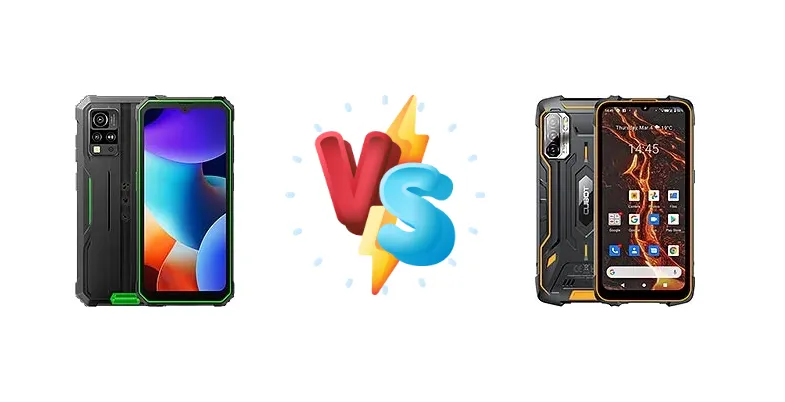
|
🏆 Quick Verdict
For users prioritizing all-day (and multi-day) battery life and a more modern chipset, the Blackview BV4800 Pro is the clear winner. Its 43-hour endurance significantly outpaces what the Cubot KingKong 5 Pro can likely achieve, making it ideal for extended fieldwork or travel. However, the KingKong 5 Pro remains a viable option for budget-conscious buyers.
| PHONES | ||
|---|---|---|
| Phone Names | Blackview BV4800 Pro | Cubot KingKong 5 Pro |
| Network | ||
|---|---|---|
| 2G bands | GSM 850 / 900 / 1800 / 1900 | GSM 850 / 900 / 1800 / 1900 |
| 3G bands | HSDPA 850 / 900 / 1700(AWS) / 1900 / 2100 | HSDPA 850 / 900 / 1700(AWS) / 1900 / 2100 |
| 4G bands | 2, 3, 4, 5, 7, 12, 13, 17, 26, 28, 40, 41, 66 | 1, 2, 3, 4, 5, 7, 8, 12, 13, 17, 18, 19, 20, 25, 26, 28, 38, 40, 41, 66 |
| Speed | HSPA, LTE | HSPA, LTE |
| Technology | GSM / HSPA / LTE | GSM / HSPA / LTE |
| Launch | ||
|---|---|---|
| Announced | 2024, December | 2021 |
| Status | Available. Released 2024, December | Available. Released 2021 |
| Body | ||
|---|---|---|
| Dimensions | 174.7 x 81.5 x 13.5 mm (6.88 x 3.21 x 0.53 in) | 165.8 x 81.4 x 18.8 mm (6.53 x 3.20 x 0.74 in) |
| SIM | Nano-SIM + Nano-SIM | Nano-SIM + Nano-SIM |
| Weight | 285 g (10.05 oz) | 319 g (11.25 oz) |
| Display | ||
|---|---|---|
| Protection | Corning Gorilla Glass 5, Mohs level 5 | - |
| Resolution | 720 x 1612 pixels, 20:9 ratio (~269 ppi density) | 720 x 1560 pixels, 19.5:9 ratio (~286 ppi density) |
| Size | 6.56 inches, 103.4 cm2 (~72.6% screen-to-body ratio) | 6.01 inches, 88.7 cm2 (~65.7% screen-to-body ratio) |
| Type | IPS LCD | IPS LCD |
| Platform | ||
|---|---|---|
| CPU | Octa-core (2x1.6 GHz Cortex-A75 & 6x1.6 GHz Cortex-A55) | Octa-core (4x2.0 GHz Cortex-A53 & 4x1.5 GHz Cortex-A53) |
| Chipset | Unisoc T606 (12 nm) | Mediatek MT6762D Helio P22 (12 nm) |
| GPU | Mali-G57 MP1 | PowerVR GE8320 |
| OS | Android 14, DokeOS 4.0 | Android 11 |
| Memory | ||
|---|---|---|
| Card slot | microSDXC (dedicated slot) | microSDXC (uses shared SIM slot) |
| Internal | 128GB 4GB RAM | 64GB 4GB RAM |
| Main Camera | ||
|---|---|---|
| Dual | 16 MP, f/2.2, (wide), AF 2 MP, f/2.8 | - |
| Features | LED flash | LED flash |
| Triple | - | 48 MP, (wide), AF 5 MP (macro), AF Auxiliary lens |
| Video | 1080p@30fps | Yes |
| Selfie camera | ||
|---|---|---|
| Single | 8 MP, f/2.2, (wide) | 25 MP |
| Video | 720p@30fps | Yes |
| Sound | ||
|---|---|---|
| 35mm jack | No | Unspecified |
| Loudspeaker | Yes | Yes, with stereo speakers |
| Comms | ||
|---|---|---|
| Bluetooth | 5.0, A2DP, LE | 5.0, A2DP, LE |
| NFC | Yes | Yes |
| Positioning | GPS, GLONASS, GALILEO, BDS | GPS, GLONASS, BDS |
| Radio | FM radio | Unspecified |
| USB | USB Type-C 2.0, OTG | USB Type-C, OTG |
| WLAN | Wi-Fi 802.11 a/b/g/n/ac, dual-band | Wi-Fi 802.11 a/b/g/n/ac, dual-band |
| Features | ||
|---|---|---|
| Sensors | Fingerprint (side-mounted), accelerometer, gyro, proximity, compass | Fingerprint (rear-mounted), accelerometer, gyro, proximity, compass |
| Battery | ||
|---|---|---|
| Charging | 10W wired | - |
| Type | 5180 mAh | 8000 mAh |
| Misc | ||
|---|---|---|
| Colors | Black, Orange, Green | Black |
| EU LABEL | ||
|---|---|---|
| Battery | 43:06h endurance, 800 cycles | - |
| Energy | Class C | - |
| Free fall | Class A (270 falls) | - |
| Repairability | Class C | - |
Blackview BV4800 Pro
- Exceptional battery life (43:06h endurance)
- More modern Unisoc T606 chipset for better performance
- 800 charge cycles indicate long-term battery health
- Slow 10W charging
- Display specifications unknown
Cubot KingKong 5 Pro
- More affordable price point
- Decent performance for basic tasks
- Rugged design for durability
- Older MediaTek Helio P22 chipset
- Likely shorter battery life compared to BV4800 Pro
Display Comparison
Neither device's display specifications are provided, so a direct comparison is limited. However, given the price points, we can assume both utilize IPS LCD panels. The focus here will be on performance. The chipset's ability to drive the display smoothly will be a key differentiator. The BV4800 Pro's newer Unisoc T606 should offer better graphics processing capabilities, potentially resulting in smoother scrolling and animations compared to the KingKong 5 Pro's Helio P22.
Camera Comparison
Without detailed camera specs, it's difficult to make a definitive judgment. However, rugged phones in this price range typically prioritize durability over camera quality. We can assume both devices feature basic camera setups. The presence of a 2MP macro camera on either device is likely more for marketing than practical use. The larger sensor (if any) and wider aperture will be the determining factors, but without that data, the BV4800 Pro's newer chipset *may* offer slightly better image processing capabilities.
Performance
The core difference lies in the chipsets. The Blackview BV4800 Pro’s Unisoc T606 (12nm) utilizes a more modern architecture with two Cortex-A75 cores clocked at 1.6 GHz alongside six Cortex-A55 cores, also at 1.6 GHz. This configuration provides a noticeable performance boost over the Cubot KingKong 5 Pro’s MediaTek Helio P22 (12nm), which features four Cortex-A53 cores at 2.0 GHz and another four at 1.5 GHz. While the P22 has a higher clock speed on some cores, the A75 cores in the T606 offer significantly better single-core performance, crucial for responsive app launches and general usability. This translates to a snappier experience for the BV4800 Pro, especially when multitasking.
Battery Life
The Blackview BV4800 Pro truly shines in battery endurance, boasting an impressive 43 hours and 6 minutes of usage. This is a significant advantage over what the Cubot KingKong 5 Pro is likely to achieve with its older chipset. While the exact battery capacity of the KingKong 5 Pro isn't specified, the more efficient Unisoc T606 in the BV4800 Pro, combined with its 800 charge cycles rating, suggests a longer lifespan and more reliable performance over time. The BV4800 Pro's 10W charging is slow, but the extended battery life mitigates this drawback.
Buying Guide
Buy the Blackview BV4800 Pro if you need a phone that can reliably last through multiple work shifts, outdoor adventures, or extended periods away from a charger. Its superior battery life and newer Unisoc T606 chipset provide a smoother, more efficient experience. Buy the Cubot KingKong 5 Pro if you prefer a more affordable rugged phone and your usage is primarily focused on basic tasks like calls, messaging, and light social media. It's a good entry point into the rugged phone category without breaking the bank.