
Blackview BL9000 vs. Ulefone Power Armor 19T: A Deep Dive into Rugged Performance
| Phones Images | |||||
|---|---|---|---|---|---|
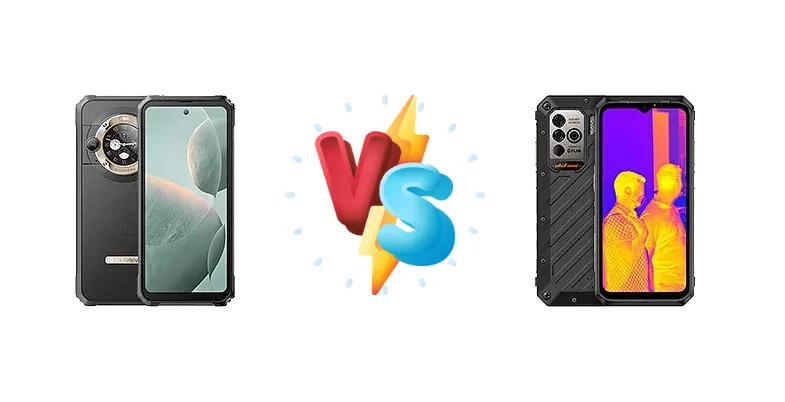
|
🏆 Quick Verdict
For the average user prioritizing performance and charging speed, the Blackview BL9000 is the clear winner. Its Dimensity 8020 chipset delivers a substantial performance advantage over the Ulefone’s Helio G99, and the 120W charging is a game-changer. However, the Power Armor 19T offers wireless charging and a potentially more affordable price point.
| PHONES | ||
|---|---|---|
| Phone Names | Blackview BL9000 | Ulefone Power Armor 19T |
| Network | ||
|---|---|---|
| 2G bands | GSM 850 / 900 / 1800 / 1900 | GSM 850 / 900 / 1800 / 1900 |
| 3G bands | HSDPA 850 / 900 / 1700(AWS) / 1900 / 2100 | HSDPA 800 / 850 / 900 / 1700(AWS) / 1900 / 2100 |
| 4G bands | 1, 2, 3, 4, 5, 7, 8, 12, 13, 17, 18, 19, 20, 25, 26, 28, 30, 34, 38, 39, 40, 41, 66 | 1, 2, 3, 4, 5, 7, 8, 12, 13, 17, 18, 19, 20, 25, 26, 28, 34, 38, 39, 40, 41, 66, 71 |
| 5G bands | 1, 3, 5, 7, 8, 20, 28, 38, 40, 41, 77, 78, 79 SA/NSA | - |
| Speed | HSPA, LTE, 5G | HSPA, LTE |
| Technology | GSM / CDMA / HSPA / LTE / 5G | GSM / CDMA / HSPA / CDMA2000 / LTE |
| - | CDMA2000 1x | |
| Launch | ||
|---|---|---|
| Announced | 2024, January | 2023, March 06 |
| Status | Available. Released 2024, January | Available. Released 2023, March 06 |
| Body | ||
|---|---|---|
| Dimensions | 179.5 x 82.6 x 17 mm (7.07 x 3.25 x 0.67 in) | 175.2 x 83.4 x 18.8 mm (6.90 x 3.28 x 0.74 in) |
| SIM | Nano-SIM + Nano-SIM | Nano-SIM + Nano-SIM |
| Weight | 413 g (14.57 oz) | 409 g (14.43 oz) |
| - | IP68/IP69K dust/water resistant (up to 1.5m for 30 min) Drop-to-concrete resistance from up to 1.5m MIL-STD-810H compliant Accessory connector (ulefone endoscope, microscope) | |
| Display | ||
|---|---|---|
| Protection | Corning Gorilla Glass Victus, Mohs level 7 | Corning Gorilla Glass 5 |
| Resolution | 1080 x 2460 pixels (~396 ppi density) | 1080 x 2408 pixels, 20:9 ratio (~401 ppi density) |
| Size | 6.78 inches, 109.2 cm2 (~73.6% screen-to-body ratio) | 6.58 inches, 104.3 cm2 (~71.4% screen-to-body ratio) |
| Type | IPS LCD, 120Hz | IPS LCD, 120Hz |
| Platform | ||
|---|---|---|
| CPU | Octa-core (4x2.6 GHz Cortex-A78 & 4x2.0 GHz Cortex-A55) | Octa-core (2x2.2 GHz Cortex-A76 & 6x2.0 GHz Cortex-A55) |
| Chipset | Mediatek Dimensity 8020 (6 nm) | Mediatek Helio G99 (6 nm) |
| GPU | Mali-G77 MC9 | Mali-G57 MC2 |
| OS | Android 13, Doke-OS 4.0 | Android 12 |
| Memory | ||
|---|---|---|
| Card slot | No | microSDXC (uses shared SIM slot) |
| Internal | 512GB 12GB RAM | 256GB 12GB RAM |
| Main Camera | ||
|---|---|---|
| Dual | 50 MP, (wide), 1/1.57", PDAF 13 MP, 120˚, (ultrawide), AF | - |
| Features | LED flash, HDR, panorama | Hexa-LED flash, HDR, panorama |
| Triple | - | 108 MP, f/1.9, (wide), 1/1.52", 0.7µm, PDAF 5 MP (macro) FLIR thermal camera (Lepton module) 5 MP (for thermal module) |
| Video | 4K@30fps, 1080p@30fps | 1440p@30fps, 1080p@30fps |
| Selfie camera | ||
|---|---|---|
| Single | 50 MP, (wide), 1/2.8" | 16 MP, f/2.0, (wide), 1.0µm |
| Video | 1080p@30fps | 1080p@30fps |
| Sound | ||
|---|---|---|
| 3.5mm jack | - | Yes |
| 35mm jack | No | Yes |
| Loudspeaker | Yes, with stereo speakers | Yes |
| Comms | ||
|---|---|---|
| Bluetooth | 5.1, A2DP, LE | 5.2, A2DP, LE |
| NFC | Yes | Yes |
| Positioning | GPS, GLONASS, BDS, GALILEO | GPS, GLONASS, GALILEO, BDS |
| Radio | FM radio | Wireless FM radio, RDS, recording |
| USB | USB Type-C, OTG | USB Type-C 2.0, OTG, magnetic connector |
| WLAN | Wi-Fi 802.11 a/b/g/n/ac/6, dual-band | Wi-Fi 802.11 a/b/g/n/ac, dual-band |
| Features | ||
|---|---|---|
| Sensors | Fingerprint (side-mounted), accelerometer, gyro, proximity, compass, barometer | Fingerprint (side-mounted), accelerometer, gyro, proximity, compass |
| Battery | ||
|---|---|---|
| Charging | 120W wired 5W reverse wired | 66W wired, 52% in 30 min 15W wireless 5W wireless reversed |
| Type | 8800 mAh | Li-Po 9600 mAh |
| Misc | ||
|---|---|---|
| Colors | Rose Gold, Interstellar Black | Black |
| Price | About 490 EUR | About 440 EUR |
| EU LABEL | ||
|---|---|---|
| Battery | 87:06h endurance, 800 cycles | - |
| Energy | Class B | - |
| Free fall | Class A (271 falls) | - |
| Repairability | Class C | - |
Blackview BL9000
- Significantly faster processor (Dimensity 8020)
- Ultra-fast 120W wired charging
- Longer battery endurance (87:06h)
- Likely higher price point
- No wireless charging
Ulefone Power Armor 19T
- Wireless charging support
- Potentially more affordable price
- Wireless reverse charging
- Less powerful processor (Helio G99)
- Slower charging speeds (66W wired)
Display Comparison
While both devices are likely to feature durable displays befitting their rugged nature, the provided data focuses on internal components. We can infer that both will prioritize visibility in direct sunlight, a key feature for outdoor use. Without specific display specs, it's difficult to compare brightness or color accuracy, but the BL9000's higher processing power could potentially support more advanced display features in future software updates.
Camera Comparison
The provided data doesn't detail camera specifications. However, given the market positioning, we can expect the BL9000 to potentially feature a more advanced camera system. The Dimensity 8020’s ISP (Image Signal Processor) is more capable than the Helio G99’s, allowing for better image processing, noise reduction, and potentially higher resolution video recording. Without specific sensor details, it’s impossible to make a definitive judgment, but the BL9000’s chipset gives it a clear advantage in potential camera performance.
Performance
The core difference lies in the chipsets. The Blackview BL9000’s Mediatek Dimensity 8020 (6nm) is a significant leap ahead of the Ulefone Power Armor 19T’s Helio G99 (6nm). The Dimensity 8020’s octa-core configuration (4x2.6 GHz Cortex-A78 & 4x2.0 GHz Cortex-A55) provides substantially more processing power than the Helio G99’s (2x2.2 GHz Cortex-A76 & 6x2.0 GHz Cortex-A55). This translates to faster app loading, smoother multitasking, and a far superior gaming experience. The Cortex-A78 cores in the BL9000 are architecturally more advanced than the A76 cores in the Ulefone, offering better single-core performance. While both are 6nm chips, the Dimensity 8020’s more efficient design and powerful cores will likely result in better sustained performance under load.
Battery Life
The Blackview BL9000 boasts an impressive 87:06h endurance rating, suggesting excellent battery life. While the Ulefone Power Armor 19T’s endurance isn’t specified, the BL9000’s 120W wired charging is a game-changer. It significantly reduces charging times compared to the Ulefone’s 66W charging (52% in 30 minutes). The BL9000 also offers 5W reverse wired charging, while the Ulefone adds 15W wireless charging and 5W wireless reversed. The choice here depends on user preference: blazing-fast wired charging with the BL9000 or the convenience of wireless charging with the Ulefone.
Buying Guide
Buy the Blackview BL9000 if you need uncompromising performance for gaming, demanding applications, or future-proofing. Its superior chipset and rapid charging will significantly enhance your experience. Buy the Ulefone Power Armor 19T if you prioritize wireless charging, a potentially lower price, and are comfortable with a more modest performance profile suitable for everyday tasks and light use.