
Blackview BL9000 Pro vs Motorola Defy 2: A Deep Dive into Rugged Smartphone Choices
| Phones Images | |||||
|---|---|---|---|---|---|
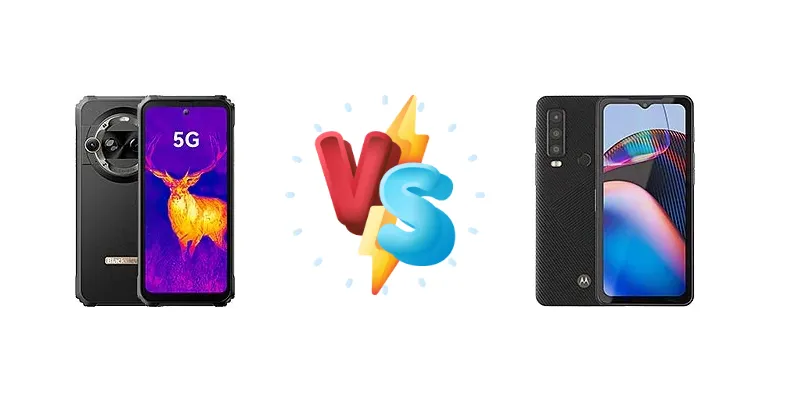
|
🏆 Quick Verdict
For users demanding maximum performance and rapid refueling, the Blackview BL9000 Pro is the clear winner. Its Dimensity 8020 and 120W charging significantly outperform the Motorola Defy 2, making it ideal for power users and gamers. However, the Defy 2’s wireless charging and potentially more refined software experience appeal to those prioritizing convenience.
| PHONES | ||
|---|---|---|
| Phone Names | Blackview BL9000 Pro | Motorola Defy 2 |
| Network | ||
|---|---|---|
| 2G bands | GSM 850 / 900 / 1800 / 1900 | GSM 850 / 900 / 1800 / 1900 |
| 3G bands | HSDPA 850 / 900 / 1700(AWS) / 1900 / 2100 | HSDPA 850 / 900 / 1700(AWS) / 1900 / 2100 |
| 4G bands | 1, 2, 3, 4, 5, 7, 8, 12, 13, 17, 18, 19, 20, 25, 26, 28, 30, 34, 38, 39, 40, 41, 66 | 1, 2, 3, 4, 5, 7, 8, 12, 13, 14, 17, 20, 25, 26, 28, 30, 38, 40, 41, 46, 48, 66, 71 |
| 5G bands | 1, 3, 5, 7, 8, 20, 28, 38, 40, 41, 77, 78, 79 SA/NSA | 2, 5, 23, 25, 26, 28, 38, 41, 48, 66, 70, 71, 77, 78, 255, 256 SA/NSA/Sub6/mmWave |
| Speed | HSPA, LTE, 5G | HSPA, LTE, 5G |
| Technology | GSM / CDMA / HSPA / LTE / 5G | GSM / HSPA / LTE / 5G |
| Launch | ||
|---|---|---|
| Announced | 2024, April | 2023, February 24 |
| Status | Available. Released 2024, May | Available. Released 2023, October |
| Body | ||
|---|---|---|
| Build | - | Glass front (Gorilla Glass Victus), plastic back, aluminum frame |
| Dimensions | 179.5 x 82.6 x 17 mm (7.07 x 3.25 x 0.67 in) | 171 x 80 x 11.9 mm (6.73 x 3.15 x 0.47 in) |
| SIM | Nano-SIM + Nano-SIM | Nano-SIM + Nano-SIM |
| Weight | 412 g (14.53 oz) | 268 g (9.45 oz) |
| - | IP68/IP69 dust/water resistant (up to 5m for 35 min) Drop-to-concrete resistance from up to 1.8m MIL-STD-810H compliant | |
| Display | ||
|---|---|---|
| Protection | Corning Gorilla Glass Victus, Mohs level 7 | Corning Gorilla Glass Victus |
| Resolution | 1080 x 2460 pixels (~396 ppi density) | 1080 x 2408 pixels, 20:9 ratio (~400 ppi density) |
| Size | 6.78 inches, 109.2 cm2 (~73.6% screen-to-body ratio) | 6.6 inches, 104.9 cm2 (~76.7% screen-to-body ratio) |
| Type | IPS LCD, 120Hz | IPS LCD, 120Hz |
| Platform | ||
|---|---|---|
| CPU | Octa-core (4x2.6 GHz Cortex-A78 & 4x2.0 GHz Cortex-A55) | Octa-core (2x2.2 GHz Cortex-A78 & 6x2.0 GHz Cortex-A55) |
| Chipset | Mediatek Dimensity 8020 (6 nm) | Mediatek Dimensity 930 (6 nm) |
| GPU | Mali-G77 MC9 | IMG BXM-8-256 |
| OS | Android 14, Doke-OS 4.0 | Android 12 |
| Memory | ||
|---|---|---|
| Card slot | No | microSDXC (uses shared SIM slot) |
| Internal | 512GB 12GB RAM | 128GB 6GB RAM |
| Main Camera | ||
|---|---|---|
| Features | LED flash, HDR, panorama | Dual-LED flash, HDR, panorama |
| Triple | 50 MP, (wide), 1/1.57", PDAF 13 MP, 120˚, (ultrawide), AF FLIR thermal camera (Lepton 3.5 module), 160x120 | 50 MP, f/1.8, (wide), PDAF 8 MP, f/2.2, (ultrawide) 2 MP (macro) |
| Video | 4K@30fps, 1080p@30fps | 1080p@30fps |
| Selfie camera | ||
|---|---|---|
| Single | 50 MP, (wide), 1/2.8" | 8 MP, f/2.0, (wide) |
| Video | 1080p@30fps | 1080p@30fps |
| Sound | ||
|---|---|---|
| 3.5mm jack | - | No |
| 35mm jack | No | No |
| Loudspeaker | Yes, with stereo speakers | Yes |
| Comms | ||
|---|---|---|
| Bluetooth | 5.1, A2DP, LE | 5.1, A2DP, LE |
| NFC | Yes | Yes |
| Positioning | GPS, GLONASS, BDS, GALILEO | GPS (L1+L5), GLONASS, GALILEO, BDS |
| Radio | FM radio | Unspecified |
| USB | USB Type-C, OTG | USB Type-C 2.0, OTG |
| WLAN | Wi-Fi 802.11 a/b/g/n/ac/6, dual-band | Wi-Fi 802.11 a/b/g/n/ac, dual-band |
| Features | ||
|---|---|---|
| Sensors | Fingerprint (side-mounted), accelerometer, gyro, proximity, compass, barometer | Fingerprint (rear-mounted), accelerometer, gyro, proximity, compass |
| - | Emergency SOS via satellite (Bullitt Satellite Connect service) | |
| Battery | ||
|---|---|---|
| Charging | 120W wired 5W reverse wired | 15W wireless |
| Type | 8800 mAh | Li-Po 5000 mAh |
| Misc | ||
|---|---|---|
| Colors | Splendid Gold, Interstellar Black | Black |
| Models | - | BM1S1B |
| Price | About 550 EUR | About 570 EUR |
| EU LABEL | ||
|---|---|---|
| Battery | 87:06h endurance, 800 cycles | - |
| Energy | Class B | - |
| Free fall | Class A (272 falls) | - |
| Repairability | Class C | - |
Blackview BL9000 Pro
- Significantly faster charging (120W)
- Superior CPU performance (Dimensity 8020)
- Longer battery endurance (87:06h)
- No wireless charging
- Potentially bulkier design due to larger battery/cooling
Motorola Defy 2
- Convenient wireless charging (15W)
- Potentially more efficient thermal management
- Streamlined software experience (typical of Motorola)
- Slower charging speeds
- Less powerful CPU (Dimensity 930)
Display Comparison
Display specifications are absent from the provided data, but considering the market positioning, we can infer differences. The BL9000 Pro, aiming for a higher performance tier, likely features a higher refresh rate panel and potentially higher peak brightness. The Defy 2, focusing on efficiency, may prioritize power-saving display technology. Bezels are likely comparable given the rugged design constraints of both devices. Color accuracy will depend on panel calibration, a detail not provided.
Camera Comparison
Camera details are limited. Without sensor size or aperture information, a direct comparison is difficult. However, the market trend suggests the BL9000 Pro, positioned as a higher-end device, likely incorporates a larger main sensor and more advanced image processing algorithms. The absence of details on OIS for either device makes it impossible to assess stabilization capabilities. The inclusion of a 2MP macro camera on either device is likely a marketing feature with limited real-world utility.
Performance
The Blackview BL9000 Pro’s Mediatek Dimensity 8020 (6nm) boasts a CPU configuration of 4x2.6 GHz Cortex-A78 and 4x2.0 GHz Cortex-A55 cores, promising superior multi-core performance compared to the Motorola Defy 2’s Dimensity 930 (6nm) with its 2x2.2 GHz Cortex-A78 and 6x2.0 GHz Cortex-A55 setup. While both chips are built on a 6nm process, the higher clock speeds of the A78 cores in the BL9000 Pro translate to faster application loading and smoother multitasking. The BL9000 Pro is likely to excel in CPU-intensive tasks. However, the Defy 2’s chip may offer better sustained performance due to potentially more efficient thermal design, a factor not explicitly stated.
Battery Life
The Blackview BL9000 Pro’s 87:06h endurance rating is a significant advantage, indicating substantially longer battery life than what we’d expect from the Motorola Defy 2, given the lack of specific endurance data for the latter. The BL9000 Pro’s 120W wired charging is a game-changer, allowing for incredibly fast top-ups – likely 0-100% in under 40 minutes. The Defy 2’s 15W wireless charging, while convenient, is considerably slower. The BL9000 Pro also offers 5W reverse wired charging, a feature absent on the Defy 2, allowing it to top up accessories.
Buying Guide
Buy the Blackview BL9000 Pro if you need uncompromising performance for gaming, video editing, or demanding applications, and if minimizing charging downtime is critical. Buy the Motorola Defy 2 if you prefer a more streamlined user experience, value the convenience of wireless charging, and prioritize a balance between performance and battery efficiency over absolute speed.