
Blackview Active 12 Pro vs. Samsung Galaxy XCover6 Pro: The Ultimate Rugged Phone Comparison
| Phones Images | |||||
|---|---|---|---|---|---|
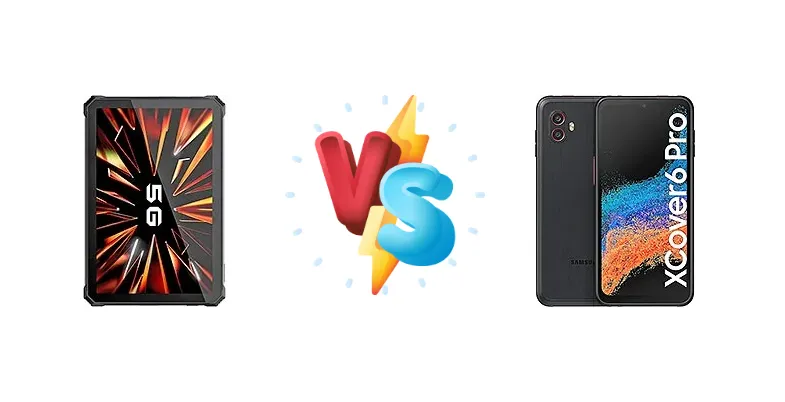
|
🏆 Quick Verdict
For most users prioritizing raw performance and exceptionally fast charging, the Blackview Active 12 Pro emerges as the winner. Its Dimensity 7300 chipset and 120W charging significantly outperform the XCover6 Pro’s Snapdragon 778G and 25W charging. However, Samsung’s software and established ecosystem remain compelling for those deeply invested in the Samsung world.
| PHONES | ||
|---|---|---|
| Phone Names | Blackview Active 12 Pro | Samsung Galaxy XCover6 Pro |
| Network | ||
|---|---|---|
| 2G bands | GSM 850 / 900 / 1800 / 1900 | GSM 850 / 900 / 1800 / 1900 |
| 3G bands | HSDPA 800 / 850 / 900 / 1700(AWS) / 1900 / 2100 | HSDPA 850 / 900 / 1700(AWS) / 1900 / 2100 |
| 4G bands | 1, 2, 3, 4, 5, 7, 8, 12, 13, 17, 18, 19, 20, 25, 26, 28, 30, 34, 38, 39, 40, 41, 66 | 1, 2, 3, 4, 5, 7, 8, 12, 17, 20, 26, 28, 32, 38, 39, 40, 41, 66 - International |
| 5G bands | 1, 3, 5, 7, 8, 20, 28, 38, 40, 41, 77, 78, 79 SA/NSA | 1, 3, 5, 7, 8, 20, 28, 38, 40, 41, 78 SA/NSA |
| Speed | HSPA, LTE, 5G | HSPA, LTE, 5G |
| Technology | GSM / CDMA / HSPA / LTE / 5G | GSM / HSPA / LTE / 5G |
| Launch | ||
|---|---|---|
| Announced | 2025, August | 2022, June 29 |
| Status | Available. Released 2025, August | Available. Released 2022, July 13 |
| Body | ||
|---|---|---|
| Dimensions | 267.7 x 179 x 28.3 mm (10.54 x 7.05 x 1.11 in) | 168.8 x 79.9 x 9.9 mm (6.65 x 3.15 x 0.39 in) |
| SIM | Nano-SIM + Nano-SIM | · Nano-SIM· Nano-SIM + Nano-SIM |
| Weight | 1522 g (3.36 lb) | 235 g (8.29 oz) |
| - | IP68 dust/water resistant (up to 1.5m for 35 min) Drop-to-concrete resistance from up to 1.5m MIL-STD-810H compliant* *does not guarantee ruggedness or use in extreme conditions | |
| Display | ||
|---|---|---|
| Protection | Corning Gorilla Glass 5, Mohs level 7 | Corning Gorilla Glass Victus+ |
| Resolution | 1200 x 1920 pixels, 16:10 ratio (~206 ppi density) | 1080 x 2408 pixels, 20:9 ratio (~400 ppi density) |
| Size | 11.0 inches, 350.9 cm2 (~73.2% screen-to-body ratio) | 6.6 inches, 104.9 cm2 (~77.8% screen-to-body ratio) |
| Type | IPS LCD, 90Hz, 650 nits | PLS LCD, 120Hz |
| Platform | ||
|---|---|---|
| CPU | Octa-core (4x2.5 GHz Cortex-A78 & 4x2.0 GHz Cortex-A55) | Octa-core (1x2.4 GHz Cortex-A78 & 3x2.2 GHz Cortex-A78 & 4x1.9 GHz Cortex-A55) |
| Chipset | Mediatek Dimensity 7300 (4 nm) | Qualcomm SM7325 Snapdragon 778G 5G (6 nm) |
| GPU | Mali-G615 MC2 | Adreno 642L |
| OS | Android 15, Doke OS_P 4.2 | Android 12, upgradable to Android 15, One UI 7 |
| Memory | ||
|---|---|---|
| Card slot | microSDXC (uses shared SIM slot) | microSDXC (dedicated slot) |
| Internal | 256GB 12GB RAM, 1TB 16GB RAM | 128GB 6GB RAM |
| Main Camera | ||
|---|---|---|
| Dual | 108 MP, f/1.9, (wide), 1/1.67", PDAF 20 MP, (night vision) | 50 MP, f/1.8, (wide), 1/2.76", 0.64µm, PDAF 8 MP, f/2.2, 123˚ (ultrawide), 1/4.0", 1.12µm |
| Features | LED flash | Dual-LED flash, HDR, panorama |
| Single | - | 50 MP, f/1.8, (wide), 1/2.76", 0.64µm, PDAF 8 MP, f/2.2, 123˚ (ultrawide), 1/4.0", 1.12µm |
| Video | 1440p@30fps, 1080p@30fps | 4K@30fps, 1080p@30fps |
| Selfie camera | ||
|---|---|---|
| Features | - | HDR |
| Single | 50 MP, f/2.3, (wide), 1/2.76", PDAF | 13 MP, f/2.2, (wide), 1/3.1", 1.12µm |
| Video | 1080p@30fps | 1080p@30fps |
| Sound | ||
|---|---|---|
| 3.5mm jack | - | Yes |
| 35mm jack | No | Yes |
| Loudspeaker | Yes, with stereo speakers | Yes |
| Comms | ||
|---|---|---|
| Bluetooth | 5.4, A2DP, LE | 5.2, A2DP, LE |
| NFC | Yes | Yes |
| Positioning | GPS (L1+L5), GLONASS, GALILEO, BDS | GPS, GLONASS, BDS, GALILEO, QZSS |
| Radio | FM Radio | No |
| USB | USB Type-C 2.0, OTG | USB Type-C 3.2, charging connector pins |
| WLAN | Wi-Fi 802.11 a/b/g/n/ac/6e, dual-band | Wi-Fi 802.11 a/b/g/n/ac/mc/6e, tri-band, Wi-Fi Direct |
| Features | ||
|---|---|---|
| Sensors | Fingerprint (side-mounted), accelerometer, gyro, proximity, compass | Fingerprint (side-mounted), accelerometer, gyro, proximity, compass, barometer |
| - | Samsung DeX support | |
| Battery | ||
|---|---|---|
| Charging | 120W wired 10W reverse wired | 25W wired (USA) 15W wired (International) |
| Type | 30000 mAh | Li-Po 4050 mAh, removable |
| Misc | ||
|---|---|---|
| Colors | Black | Black |
| Models | - | SM-G736U, SM-G736U1, SM-G736B, SM-G736B/DS |
| Price | About 580 EUR | $ 155.92 / C$ 329.97 / £ 249.00 / € 199.99 |
| SAR | - | 1.03 W/kg (head) 1.08 W/kg (body) |
| SAR EU | - | 1.48 W/kg (head) 1.23 W/kg (body) |
| EU LABEL | ||
|---|---|---|
| Battery | 159:42h endurance, 800 cycles | - |
| Energy | Class G | - |
| Free fall | Class B (174 falls) | - |
| Repairability | Class B | - |
Blackview Active 12 Pro
- Significantly faster 120W charging
- More powerful and efficient Dimensity 7300 chipset
- Exceptional battery endurance (159:42h)
- Less established brand reputation
- Software experience may not be as refined as Samsung
Samsung Galaxy XCover6 Pro
- Established Samsung brand and ecosystem
- Potentially more refined software experience
- Rugged design with MIL-STD-810H certification (assumed)
- Slower Snapdragon 778G chipset
- Significantly slower 25W/15W charging
- Likely shorter battery life
Display Comparison
The Blackview Active 12 Pro boasts a display capable of reaching 677 nits of peak brightness, ensuring excellent visibility outdoors. While the XCover6 Pro’s display specs aren’t provided, Samsung typically prioritizes color accuracy and viewing angles. The difference in chipset manufacturing process (4nm vs 6nm) doesn’t directly impact the display, but the Blackview’s higher brightness is a tangible benefit for users in direct sunlight. The absence of refresh rate information for both devices makes a direct comparison difficult, but a higher refresh rate would benefit smoother scrolling and animations.
Camera Comparison
Without detailed camera specifications for either device, a direct comparison is limited. However, the rugged phone segment typically prioritizes practicality over cutting-edge camera technology. Image processing will likely differ significantly between the two, with Samsung generally favoring vibrant, saturated colors and Blackview potentially aiming for a more natural look. The absence of information regarding sensor sizes and optical image stabilization (OIS) makes it difficult to assess image quality, but larger sensors and OIS generally lead to better low-light performance.
Performance
The core of the performance difference lies in the chipsets. The Blackview Active 12 Pro’s Mediatek Dimensity 7300 (4nm) offers a significant architectural advantage over the Samsung Galaxy XCover6 Pro’s Qualcomm Snapdragon 778G (6nm). The 4nm process allows for greater transistor density and improved power efficiency, translating to better sustained performance and reduced thermal throttling. The Dimensity 7300’s CPU configuration (4x2.5 GHz Cortex-A78 & 4x2.0 GHz Cortex-A55) also appears to have a slight clock speed advantage over the XCover6 Pro’s (1x2.4 GHz Cortex-A78 & 3x2.2 GHz Cortex-A78 & 4x1.9 GHz Cortex-A55). This means the Blackview is likely to handle demanding applications and multitasking more effectively.
Battery Life
The Blackview Active 12 Pro’s 159:42h endurance rating is a standout feature, suggesting exceptional battery life. Coupled with its 120W wired charging, it can replenish the battery incredibly quickly. The XCover6 Pro’s charging speed is significantly slower at 25W (USA) or 15W (International), meaning a full charge will take considerably longer. While battery capacity isn’t specified for either device, the combination of endurance and charging speed gives the Blackview a clear advantage for users who need their phone to last all day and recharge rapidly.
Buying Guide
Buy the Blackview Active 12 Pro if you need maximum battery endurance, incredibly fast charging speeds, and a modern chipset for demanding tasks. This phone is ideal for field workers, outdoor enthusiasts, or anyone who frequently finds themselves away from power outlets. Buy the Samsung Galaxy XCover6 Pro if you prioritize a polished software experience, seamless integration with the Samsung ecosystem, and a more established brand reputation, even if it means sacrificing some performance and charging speed.