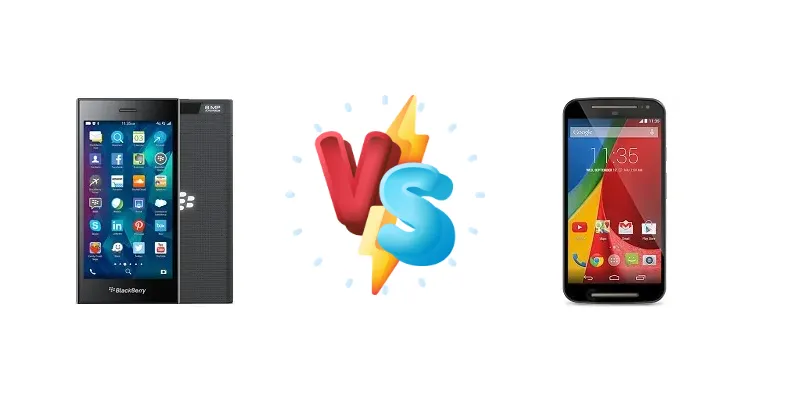
The BlackBerry Leap and Motorola Moto G (2nd Gen) were both popular budget smartphones aiming to offer a compelling experience without breaking the bank. But which one truly delivered? We're diving deep into their specs, performance, and features to help you decide which phone is right for you.
🏆 Quick Verdict
The Moto G (2nd Gen) edges out the Leap thanks to its more modern processor and slightly better overall performance. While the Leap offers a secure BlackBerry experience, the Moto G provides a more versatile and future-proof Android experience at a similar price point.
| Network |
|---|
| 2G bands | GSM 850 / 900 / 1800 / 1900 | GSM 850 / 900 / 1800 / 1900 |
| 3G bands | HSDPA 850 / 900 / 1700 / 1900 / 2100 - North America | HSDPA 850 / 900 / 1900 / 2100 - Global model |
| 4G bands | 1, 2, 4, 5, 7, 13, 17 - North America | - |
| Speed | HSPA, LTE | HSPA 21.1/5.76 Mbps |
| Technology | GSM / HSPA / LTE | GSM / HSPA |
| | 1, 3, 7, 8, 20 - Global | HSDPA 850 / 1700 / 1900 / 2100 - USA model |
| Launch |
|---|
| Announced | 2015, March. Released 2015, April | 2014, September. Released 2014, September |
| Status | Discontinued | Discontinued |
| Body |
|---|
| Dimensions | 144 x 72.8 x 9.5 mm (5.67 x 2.87 x 0.37 in) | 141.5 x 70.7 x 11 mm (5.57 x 2.78 x 0.43 in) |
| SIM | Micro-SIM | Micro-SIM |
| Weight | 170 g (6.00 oz) | 149 g (5.26 oz) |
| Display |
|---|
| Protection | - | Corning Gorilla Glass 3 |
| Resolution | 720 x 1280 pixels, 16:9 ratio (~294 ppi density) | 720 x 1280 pixels, 16:9 ratio (~294 ppi density) |
| Size | 5.0 inches, 68.9 cm2 (~65.7% screen-to-body ratio) | 5.0 inches, 68.9 cm2 (~68.9% screen-to-body ratio) |
| Type | IPS LCD, | IPS LCD |
| Platform |
|---|
| CPU | Dual-core 1.5 GHz Krait | Quad-core 1.2 GHz Cortex-A7 |
| Chipset | Qualcomm MSM8960 Snapdragon S4 Plus | Qualcomm MSM8226 Snapdragon 400 (28 nm) |
| GPU | Adreno 225 | Adreno 305 |
| OS | BlackBerry OS 10.3.1 | Android 4.4.4 (KitKat), upgradable to 6.0 (Marshmallow) |
| Memory |
|---|
| Card slot | microSDXC (dedicated slot) | microSDHC (dedicated slot) |
| Internal | 16GB 2GB RAM | 8GB 1GB RAM |
| | - | eMMC 4.5 |
| Main Camera |
|---|
| Features | LED flash, HDR, panorama | LED flash, HDR, panorama |
| Single | 8 MP, f/2.2, 31mm (standard), AF | 8 MP, f/2.0, AF |
| Video | 1080p@30fps, 720p@60fps | 720p@30fps, stereo sound rec., HDR |
| Selfie camera |
|---|
| Single | 2 MP | 2 MP, f/2.2 |
| Video | 720p | - |
| Sound |
|---|
| 3.5mm jack | Yes | Yes |
| 35mm jack | Yes | Yes |
| Loudspeaker | Yes | Yes, with stereo speakers |
| Comms |
|---|
| Bluetooth | 4.0, A2DP, EDR, LE | 4.0, A2DP, LE, aptX |
| NFC | No | No |
| Positioning | GPS | GPS, GLONASS |
| Radio | FM radio | FM radio |
| USB | microUSB 2.0 | microUSB 2.0, OTG |
| WLAN | Wi-Fi 802.11 b/g/n, hotspot | Wi-Fi 802.11 b/g/n, hotspot |
| Features |
|---|
| Sensors | Accelerometer, proximity | Accelerometer, gyro, proximity, compass |
| | - | Digital TV (DS DTV 16GB model only) |
| Battery |
|---|
| Talk time | Up to 25 h | - |
| Type | Li-Ion 2800 mAh, non-removable | Li-Ion 2070 mAh, non-removable |
| Misc |
|---|
| Colors | Black, White | White, Black |
| Models | - | XT1068, XT1063, XT1064, XT1069, XT1077 |
| Price | About 80 EUR | About 160 EUR |
| Tests |
|---|
| Audio quality | - |
Noise -91.6dB / Crosstalk -91.7dB |
| Battery life |
Endurance rating 45h
| Endurance rating 50h |
| Camera |
Photo / Video |
Photo / Video |
| Loudspeaker | - |
Voice 66dB / Noise 66dB / Ring 75dB |
| Performance | - |
Basemark OS II 2.0: 497Basemark X: 3142 |
BlackBerry Leap
- Secure BlackBerry OS
- Physical QWERTY keyboard
- Good battery life
- Durable build quality
- Outdated processor
- Limited app selection compared to Android
- Less vibrant display
- Older software
Motorola Moto G (2nd gen)
- Modern Android experience
- Better performance
- Wider app compatibility
- More vibrant display
- Affordable price
- Plastic build quality
- Basic camera
- No physical keyboard
Display Comparison
The Moto G (2nd Gen) features a 5.0-inch 720p display, offering a slightly sharper image than the Leap's 5.0-inch 720p display. While both are adequate, the Moto G's display generally appears more vibrant.
Camera Comparison
Both phones feature basic 8MP cameras. Image quality is comparable in good lighting conditions, but the Moto G (2nd Gen) tends to perform slightly better in low light. Video recording capabilities are similar on both devices.
Performance
The Moto G (2nd Gen)'s quad-core 1.2 GHz Cortex-A7 processor and Snapdragon 400 chipset provide a noticeable performance advantage over the Leap's dual-core 1.5 GHz Krait processor and Snapdragon S4 Plus. Expect smoother multitasking and faster app loading on the Moto G.
Battery Life
Both devices boast an endurance rating of 45-50 hours, suggesting comparable battery life in typical usage. Real-world battery performance will depend on usage patterns, but both should comfortably last a full day.
Buying Guide
The BlackBerry Leap is ideal for users prioritizing security and the BlackBerry keyboard experience. The Moto G (2nd Gen) is a better choice for those seeking a more modern Android experience, broader app compatibility, and slightly better performance for everyday tasks.
Frequently Asked Questions
❓ Is the BlackBerry Leap still worth buying?
The Leap's value is limited due to its outdated hardware and software. It's only recommended for users heavily invested in the BlackBerry ecosystem and prioritizing security over performance.
❓ Which phone has better app support?
The Moto G (2nd Gen) with Android offers significantly better app support and a wider selection of apps compared to the BlackBerry Leap's proprietary OS.