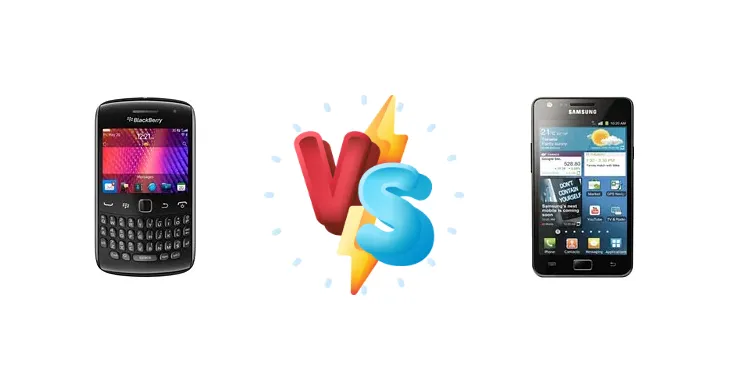
In 2011, the smartphone landscape was rapidly evolving. The BlackBerry Curve 9360 represented the pinnacle of secure, keyboard-centric communication, while the Samsung Galaxy S II 4G heralded the arrival of powerful, multimedia-focused Android devices. This comparison revisits these two titans, analyzing their strengths and weaknesses for today’s perspective.
🏆 Quick Verdict
For the average user today, the Samsung Galaxy S II 4G is the superior device. Its dual-core processor and Android ecosystem offer a far more versatile experience. However, users prioritizing secure communication and a physical keyboard will still find value in the Curve 9360.
| Network |
|---|
| 2G bands | GSM 850 / 900 / 1800 / 1900 | GSM 850 / 900 / 1800 / 1900 |
| 3G bands | HSDPA 850 / 1900 / 2100 | HSDPA 850 / 900 / 1900 / 2100 /1800 |
| 4G bands | - | 1, 2, 3, 4, 5, 7, 8, 12, 17, 20, 28, 38, 40 |
| Speed | HSPA 7.2/2 Mbps | HSPA 21.1/5.76 Mbps |
| Technology | GSM / HSPA | GSM / HSPA |
| | HSDPA 900 / 1700 / 2100 | - |
| Launch |
|---|
| Announced | 2011, August. Released 2011, August | 2011, July. Released 2011, July |
| Status | Discontinued | Discontinued |
| Body |
|---|
| Dimensions | 109 x 60 x 11 mm (4.29 x 2.36 x 0.43 in) | 125.3 x 66.1 x 8.5 mm (4.93 x 2.60 x 0.33 in) |
| Keyboard | QWERTY | - |
| SIM | Mini-SIM | Mini-SIM |
| Weight | 99 g (3.49 oz) | 116 g (4.09 oz) |
| | Optical trackpad | - |
| Display |
|---|
| Protection | - | Corning Gorilla Glass |
| Resolution | 480 x 360 pixels, 4:3 ratio (~246 ppi density) | 480 x 800 pixels, 5:3 ratio (~217 ppi density) |
| Size | 2.44 inches, 18.4 cm2 (~28.2% screen-to-body ratio) | 4.3 inches, 52.6 cm2 (~63.5% screen-to-body ratio) |
| Type | TFT | Super AMOLED Plus |
| | - | ClearBlack display |
| Platform |
|---|
| CPU | 800MHz | Dual-core 1.2 GHz Cortex-A9 |
| Chipset | - | Exynos 4210 Dual |
| GPU | - | Mali-400MP4 |
| OS | BlackBerry OS 7.0 | Android 2.3 (Gingerbread) |
| Memory |
|---|
| Card slot | microSDHC (dedicated slot) | microSDHC (dedicated slot) |
| Internal | 512MB 512MB RAM | 16GB 1GB RAM |
| | - | eMMC 5.0 |
| Main Camera |
|---|
| Features | LED flash | LED flash |
| Single | 5 MP | 8 MP, f/2.6, 1/3.2", AF |
| Video | 480p | 1080p@30fps |
| Selfie camera |
|---|
| Single | - | 2 MP |
| Video | - | 1080p@30fps |
| | No | - |
| Sound |
|---|
| 3.5mm jack | Yes | Yes |
| 35mm jack | Yes | Yes |
| Loudspeaker | Yes | Yes |
| Comms |
|---|
| Bluetooth | 2.1, A2DP | 3.0, A2DP, aptX |
| NFC | Yes | Yes |
| Positioning | GPS, A-GPS | GPS, A-GPS |
| Radio | No | No |
| USB | microUSB 2.0 | microUSB 2.0 (MHL TV-out), OTG |
| WLAN | Wi-Fi 802.11 b/g/n, UMA (carrier-dependent) | Wi-Fi 802.11 a/b/g/n, dual-band, Wi-Fi Direct, DLNA, hotspot |
| Features |
|---|
| Browser | HTML | - |
| Sensors | - | Accelerometer, gyro, proximity, compass |
| | MP3/eAAC+/WMA/WAV/FLAC player
MP4/H.264/WMV player
Organizer
Document viewer
Voice memo/dial
Predictive text input | Microsoft Continuum support |
| Battery |
|---|
| Charging | - | 18W wired
Wireless (Qi) |
| Music play | Up to 25 h | Up to 67 h |
| Stand-by | Up to 336 h (2G) / Up to 288 h (3G) | Up to 372 h (2G) / Up to 610 h (3G) |
| Talk time | Up to 5 h (2G) / Up to 5 h (3G) | Up to 6 h (2G) / Up to 8 h 30 min (3G) |
| Type | Removable Li-Ion 1000 mAh battery | Removable Li-Ion 1700 mAh battery |
| Misc |
|---|
| Colors | Black, Purple, Pink | Black |
| Models | - | GT-I9100M |
| Price | About 90 EUR | About 260 EUR |
| SAR | 1.42 W/kg (head) 1.06 W/kg (body) | 0.16 W/kg (head) 0.96 W/kg (body) |
| SAR EU | 1.22 W/kg (head) 0.62 W/kg (body) | 0.34 W/kg (head) |
| Tests |
|---|
| Audio quality |
Noise -85.9dB / Crosstalk -82.1dB | - |
| Camera |
Photo | - |
| Display |
Contrast ratio: 1054:1 (nominal) | - |
| Loudspeaker |
Voice 69dB / Noise 65dB / Ring 71dB
| - |
BlackBerry Curve 9360
- Excellent physical keyboard for fast typing
- Highly secure BlackBerry OS
- Long battery life due to efficient hardware
- Slow processor compared to competitors
- Limited app ecosystem
- Basic camera capabilities
Samsung Galaxy S II 4G I9100M
- Powerful dual-core processor
- Vibrant Super AMOLED display
- Fast charging capabilities (18W wired, Qi wireless)
- Android OS security concerns (at the time)
- Potentially shorter battery life under heavy use
- Larger size and less pocketable than the Curve 9360
Display Comparison
The BlackBerry Curve 9360’s display specifications are limited to a contrast ratio of 1054:1, suggesting a focus on readability rather than visual fidelity. In contrast, the Samsung Galaxy S II 4G, while lacking detailed display specs in the provided data, benefited from Samsung’s Super AMOLED technology, known for its vibrant colors and wide viewing angles. The S II’s larger screen size, typical for the time, would have provided a significantly more immersive experience for video playback and web browsing. The Curve 9360’s smaller screen prioritized portability and battery efficiency.
Camera Comparison
Camera capabilities are limited in the provided data. The BlackBerry Curve 9360 is only noted as having a 'Photo' camera, implying basic functionality. The Samsung Galaxy S II 4G, while lacking detailed sensor information, was a flagship device and likely featured a more advanced camera system with higher resolution and image quality. The S II’s camera would have been geared towards capturing photos and videos for sharing and social media, a growing trend at the time. The Curve 9360’s camera was likely intended for basic documentation and quick snapshots.
Performance
The performance gap between these devices is substantial. The BlackBerry Curve 9360’s 800MHz CPU is dwarfed by the Samsung Galaxy S II 4G’s Exynos 4210 dual-core 1.2 GHz Cortex-A9 processor. This difference translates to significantly faster app loading times, smoother multitasking, and the ability to handle more demanding applications on the S II. The Exynos 4210, built on a more advanced manufacturing process (though specifics aren't provided), offered a leap in processing power, enabling a more responsive and fluid user experience. The S II was designed to handle the growing complexity of Android and its applications, while the Curve 9360 was optimized for efficient communication.
Battery Life
The Samsung Galaxy S II 4G’s 18W wired and wireless (Qi) charging capabilities were ahead of its time, offering faster and more convenient charging options. While the BlackBerry Curve 9360’s battery capacity isn’t specified, its less demanding processor and smaller display likely resulted in longer battery life under typical usage scenarios. However, the S II’s faster charging could offset this difference for users who frequently used their phones throughout the day. The Curve 9360 prioritized longevity, while the S II balanced battery life with rapid replenishment.
Buying Guide
Buy the BlackBerry Curve 9360 if you need a highly secure device with a physical QWERTY keyboard for extensive messaging and email, and value battery life over multimedia capabilities. Buy the Samsung Galaxy S II 4G I9100M if you prefer a large, vibrant display, a powerful processor for emerging Android apps, and a more modern, multimedia-rich smartphone experience.
Frequently Asked Questions
❓ Did the Exynos 4210 in the Galaxy S II 4G suffer from overheating issues?
While the Exynos 4210 was a powerful processor for its time, some users reported occasional overheating during prolonged gaming or intensive tasks. However, this wasn't a widespread issue and was generally manageable. The Curve 9360, with its less powerful processor, did not experience such concerns.
❓ Is the BlackBerry Curve 9360 still secure for sensitive communications today?
BlackBerry's security infrastructure was a major selling point. However, BlackBerry OS is no longer actively supported, meaning security updates have ceased. While the device may still offer some level of inherent security, it's no longer recommended for highly sensitive communications due to potential vulnerabilities.
❓ Can the Samsung Galaxy S II 4G be upgraded to a newer version of Android?
The Samsung Galaxy S II 4G originally shipped with Android 2.3 (Gingerbread) and was officially updated to Android 4.0 (Ice Cream Sandwich). Further unofficial custom ROMs are available, but installing them voids the warranty and carries inherent risks.