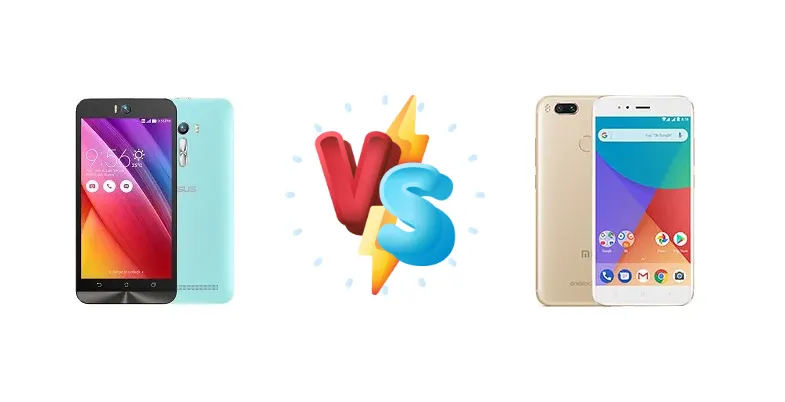
The Asus Zenfone Selfie and Xiaomi Mi A1 were popular mid-range phones offering compelling features for their time. Both focused on camera capabilities and battery life, but which one ultimately delivers a better experience? This detailed comparison will break down their strengths and weaknesses to help you decide.
🏆 Quick Verdict
The Xiaomi Mi A1 (Mi 5X) edges out the Asus Zenfone Selfie thanks to its superior Snapdragon 625 chipset, better display contrast, and longer battery life. While the Zenfone Selfie had a strong initial appeal, the Mi A1's overall package is more refined and durable.
| Network |
|---|
| 2G bands | GSM 850 / 900 / 1800 / 1900 - SIM 1 & SIM 2 | GSM 850 / 900 / 1800 / 1900 - SIM 1 & SIM 2 |
| 3G bands | HSDPA 850 / 900 / 1900 / 2100 | HSDPA 850 / 900 / 1900 / 2100 |
| 4G bands | 1, 2, 3, 5, 7, 8, 20 - Global | 1, 3, 5, 7, 8, 20, 38, 40 |
| Speed | HSPA 42.2/5.76 Mbps, LTE Cat4 150/50 Mbps | HSPA 42.2/5.76 Mbps, LTE (2CA) Cat6 300/50 Mbps |
| Technology | GSM / HSPA / LTE | GSM / HSPA / LTE |
| | 1, 3 - India | - |
| Launch |
|---|
| Announced | 2015, June. Released 2015, August | 2017, September. Released 2017, September |
| Status | Discontinued | Discontinued |
| Body |
|---|
| Build | Glass front (Gorilla Glass 4), plastic back, plastic frame | Glass front (Gorilla Glass 3), aluminum back, aluminum frame |
| Dimensions | 156.5 x 77.2 x 10.8 mm (6.16 x 3.04 x 0.43 in) | 155.4 x 75.8 x 7.3 mm (6.12 x 2.98 x 0.29 in) |
| SIM | Dual SIM (Micro-SIM, dual stand-by) | Nano-SIM + Nano-SIM |
| Weight | 170 g (6.00 oz) | 165 g (5.82 oz) |
| Display |
|---|
| Protection | Corning Gorilla Glass 4, oleophobic coating | Corning Gorilla Glass 3 |
| Resolution | 1080 x 1920 pixels, 16:9 ratio (~403 ppi density) | 1080 x 1920 pixels, 16:9 ratio (~403 ppi density) |
| Size | 5.5 inches, 82.6 cm2 (~68.3% screen-to-body ratio) | 5.5 inches, 82.6 cm2 (~70.1% screen-to-body ratio) |
| Type | IPS LCD | IPS LCD |
| Platform |
|---|
| CPU | Octa-core (4x1.7 GHz Cortex-A53 & 4x1.0 GHz Cortex-A53) | Octa-core 2.0 GHz Cortex-A53 |
| Chipset | Qualcomm MSM8939 Snapdragon 615 (28 nm) | Qualcomm MSM8953 Snapdragon 625 (14 nm) |
| GPU | Adreno 405 | Adreno 506 |
| OS | Android 5.0 (Lollipop), upgradable to 6.0 (Marshmallow), ZenUI | Android 7.1.2 (Nougat), upgradable to Android 9.0 (Pie), Android One |
| Memory |
|---|
| Card slot | microSDXC (dedicated slot) | microSDXC (uses shared SIM slot) |
| Internal | 16GB 2GB RAM, 32GB 3GB RAM | 32GB 4GB RAM, 64GB 4GB RAM |
| | eMMC 4.5 | eMMC 5.1 |
| Main Camera |
|---|
| Dual | - | 12 MP, f/2.2, 26mm (wide), 1/2.9", 1.25µm, PDAF
12 MP, f/2.6, 50mm (telephoto), 1.0µm, AF, 2x optical zoom |
| Features | Laser AF, Dual-LED dual-tone flash, panorama, HDR | Dual-LED dual-tone flash, HDR, panorama |
| Single | 13 MP, f/2.0, 28mm (wide), 1/3.0" | - |
| Video | 1080p@30fps | 4K@30fps, 1080p@30fps, 720p@120fps |
| Selfie camera |
|---|
| Features | Dual-LED dual-tone flash | - |
| Single | 13 MP, f/2.2, 1/3.1", 1.12µm, AF | 5 MP |
| Video | 1080p@30fps | 1080p@30fps |
| Sound |
|---|
| 3.5mm jack | Yes | Yes |
| 35mm jack | Yes | Yes |
| Loudspeaker | Yes | Yes |
| Comms |
|---|
| Bluetooth | 4.0, A2DP, EDR | 4.2, A2DP, LE |
| Infrared port | - | Yes |
| NFC | No | No |
| Positioning | GPS, GLONASS, BDS | GPS, GLONASS, BDS |
| Radio | FM radio, RDS | FM radio |
| USB | microUSB 2.0, OTG | USB Type-C 2.0 |
| WLAN | Wi-Fi 802.11 a/b/g/n/ac, Wi-Fi Direct, hotspot | Wi-Fi 802.11 a/b/g/n/ac, dual-band, Wi-Fi Direct |
| Features |
|---|
| Sensors | Accelerometer, gyro, proximity, compass | Fingerprint (rear-mounted), accelerometer, gyro, proximity |
| Battery |
|---|
| Charging | - | 10W wired |
| Type | Li-Po 3000 mAh, removable | Li-Po 3080 mAh, non-removable |
| Misc |
|---|
| Colors | Pure White, Chic Pink, Aqua Blue | Black, Gold, Rose Gold, Red |
| Models | Z00UD, Z00UDH, Z00UDC, Z00UDB | MDG2, MDI2 |
| Price | About 280 EUR | About 170 EUR |
| SAR | - | 1.75 W/kg (head) 0.76 W/kg (body) |
| Tests |
|---|
| Audio quality |
Noise -92.1dB / Crosstalk -92.5dB |
Noise -91.0dB / Crosstalk -82.5dB |
| Battery life |
Endurance rating 63h
| Endurance rating 87h |
| Camera |
Photo / Video |
Photo / Video |
| Display |
Contrast ratio: 928:1 (nominal), 1.680 (sunlight) |
Contrast ratio: 1570:1 (nominal), 2.689 (sunlight) |
| Loudspeaker |
Voice 65dB / Noise 66dB / Ring 75dB
|
Voice 74dB / Noise 73dB / Ring 90dB |
| Performance |
Basemark OS II 2.0: 883Basemark X: 4915 |
GeekBench: 4292 (v4.4)
GFXBench: 3.5fps (ES 3.1 onscreen) |
Asus Zenfone Selfie ZD551KL
- Excellent front-facing camera
- Good sunlight display performance
- Decent value (if found at a low price)
- Slower performance
- Shorter battery life
- Less efficient chipset
- Outdated software
Xiaomi Mi A1 (Mi 5X)
- Superior battery life
- Better display contrast and brightness
- More efficient and powerful chipset
- Clean Android experience
- Dual-lens rear camera
- 10W charging is relatively slow
- May be difficult to find new
Display Comparison
Both phones feature 5.5-inch displays, but the Xiaomi Mi A1 boasts a significantly better contrast ratio (1570:1 vs 928:1 nominal, and 2689 vs 1680 in sunlight). This translates to richer colors, deeper blacks, and improved visibility in bright conditions. The Mi A1's display is noticeably more vibrant and easier to view outdoors.
Camera Comparison
While both phones marketed themselves as 'selfie' phones, the Mi A1's camera system is generally considered superior. It features a dual-lens setup on the rear, allowing for better portrait mode shots and improved low-light performance. The Zenfone Selfie's front camera was indeed impressive for its time, but the Mi A1's overall camera capabilities are more versatile.
Performance
The Xiaomi Mi A1's Snapdragon 625 chipset (14nm) is more efficient and powerful than the Zenfone Selfie's Snapdragon 615 (28nm). The Mi A1's CPU also clocks slightly higher at 2.0 GHz. This results in smoother multitasking, faster app loading times, and a generally more responsive user experience. The Zenfone Selfie can feel sluggish at times, especially with demanding apps.
Battery Life
The Xiaomi Mi A1 takes a clear lead in battery life, achieving an endurance rating of 87 hours compared to the Zenfone Selfie's 63 hours. This difference is largely due to the more efficient Snapdragon 625 chipset and optimized software. The Mi A1 will easily last a full day of moderate to heavy use, while the Zenfone Selfie may require a midday top-up.
Buying Guide
The Asus Zenfone Selfie ZD551KL is a good option for users prioritizing a large front-facing camera for selfies and video calls, and who find a good deal on a used device. The Xiaomi Mi A1 (Mi 5X) is ideal for those seeking a reliable, well-rounded phone with excellent battery life, a capable camera, and a cleaner Android experience.
Frequently Asked Questions
❓ Is the Asus Zenfone Selfie still worth buying?
Only if you find it at a very low price and primarily need a phone with a good front-facing camera. Otherwise, the Xiaomi Mi A1 offers a better overall experience.
❓ Which phone has a better Android experience?
The Xiaomi Mi A1 (Mi 5X) runs a near-stock version of Android, providing a cleaner and more streamlined user experience compared to Asus's custom UI.