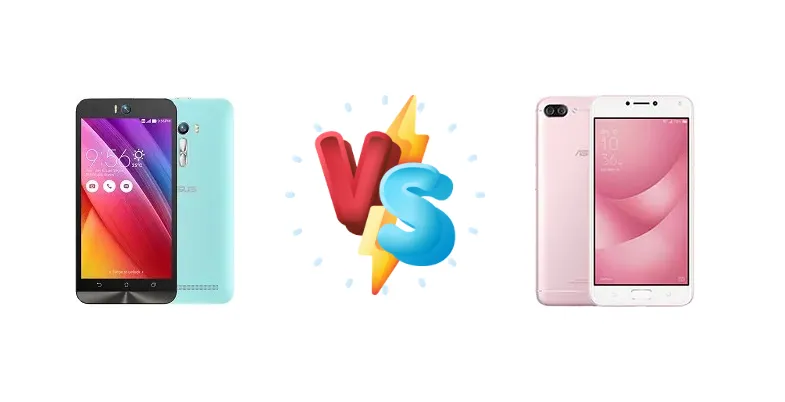
The Asus Zenfone series has always aimed to deliver value and features. Two popular models, the Selfie ZD551KL and the 4 Max Pro ZC554KL, offer distinct strengths. This comparison dives deep into their specs and performance to help you decide which one best suits your needs.
🏆 Quick Verdict
The Zenfone Selfie boasts superior sunlight display visibility and a potentially better camera experience. However, the 4 Max Pro offers faster charging, a slightly more modern chipset (depending on variant), and potentially better overall battery life due to optimizations. It's a close call, leaning towards the 4 Max Pro for most users.
| Network |
|---|
| 2G bands | GSM 850 / 900 / 1800 / 1900 - SIM 1 & SIM 2 | GSM 850 / 900 / 1800 / 1900 - SIM 1 & SIM 2 |
| 3G bands | HSDPA 850 / 900 / 1900 / 2100 | HSDPA 850 / 900 / 2100 - Global, India, Indonesia |
| 4G bands | 1, 2, 3, 5, 7, 8, 20 - Global | 1, 3, 5, 7, 8, 20, 40 - Global, India, Indonesia |
| Speed | HSPA 42.2/5.76 Mbps, LTE Cat4 150/50 Mbps | HSPA 42.2/5.76 Mbps, LTE Cat4 150/50 Mbps |
| Technology | GSM / HSPA / LTE | GSM / HSPA / LTE |
| | 1, 3 - India | 1, 2, 3, 4, 5, 7, 8, 12, 17, 18, 19, 26, 28, 38, 41 - Americas, Asia |
| Launch |
|---|
| Announced | 2015, June. Released 2015, August | 2017, August. Released 2017, September |
| Status | Discontinued | Discontinued |
| Body |
|---|
| Build | Glass front (Gorilla Glass 4), plastic back, plastic frame | Glass front, aluminum back, aluminum frame |
| Dimensions | 156.5 x 77.2 x 10.8 mm (6.16 x 3.04 x 0.43 in) | 154 x 76.9 x 8.9 mm (6.06 x 3.03 x 0.35 in) |
| SIM | Dual SIM (Micro-SIM, dual stand-by) | Nano-SIM + Nano-SIM |
| Weight | 170 g (6.00 oz) | 181 g (6.38 oz) |
| Display |
|---|
| Protection | Corning Gorilla Glass 4, oleophobic coating | - |
| Resolution | 1080 x 1920 pixels, 16:9 ratio (~403 ppi density) | 720 x 1280 pixels, 16:9 ratio (~267 ppi density) |
| Size | 5.5 inches, 82.6 cm2 (~68.3% screen-to-body ratio) | 5.5 inches, 83.4 cm2 (~70.4% screen-to-body ratio) |
| Type | IPS LCD | IPS LCD |
| Platform |
|---|
| CPU | Octa-core (4x1.7 GHz Cortex-A53 & 4x1.0 GHz Cortex-A53) | Quad-core 1.4 GHz Cortex-A53Octa-core 1.4 GHz Cortex-A53 |
| Chipset | Qualcomm MSM8939 Snapdragon 615 (28 nm) | Qualcomm MSM8917 Snapdragon 425 (28 nm)Qualcomm MSM8937 Snapdragon 430 (28 nm) |
| GPU | Adreno 405 | Adreno 308Adreno 505 |
| OS | Android 5.0 (Lollipop), upgradable to 6.0 (Marshmallow), ZenUI | Android 7 (Nougat), ZenUI 4 |
| Memory |
|---|
| Card slot | microSDXC (dedicated slot) | microSDXC (dedicated slot) |
| Internal | 16GB 2GB RAM, 32GB 3GB RAM | 32GB 2GB RAM, 32GB 3GB RAM |
| | eMMC 4.5 | eMMC 5.1 |
| Main Camera |
|---|
| Features | Laser AF, Dual-LED dual-tone flash, panorama, HDR | LED flash, HDR, panorama |
| Single | 13 MP, f/2.0, 28mm (wide), 1/3.0" | 16 MP, f/2.0, 26mm (wide), PDAF |
| Video | 1080p@30fps | 1080p@30fps |
| Selfie camera |
|---|
| Features | Dual-LED dual-tone flash | LED |
| Single | 13 MP, f/2.2, 1/3.1", 1.12µm, AF | 16 MP, f/2.0, 18mm (ultrawide), 1/3.06", 1.0µm |
| Video | 1080p@30fps | - |
| Sound |
|---|
| 3.5mm jack | Yes | Yes |
| 35mm jack | Yes | Yes |
| Loudspeaker | Yes | Yes |
| Comms |
|---|
| Bluetooth | 4.0, A2DP, EDR | 4.1, A2DP, LE |
| NFC | No | No |
| Positioning | GPS, GLONASS, BDS | GPS, GLONASS, BDS, GALILEO |
| Radio | FM radio, RDS | No |
| USB | microUSB 2.0, OTG | microUSB 2.0, OTG |
| WLAN | Wi-Fi 802.11 a/b/g/n/ac, Wi-Fi Direct, hotspot | Wi-Fi 802.11 b/g/n, Wi-Fi Direct |
| Features |
|---|
| Sensors | Accelerometer, gyro, proximity, compass | Fingerprint (front-mounted), accelerometer, gyro, proximity, compass |
| Battery |
|---|
| Charging | - | 18W wired
2.5W reverse wired |
| Stand-by | - | Up to 1104 h (3G) |
| Talk time | - | Up to 40 h (3G) |
| Type | Li-Po 3000 mAh, removable | Li-Po 5000 mAh, non-removable |
| Misc |
|---|
| Colors | Pure White, Chic Pink, Aqua Blue | Deepsea Black, Sunlight Gold, Rose Pink |
| Models | Z00UD, Z00UDH, Z00UDC, Z00UDB | - |
| Price | About 280 EUR | About 250 EUR |
| Tests |
|---|
| Audio quality |
Noise -92.1dB / Crosstalk -92.5dB | - |
| Battery life |
Endurance rating 63h
| - |
| Camera |
Photo / Video | - |
| Display |
Contrast ratio: 928:1 (nominal), 1.680 (sunlight) | - |
| Loudspeaker |
Voice 65dB / Noise 66dB / Ring 75dB
| - |
| Performance |
Basemark OS II 2.0: 883Basemark X: 4915 | - |
Asus Zenfone Selfie ZD551KL
- Excellent sunlight display visibility
- Potentially better front-facing camera
- Impressive battery endurance (63h)
- Older chipset
- Standard charging speed
- Missing detailed camera specs
Asus Zenfone 4 Max Pro ZC554KL
- Faster 18W wired charging
- 2.5W reverse wired charging
- Slightly more modern chipset (Snapdragon 430 variant)
- Good battery life (expected)
- Less impressive display in sunlight
- Potentially lower-resolution front camera
- Performance not significantly better than Selfie
Display Comparison
The Zenfone Selfie shines with its exceptional sunlight contrast ratio of 1680, making it incredibly readable outdoors. The 4 Max Pro's display is likely adequate but doesn't match the Selfie's outdoor performance. Both phones likely feature similar resolutions (720p) and sizes (5.5 inches), so the contrast is the key differentiator.
Camera Comparison
The Zenfone Selfie's name suggests a camera focus, and it likely features a higher-resolution front-facing camera for selfies. While both phones offer Photo/Video capabilities, detailed camera specs are missing. Expect decent image quality in good lighting conditions from both, but low-light performance will likely be average.
Performance
The Zenfone Selfie's Snapdragon 615 Octa-core CPU offers decent performance for everyday tasks. The 4 Max Pro's Snapdragon 425/430 (depending on variant) is a slightly newer generation, potentially offering minor improvements in efficiency and some tasks. However, neither phone is a powerhouse and will struggle with demanding games or heavy multitasking.
Battery Life
The Zenfone Selfie's endurance rating of 63h is impressive, suggesting excellent battery life. The 4 Max Pro, while not explicitly stated, is expected to offer good battery life as well, potentially benefiting from newer power management features. The 4 Max Pro's 18W fast charging is a significant advantage over the Selfie's standard charging.
Buying Guide
The Asus Zenfone Selfie ZD551KL is ideal for users prioritizing excellent outdoor display visibility and a potentially better camera. The Asus Zenfone 4 Max Pro ZC554KL is a better choice for those seeking faster charging, a more modern (though still entry-level) chipset, and potentially longer battery life.
Frequently Asked Questions
❓ Which phone is better for taking selfies?
The Zenfone Selfie is likely better for selfies due to its name and potential for a higher-resolution front-facing camera, although specific specs are unavailable.
❓ Does the Zenfone 4 Max Pro support fast charging?
Yes, the Zenfone 4 Max Pro supports 18W wired fast charging, a significant advantage over the Zenfone Selfie.