
Asus Zenfone 7 Pro vs Sony Xperia 1 III: A Detailed Comparison of Flagship Performance and Value
| Phones Images | |||||
|---|---|---|---|---|---|
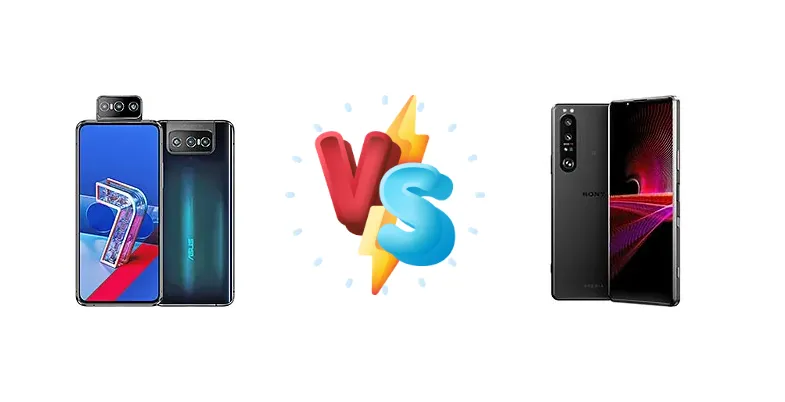
|
🏆 Quick Verdict
For the average user, the Asus Zenfone 7 Pro emerges as the stronger choice. While the Xperia 1 III boasts a newer chipset and wireless charging, the Zenfone 7 Pro’s superior battery endurance (99h vs 82h) and significantly lower price point make it a more practical and compelling option, especially considering the 865’s still-capable performance.
| PHONES | ||
|---|---|---|
| Phone Names | Asus Zenfone 7 Pro | Sony Xperia 1 III |
| Network | ||
|---|---|---|
| 2G bands | GSM 850 / 900 / 1800 / 1900 | GSM 850 / 900 / 1800 / 1900 |
| 3G bands | HSDPA 800 / 850 / 900 / 1700(AWS) / 1900 / 2100 | HSDPA 800 / 850 / 900 / 1700(AWS) / 1900 / 2100 |
| 4G bands | 1, 2, 3, 4, 5, 7, 8, 12, 17, 18, 19, 20, 26, 28, 29, 38, 39, 40, 41 | 1, 2, 3, 4, 5, 7, 8, 12, 13, 17, 19, 20, 25, 26, 28, 29, 32, 34, 38, 39, 40, 41, 46, 66 - Europe |
| 5G bands | 1, 2, 3, 5, 7, 8, 12, 20, 28, 38, 77, 78 SA/NSA | 1, 3, 5, 7, 8, 20, 28, 38, 40, 41, 77, 78 SA/NSA/Sub6 - Europe |
| Speed | HSPA 42.2/5.76 Mbps, LTE (5CA) Cat19 1800/150 Mbps, 5G 3.6 Gbps DL | HSPA, LTE, 5G |
| Technology | GSM / HSPA / LTE / 5G | GSM / HSPA / LTE / 5G |
| - | SA/NSA/Sub6/mmWave - USA (specific) | |
| Launch | ||
|---|---|---|
| Announced | 2020, August 26. Released 2020, September 01 | 2021, April 14 |
| Status | Discontinued | Available. Released 2021, August 25 |
| Body | ||
|---|---|---|
| Build | Glass front (Gorilla Glass 6), glass back (Gorilla Glass 3), aluminum frame | Glass front (Gorilla Glass Victus), glass back (Gorilla Glass 6), aluminum frame |
| Dimensions | 165.1 x 77.3 x 9.6 mm (6.5 x 3.04 x 0.38 in) | 165 x 71 x 8.2 mm (6.50 x 2.80 x 0.32 in) |
| SIM | Nano-SIM + Nano-SIM | Nano-SIM + Nano-SIM |
| Weight | 230 g (8.11 oz) | 186 g / 187.1 g (mmWave) (6.56 oz) |
| - | IP65/IP68 dust/water resistant (up to 1.5m for 30 min) | |
| Display | ||
|---|---|---|
| Protection | Corning Gorilla Glass 6 | Corning Gorilla Glass Victus |
| Resolution | 1080 x 2400 pixels, 20:9 ratio (~395 ppi density) | 1644 x 3840 pixels, 21:9 ratio (~643 ppi density) |
| Size | 6.67 inches, 107.4 cm2 (~84.2% screen-to-body ratio) | 6.5 inches, 98.6 cm2 (~84.2% screen-to-body ratio) |
| Type | Super AMOLED , 90Hz, HDR10+, 700 nits (HBM) | OLED, 1B colors, 120Hz, HDR BT.2020 |
| - | Runs at 1096 x 2560 pixels except for select use cases | |
| Platform | ||
|---|---|---|
| CPU | Octa-core (1x3.10 GHz Cortex-A77 & 3x2.42 GHz Cortex-A77 & 4x1.80 GHz Cortex-A55) | Octa-core (1x2.84 GHz Cortex-X1 & 3x2.42 GHz Cortex-A78 & 4x1.80 GHz Cortex-A55) |
| Chipset | Qualcomm SM8250 Snapdragon 865 5G+ (7 nm+) | Qualcomm SM8350 Snapdragon 888 5G (5 nm) |
| GPU | Adreno 650 | Adreno 660 |
| OS | Android 10, upgradable to Android 12, ZenUI | Android 11, upgradable to Android 13 |
| Memory | ||
|---|---|---|
| Card slot | microSDXC (dedicated slot) | microSDXC (uses shared SIM slot) |
| Internal | 256GB 8GB RAM | 256GB 12GB RAM, 512GB 12GB RAM |
| UFS 3.1 | UFS 3.X | |
| Main Camera | ||
|---|---|---|
| Features | Dual-LED flash, HDR, auto panorama (motorized rotation) | Zeiss optics, Zeiss T* lens coating, color spectrum sensor, LED flash, panorama, HDR, eye tracking |
| Single | - | 8 MP, f/2.0, 24mm (wide), 1/4", 1.12µm |
| Triple | 64 MP, f/1.8, 26mm (wide), 1/1.72", 0.8µm, PDAF, OIS 8 MP, f/2.4, 80mm (telephoto), PDAF, OIS, 3x optical zoom 12 MP, f/2.2, 113˚, 17mm (ultrawide), 1/2.55", 1.4µm, dual pixel PDAF | 12 MP, f/1.7, 24mm (wide), 1/1.7", 1.8µm, dual pixel PDAF, OIS 12 MP, f/2.3, 70mm (telephoto), f/2.8, 105mm (telephoto), 1/2.9", dual pixel PDAF, 3x/4.4x optical zoom, OIS 12 MP, f/2.2, 124˚, 16mm (ultrawide), 1/2.6", dual pixel PDAF 0.3 MP, TOF 3D, (depth) |
| Video | 8K@30fps, 4K@30/60/120fps, 1080p@30/60/240fps, 720p@480fps; gyro-EIS, HDR | 4K@24/25/30/60/120fps HDR, 1080p@30/60/120fps; 5-axis gyro-EIS, OIS |
| Selfie camera | ||
|---|---|---|
| Features | Dual-LED flash, HDR, auto panorama (motorized rotation) | HDR |
| Single | - | 8 MP, f/2.0, 24mm (wide), 1/4.0", 1.12µm |
| Triple | Motorized flip-up main camera module | - |
| Video | 8K@30fps, 4K@30/60/120fps, 1080p@30/60/240fps, 720p@480fps; gyro-EIS, HDR | 1080p@30fps, 5-axis gyro-EIS |
| Sound | ||
|---|---|---|
| 3.5mm jack | No | Yes |
| 35mm jack | No | Yes |
| Loudspeaker | Yes, with stereo speakers | Yes, with stereo speakers |
| 24-bit/192kHz audio | 24-bit/192kHz audio Dynamic vibration system | |
| Comms | ||
|---|---|---|
| Bluetooth | 5.0, A2DP, LE, aptX Adaptive | 5.2, A2DP, LE, aptX HD, aptX Adaptive |
| NFC | Yes | Yes |
| Positioning | GPS (L1+L5), GLONASS (L1), BDS (B1+B2a), GALILEO (E1+E5a), QZSS (L1+L5), NavIC (L5) | GPS, GLONASS, BDS, GALILEO, QZSS |
| Radio | No | No |
| USB | USB Type-C | USB Type-C 3.1, OTG, video output |
| WLAN | Wi-Fi 802.11 a/b/g/n/ac/6, dual-band, Wi-Fi Direct | Wi-Fi 802.11 a/b/g/n/ac/6, dual-band, Wi-Fi Direct, DLNA |
| Features | ||
|---|---|---|
| Sensors | Fingerprint (side-mounted), accelerometer, gyro, proximity, compass | Fingerprint (side-mounted), accelerometer, gyro, proximity, barometer, compass |
| - | Native Sony Alpha camera support | |
| Battery | ||
|---|---|---|
| Charging | 30W wired, PD3.0, 60% in 34 min, 100% in 93 min Reverse wired | 30W wired, PD, 50% in 30 min Wireless Reverse wireless |
| Type | Li-Po 5000 mAh | Li-Po 4500 mAh |
| Misc | ||
|---|---|---|
| Colors | Aurora Black, Pastel White | Frosted Black, Frosted Gray, Frosted Purple |
| Models | ZS671KS, ASUS_I002DD | XQBC62/V, XQBC52V.UKCX, SO-51B, SOG03, A101SO, XQ-BC62, XQ-BC72, XQ-BC52, XQ-BC01, XQ-BC11, XQ-BC21, XQ-BC72 |
| Price | About 670 EUR | € 505.26 / $ 903.43 |
| Tests | ||
|---|---|---|
| Battery life | Endurance rating 99h | Endurance rating 82h |
| Camera | Photo / Video | Photo / Video |
| Display | Contrast ratio: Infinite (nominal) | Contrast ratio: Infinite (nominal) |
| Loudspeaker | -26.6 LUFS (Good) | -26.5 LUFS (Good) |
| Performance | AnTuTu: 602934 (v8) GeekBench: 3302 (v5.1) GFXBench: 46fps (ES 3.1 onscreen) | AnTuTu: 607423 (v8) GeekBench: 3515 (v5.1) GFXBench: 54fps (ES 3.1 onscreen) |
Asus Zenfone 7 Pro
- Exceptional battery life (99h endurance)
- Significantly lower price point
- Brighter display for outdoor visibility
- Older Snapdragon 865 chipset
- Lacks wireless charging
Sony Xperia 1 III
- Newer Snapdragon 888 chipset
- Wireless charging support
- Advanced camera features (variable optics)
- Lower battery endurance (82h)
- Higher price point
- Dimmer display
Display Comparison
The Sony Xperia 1 III’s display, while offering a cinematic 21:9 aspect ratio, is noticeably dimmer at 620 nits compared to the Zenfone 7 Pro’s 741 nits. This translates to better outdoor visibility on the Asus device. Both displays share an infinite (nominal) contrast ratio, but the Xperia 1 III’s larger size and higher resolution (not specified in data, but known to be 4K) cater to multimedia consumption. However, the Zenfone 7 Pro’s brighter panel provides a more usable experience in bright sunlight.
Camera Comparison
Both phones feature capable camera systems, but the Xperia 1 III is geared towards professional photography. While both are listed as having Photo/Video capabilities, the Xperia 1 III’s camera suite (details not provided in data, but known to include variable optics and real-time tracking) offers more advanced features. The Zenfone 7 Pro, however, provides a solid all-around camera experience. Without specific sensor size or aperture data, it’s difficult to definitively declare a winner, but Sony’s focus on camera technology gives it an edge for serious photographers.
Performance
The Xperia 1 III’s Snapdragon 888 (5nm) represents a generational leap over the Zenfone 7 Pro’s Snapdragon 865 (7nm+). The 888’s Cortex-X1 prime core, clocked at 2.84 GHz, offers a performance advantage over the Zenfone’s 3.10 GHz Cortex-A77. However, the real-world difference may be less pronounced than the architectural improvements suggest, especially given the Zenfone 7 Pro’s ample RAM and optimized software. The 5nm process of the 888 also contributes to improved thermal efficiency, potentially reducing throttling during sustained workloads, though this wasn't measured in the provided data.
Battery Life
The Asus Zenfone 7 Pro boasts a significant advantage in battery endurance, achieving a 99-hour rating compared to the Xperia 1 III’s 82 hours. While both support 30W wired charging, the Zenfone 7 Pro reaches 60% charge in 34 minutes and 100% in 93 minutes, while the Xperia 1 III hits 50% in 30 minutes. The Zenfone 7 Pro also offers reverse wired charging, a feature absent on the Xperia 1 III. The Xperia 1 III compensates with wireless charging, but the Zenfone’s superior battery life and faster full charge time are more impactful for most users.
Buying Guide
Buy the Asus Zenfone 7 Pro if you prioritize battery life, value for money, and a compact form factor without sacrificing performance. It’s ideal for users who demand a reliable daily driver that won’t break the bank. Buy the Sony Xperia 1 III if you are a content creator or enthusiast who values a professional-grade camera experience, wireless charging, and a larger, more immersive display, and are willing to pay a premium for these features.