
Asus Smartphone for Snapdragon Insiders vs. Sony Xperia 1 IV: A Deep Dive Comparison
| Phones Images | |||||
|---|---|---|---|---|---|
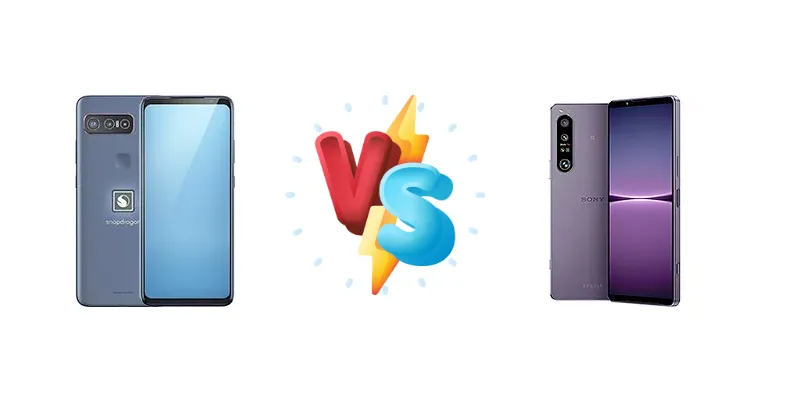
|
🏆 Quick Verdict
For the average user prioritizing camera quality and a refined multimedia experience, the Sony Xperia 1 IV is the stronger choice. However, gamers and power users who demand maximum Snapdragon 888 performance and faster charging will find the Asus Smartphone for Snapdragon Insiders more appealing.
| PHONES | ||
|---|---|---|
| Phone Names | Asus Smartphone for Snapdragon Insiders | Sony Xperia 1 IV |
| Network | ||
|---|---|---|
| 2G bands | GSM 850 / 900 / 1800 / 1900 | GSM 850 / 900 / 1800 / 1900 |
| 3G bands | HSDPA 800 / 850 / 900 / 1700(AWS) / 1900 / 2100 | HSDPA 800 / 850 / 900 / 1700(AWS) / 1900 / 2100 |
| 4G bands | 1, 2, 3, 4, 5, 7, 8, 11, 12, 13, 14, 17, 18, 19, 20, 21, 25, 26, 28, 29, 30, 32, 34, 38, 39, 40, 41, 42, 43, 46, 48, 66, 71 | 1, 2, 3, 4, 5, 7, 8, 12, 13, 17, 19, 20, 25, 26, 28, 29, 32, 34, 38, 39, 40, 41, 46, 66 - Europe |
| 5G bands | 1, 2, 3, 5, 7, 8, 11, 12, 13, 14, 18, 20, 21, 25, 26, 28, 30, 38, 40, 41, 42, 43, 46, 48, 66, 71, 77, 78, 79, 257, 258, 260, 261 SA/NSA/Sub6/mmWave | 1, 3, 5, 7, 8, 20, 28, 38, 40, 41, 77, 78 SA/NSA/Sub6 - Europe |
| Speed | HSPA 42.2/5.76 Mbps, LTE (6CA) Cat20 2000/150 Mbps, 5G | HSPA, LTE, 5G |
| Technology | GSM / HSPA / LTE / 5G | GSM / HSPA / LTE / 5G |
| - | 1, 3, 5, 7, 8, 28, 38, 40, 41, 77, 78, 79 SA/NSA/Sub6 - Asia | |
| Launch | ||
|---|---|---|
| Announced | 2021, July 08 | 2022, May 11 |
| Status | Available. Released 2021, August 31 | Available. Released 2022, June 11 |
| Body | ||
|---|---|---|
| Build | - | Glass front (Gorilla Glass Victus), glass back (Gorilla Glass Victus), aluminum frame |
| Dimensions | 173.2 x 77.3 x 9.6 mm (6.82 x 3.04 x 0.38 in) | 165 x 71 x 8.2 mm (6.50 x 2.80 x 0.32 in) |
| SIM | Nano-SIM + Nano-SIM | · Nano-SIM + eSIM· Nano-SIM + Nano-SIM |
| Weight | 210 g (7.41 oz) | 185 g (6.53 oz) |
| - | IP65/IP68 dust/water resistant (up to 1.5m for 30 min) | |
| Display | ||
|---|---|---|
| Protection | Corning Gorilla Glass Victus | Corning Gorilla Glass Victus |
| Resolution | 1080 x 2400 pixels (~395 ppi density) | 1644 x 3840 pixels, 21:9 ratio (~643 ppi density) |
| Size | 6.78 inches, 109.5 cm2 (~81.8% screen-to-body ratio) | 6.5 inches, 98.6 cm2 (~84.2% screen-to-body ratio) |
| Type | Super AMOLED, 144Hz, HDR10+, 800 nits (HBM), 1200 nits (peak) | OLED, 1B colors, 120Hz, HDR BT.2020 |
| Always-on display | Runs at 1096 x 2560 pixels except for select use cases | |
| Platform | ||
|---|---|---|
| CPU | Octa-core (1x2.84 GHz Cortex-X1 & 3x2.42 GHz Cortex-A78 & 4x1.80 GHz Cortex-A55) | Octa-core (1x3.00 GHz Cortex-X2 & 3x2.50 GHz Cortex-A710 & 4x1.80 GHz Cortex-A510) |
| Chipset | Qualcomm SM8350 Snapdragon 888 5G (5 nm) | Qualcomm SM8450 Snapdragon 8 Gen 1 (4 nm) |
| GPU | Adreno 660 | Adreno 730 |
| OS | Android 11 | Android 12, upgradable to Android 13 |
| Memory | ||
|---|---|---|
| Card slot | No | microSDXC (uses shared SIM slot) |
| Internal | 512GB 16GB RAM | 256GB 12GB RAM, 512GB 12GB RAM, 512GB 16GB RAM |
| UFS 3.1 | UFS 3.X | |
| Main Camera | ||
|---|---|---|
| Features | Dual-LED flash, HDR, panorama | Zeiss optics, Zeiss T* lens coating, color spectrum sensor, LED flash, panorama, HDR, eye tracking |
| Single | - | 12 MP, f/2.0, 24mm (wide), 1/2.9", 1.25µm |
| Triple | 64 MP, f/1.8, 26mm (wide), 1/1.73", 0.8µm, PDAF, OIS 8 MP, f/2.4, 80mm (telephoto), PDAF, 3x optical zoom, OIS 12 MP, f/2.2, 112˚, 14mm (ultrawide), 1/2.55", 1.4µm, dual pixel PDAF | 12 MP, f/1.7, 24mm (wide), 1/1.7", 1.8µm, dual pixel PDAF, OIS 12 MP, f/2.3, 85mm (telephoto), f/2.8, 125mm (telephoto), 1/3.5", dual pixel PDAF, 3.5x-5.2x continuous optical zoom, OIS 12 MP, f/2.2, 124˚, 16mm (ultrawide), 1/2.5", dual pixel PDAF 0.3 MP, TOF 3D, (depth) |
| Video | 8K@30fps, 4K@30/60fps, 1080p@30/60fps, gyro-EIS, HDR | 4K@24/25/30/60/120fps HDR, 1080p@30/60/120fps; 5-axis gyro-EIS, OIS |
| Selfie camera | ||
|---|---|---|
| Features | HDR | HDR |
| Single | 24 MP, f/2.5, 27mm (wide), 0.9µm | 12 MP, f/2.0, 24mm (wide), 1/2.9", 1.25µm |
| Video | 1080p@30fps | 4K@30fps, 1080p@30/60fps, 5-axis gyro-EIS |
| Sound | ||
|---|---|---|
| 3.5mm jack | No | Yes |
| 35mm jack | No | Yes |
| Loudspeaker | Yes, with stereo speakers | Yes, with stereo speakers |
| Snapdragon Sound Technology 32-bit/384kHz audio | 24-bit/192kHz audio Dynamic vibration system | |
| Comms | ||
|---|---|---|
| Bluetooth | 5.2, A2DP, LE, aptX HD, aptX Adaptive | 5.2, A2DP, LE Audio, aptX HD, aptX Adaptive |
| NFC | Yes | Yes |
| Positioning | GPS (L1+L5), GLONASS (L1), BDS (B1I+B1c+B2a), GALILEO (E1+E5a), QZSS (L1+L5), NavIC (L5) | GPS, GLONASS, BDS, GALILEO, QZSS |
| Radio | No | No |
| USB | USB Type-C | USB Type-C 3.2, OTG, video output |
| WLAN | Wi-Fi 802.11 a/b/g/n/ac/6e, dual-band, Wi-Fi Direct | Wi-Fi 802.11 a/b/g/n/ac/6e, dual-band or tri-band (region dependent), Wi-Fi Direct, DLNA |
| Features | ||
|---|---|---|
| Sensors | Fingerprint (rear-mounted, ultrasonic), accelerometer, gyro, proximity, compass | Fingerprint (side-mounted), accelerometer, gyro, proximity, barometer, compass |
| Illuminated Snapdragon fireball icon on the back | Native Sony Alpha camera support | |
| Battery | ||
|---|---|---|
| Charging | 65W wired, PD3.0, QC5, 50% in 30 min, 100% in 50 min | 30W wired, PD3.0, PPS, 50% in 30 min Wireless Reverse wireless |
| Type | Li-Po 4000 mAh | Li-Po 5000 mAh |
| Misc | ||
|---|---|---|
| Colors | Midnight blue | Black, Violet, White |
| Models | I007D | XQCT62-B, XQCT54, XQCT54C0V.YD, XQCT54C0B.YD, XQCT54C0W.YD, XQCT54C0V.EEAC, XQCT54C0B.EEAC, XQ-CT72, XQ-CT54, XQ-CT62, SO-51C |
| Price | About 1270 EUR | $ 1,120.00 / € 489.00 |
| Tests | ||
|---|---|---|
| Battery life | - | Endurance rating 100h |
| Camera | - | Photo / Video |
| Display | - | Contrast ratio: Infinite (nominal) |
| Loudspeaker | - | -27.6 LUFS (Good) |
| Performance | - | AnTuTu: 838832 (v9) GeekBench: 3403 (v5.1) GFXBench: 74fps (ES 3.1 onscreen) |
Asus Smartphone for Snapdragon Insiders
- Faster 65W wired charging
- Optimized for Snapdragon performance
- Potentially lower price (depending on current deals)
- Older Snapdragon 888 chipset
- Limited camera information
- No wireless charging
Sony Xperia 1 IV
- Newer Snapdragon 8 Gen 1 chipset
- Professional-grade camera system
- Wireless and reverse wireless charging
- Slower 30W wired charging
- Higher price point
- Unique 21:9 aspect ratio may not suit all users
Display Comparison
The Sony Xperia 1 IV boasts a 602 nit peak brightness, providing good visibility outdoors, but lacks the dynamic refresh rate technology found in many modern flagships. The Asus Smartphone for Snapdragon Insiders’ display specifications are not provided, but given its gaming focus, it likely prioritizes refresh rate over peak brightness. The Xperia 1 IV’s infinite contrast ratio (nominal) suggests a high-quality OLED panel, while the absence of PWM dimming information for the Asus phone could be a concern for users sensitive to flicker. The Xperia 1 IV’s 21:9 aspect ratio is a defining feature, catering to video consumption and multitasking, a departure from the more conventional displays typically found on gaming-focused devices.
Camera Comparison
Both devices are positioned as camera-centric, but approach imaging differently. The Xperia 1 IV’s camera system is renowned for its professional features and real-time tracking autofocus. While specific sensor details are missing, Sony’s expertise in image processing and optical stabilization (OIS) is a key differentiator. The Asus Smartphone for Snapdragon Insiders’ camera specifications are not detailed, but its focus on Snapdragon optimization suggests potential for computational photography enhancements. The absence of information regarding sensor size and aperture on the Asus phone makes a direct comparison difficult, but Sony’s established camera pedigree gives the Xperia 1 IV a clear advantage.
Performance
The Xperia 1 IV’s Snapdragon 8 Gen 1 (4nm) chipset represents a significant architectural leap over the Asus’s Snapdragon 888 (5nm). The Gen 1’s Cortex-X2 core, clocked at 3.00 GHz, offers improved single-core performance compared to the Asus’s Cortex-X1 at 2.84 GHz. Furthermore, the Gen 1 utilizes the more efficient Cortex-A710 cores, contributing to better thermal management. While the Asus benefits from a dedicated Snapdragon focus, the Xperia 1 IV’s newer chipset and more efficient architecture provide a performance advantage, especially in sustained workloads. The Xperia 1 IV’s LPDDR5 RAM is standard for flagships, while the Asus’s RAM specification is unknown.
Battery Life
Both phones share a 100-hour endurance rating, suggesting comparable battery life under similar usage scenarios. However, their charging approaches differ significantly. The Asus supports 65W wired charging, achieving 50% charge in 30 minutes and 100% in 50 minutes, offering a substantial speed advantage. The Xperia 1 IV’s 30W charging, while supporting PD3.0 and PPS, is slower, also reaching 50% in 30 minutes, but taking longer to fully charge. The Xperia 1 IV also offers wireless and reverse wireless charging, features absent on the Asus.
Buying Guide
Buy the Asus Smartphone for Snapdragon Insiders if you need a phone specifically optimized for Snapdragon performance, prioritize fast 65W charging, and frequently engage in demanding mobile gaming. Buy the Sony Xperia 1 IV if you prefer a professional-grade camera system, value a high-quality display with accurate color reproduction, and appreciate Sony’s unique multimedia features and long battery endurance.