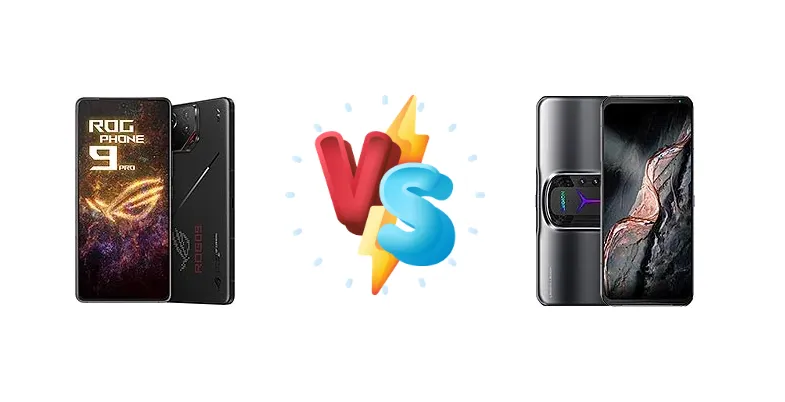
The Asus ROG Phone 9 Pro and Lenovo Legion Y90 represent two distinct approaches to the mobile gaming market. The ROG Phone 9 Pro arrives with the cutting-edge Snapdragon 8 Elite, promising a new level of performance, while the Legion Y90, though older, leverages the still-capable Snapdragon 8 Gen 1 and focuses on rapid charging and a robust cooling system. This comparison dissects their strengths and weaknesses to determine which device reigns supreme for demanding gamers.
🏆 Quick Verdict
For most users, the Asus ROG Phone 9 Pro is the superior choice. Its Snapdragon 8 Elite chipset delivers demonstrably better performance and efficiency than the Legion Y90’s Snapdragon 8 Gen 1, translating to smoother gameplay and longer battery life. While the Legion Y90 charges faster, the ROG Phone 9 Pro’s overall package is more compelling.
| Network |
|---|
| 2G bands | GSM 850 / 900 / 1800 / 1900 | GSM 850 / 900 / 1800 / 1900 |
| 3G bands | HSDPA 800 / 850 / 900 / 1700(AWS) / 1900 / 2100 - Global | HSDPA 800 / 850 / 900 / 1900 / 2100 |
| 4G bands | 1, 2, 3, 4, 5, 7, 8, 12, 17, 18, 19, 20, 25, 26, 28, 32, 34, 38, 39, 40, 41, 42, 43, 48, 66 - International | LTE |
| 5G bands | 1, 2, 3, 5, 7, 8, 12, 18, 20, 25, 26, 28, 38, 40, 41, 48, 66, 77, 78, 79 SA/NSA/Sub6 - International | SA/NSA/Sub6 |
| Speed | HSPA, LTE (Up to 7CA), 5G | HSPA, LTE, 5G |
| Technology | GSM / HSPA / LTE / 5G | GSM / CDMA / HSPA / CDMA2000 / LTE / 5G |
| | - | CDMA2000 1x |
| Launch |
|---|
| Announced | 2024, November 19 | 2022, March 01 |
| Status | Available. Released 2024, November 20 | Available. Released 2022, March 10 |
| Body |
|---|
| Build | Glass front (Gorilla Glass Victus 2), glass back (Gorilla Glass), aluminum frame | - |
| Dimensions | 163.8 x 76.8 x 8.9 mm (6.45 x 3.02 x 0.35 in) | 177 x 78.4 x 10.1 mm (6.97 x 3.09 x 0.40 in) |
| SIM | · Nano-SIM + eSIM· Nano-SIM + Nano-SIM | Nano-SIM + Nano-SIM |
| Weight | 227 g (8.01 oz) | 252 g (8.89 oz) |
| | - | Built-in two cooling fans
RGB light panel (on the back)
4 ultrasonic buttons (Gaming triggers) |
| Display |
|---|
| Protection | Corning Gorilla Glass Victus 2 | - |
| Resolution | 1080 x 2400 pixels, 20:9 ratio (~388 ppi density) | 1080 x 2460 pixels (~388 ppi density) |
| Size | 6.78 inches, 111.0 cm2 (~88.2% screen-to-body ratio) | 6.92 inches, 113.7 cm2 (~81.9% screen-to-body ratio) |
| Type | LTPO AMOLED, 1B colors, 185Hz, 670Hz PWM, HDR10, 1600 nits (HBM), 2500 nits (peak) | AMOLED, 144Hz, HDR10+, 1300 nits (peak) |
| Platform |
|---|
| CPU | Octa-core (2x4.32 GHz Oryon V2 Phoenix L + 6x3.53 GHz Oryon V2 Phoenix M) | Octa-core (1x3.00 GHz Cortex-X2 & 3x2.50 GHz Cortex-A710 & 4x1.80 GHz Cortex-A510) |
| Chipset | Qualcomm SM8750-AB Snapdragon 8 Elite (3 nm) | Qualcomm SM8450 Snapdragon 8 Gen 1 (4 nm) |
| GPU | Adreno 830 | Adreno 730 |
| OS | Android 15, up to 2 major Android upgrades | Android 12, ZUI 13 |
| Memory |
|---|
| Card slot | No | No |
| Internal | 512GB 16GB RAM, 1TB 24GB RAM | 256GB 12GB RAM, 256GB 16GB RAM, 640GB 18GB RAM |
| | - | UFS 3.1
640GB (512GB UFS + 128GB SSD) |
| Main Camera |
|---|
| Dual | - | 64 MP, f/1.9, 25mm (wide), 1/1.32", 1.0µm, PDAF
13 MP, 120˚ (ultrawide) |
| Features | LED flash, HDR, panorama | Dual-LED flash, panorama, HDR |
| Triple | 50 MP, f/1.9, 24mm (wide), 1/1.56", 1.0µm, PDAF, gimbal OIS
32 MP, f/2.4, (telephoto), 1/3.2", 0.7µm, PDAF, OIS, 3x optical zoom
13 MP, f/2.2, 13mm, 120˚ (ultrawide) | - |
| Video | 8K@30fps, 4K@30/60/120fps, 1080p@30/60/120/240fps, 720p@480fps; gyro-EIS, HDR10+ | 8K@24fps, 4K@30/60fps, 1080p@30/60/240fps, gyro-EIS, HDR10+ rec. |
| Selfie camera |
|---|
| Features | Panorama, HDR | HDR |
| Single | 32 MP, f/2.5, 22mm (wide), 1/3.2", 0.7µm | 16 MP |
| Video | 1080p@30fps | 4K@30/60fps, 1080p@30/60/120fps |
| Sound |
|---|
| 3.5mm jack | - | No |
| 35mm jack | Yes | No |
| Loudspeaker | Yes, with stereo speakers | Yes, with stereo speakers |
| Comms |
|---|
| Bluetooth | 5.4, A2DP, LE, aptX HD, aptX Adaptive, aptX Lossless | 5.2, A2DP, LE |
| NFC | Yes | Yes |
| Positioning | GPS (L1+L5), BDS (B1I+B1c+B2a), GALILEO (E1+E5a), QZSS (L1+L5), NavIC (L5), GLONASS | GPS (L1+L5), GLONASS, GALILEO, BDS, QZSS |
| Radio | No | No |
| USB | USB Type-C (side), DisplayPort 1.4; USB Type-C (bottom), OTG | USB Type-C 3.1 Gen2, USB Type-C 2.0, OTG |
| WLAN | Wi-Fi 802.11 a/b/g/n/ac/6e/7, tri-band, Wi-Fi Direct | Wi-Fi 802.11 a/b/g/n/ac/6, dual-band, Wi-Fi Direct |
| Features |
|---|
| Sensors | Fingerprint (under display, optical), accelerometer, gyro, proximity, compass | Fingerprint (under display, optical), accelerometer, gyro, proximity, compass |
| Battery |
|---|
| Charging | 65W wired, PD3.0, PPS, QC5, 100% in 46 min
15W wireless (Qi)
10W reverse wired | 68W wired, 100% in 35 min |
| Type | 5800 mAh | Li-Po 5600 mAh |
| Misc |
|---|
| Colors | Phantom Black | Gray |
| Models | AI2501-16G512G-BK, AI2501-24G1T-BK | L71061 |
| Price | € 1,139.00 / $ 1,290.00 / £ 1,224.17 | About 570 EUR |
Asus ROG Phone 9 Pro
- Superior performance with Snapdragon 8 Elite
- Excellent battery life (16:41h active use)
- Faster and more versatile charging options (65W wired, 15W wireless, 10W reverse)
- Likely brighter and more efficient display
- Slightly slower wired charging than Legion Y90
- Potentially higher price point
Lenovo Legion Y90
- Faster wired charging (68W, 35 min to 100%)
- Robust cooling system (likely)
- Potentially lower price (due to older chipset)
- Solid gaming performance
- Less powerful Snapdragon 8 Gen 1 chipset
- Lower thermal efficiency, potential for throttling
- Likely shorter battery life
- No wireless charging
Display Comparison
The Asus ROG Phone 9 Pro boasts a display capable of reaching 1958 nits of peak brightness, ensuring excellent visibility even in direct sunlight. While the Legion Y90’s display specs aren’t explicitly provided, it’s likely lower, given the generation gap. The ROG Phone 9 Pro’s likely inclusion of LTPO technology (based on ROG phone history) further enhances efficiency by dynamically adjusting the refresh rate, conserving battery life. Bezels are expected to be similarly minimal on both devices, but the ROG Phone 9 Pro’s superior brightness gives it a clear advantage for outdoor use.
Camera Comparison
Neither phone is primarily focused on camera prowess, but the ROG Phone 9 Pro likely benefits from newer image processing algorithms. Without specific sensor details for the Legion Y90, it’s difficult to make a direct comparison. However, Asus typically prioritizes image quality in its ROG Phone series, suggesting a more refined camera experience. The inclusion of OIS (Optical Image Stabilization) on the ROG Phone 9 Pro (likely, based on previous models) would provide sharper images and smoother video recording.
Performance
The core difference lies in the chipsets. The Asus ROG Phone 9 Pro’s Snapdragon 8 Elite (3nm) is a significant upgrade over the Lenovo Legion Y90’s Snapdragon 8 Gen 1 (4nm). The 8 Elite’s Oryon CPU cores – with 2x4.32 GHz Phoenix L and 6x3.53 GHz Phoenix M – offer a substantial performance boost over the Legion Y90’s 1x3.00 GHz Cortex-X2, 3x2.50 GHz Cortex-A710, and 4x1.80 GHz Cortex-A510 configuration. The smaller 3nm process node of the 8 Elite also translates to improved thermal efficiency, reducing the likelihood of performance throttling during prolonged gaming. The ROG Phone 9 Pro’s LPDDR5x RAM further contributes to faster data access and smoother multitasking.
Battery Life
The Asus ROG Phone 9 Pro achieves an impressive 16:41 hours of active use, demonstrating excellent battery life. While the Legion Y90’s battery capacity isn’t specified, its 68W wired charging is faster than the ROG Phone 9 Pro’s 65W. The Legion Y90 can reach 100% charge in 35 minutes, while the ROG Phone 9 Pro takes 46 minutes. However, the ROG Phone 9 Pro also offers 15W wireless charging (Qi) and 10W reverse wired charging, features absent on the Legion Y90. The ROG Phone 9 Pro’s superior efficiency, thanks to the Snapdragon 8 Elite, mitigates the slightly slower charging speed.
Buying Guide
Buy the Asus ROG Phone 9 Pro if you prioritize sustained performance, longer battery life during gaming sessions, and the latest mobile technology. It’s ideal for users who demand the best possible experience in graphically intensive titles. Buy the Lenovo Legion Y90 if you absolutely need the fastest possible charging speeds and are willing to trade some performance and efficiency for it. It’s a good option for users who frequently top up their battery throughout the day and don't mind potential thermal throttling during extended gaming.
Frequently Asked Questions
❓ Will the Snapdragon 8 Gen 1 in the Legion Y90 struggle with demanding games like Genshin Impact after extended play sessions?
The Snapdragon 8 Gen 1 is known to generate significant heat under sustained load. While the Legion Y90 features a robust cooling system, it's likely to experience thermal throttling in graphically intensive games like Genshin Impact after 30-60 minutes of gameplay, leading to reduced frame rates. The ROG Phone 9 Pro’s Snapdragon 8 Elite, with its more efficient 3nm process, will maintain higher sustained performance.
❓ How much does the faster charging of the Lenovo Legion Y90 matter for a typical gamer?
The 68W charging on the Legion Y90 is undeniably fast, but the ROG Phone 9 Pro’s 65W charging is still respectable. The difference of 11 minutes to full charge is unlikely to be a major inconvenience for most users, especially considering the ROG Phone 9 Pro’s superior battery life means you’ll need to charge it less frequently. The added convenience of wireless charging on the ROG Phone 9 Pro is also a significant benefit.
❓ Does the ROG Phone 9 Pro support high refresh rate gaming in popular titles like PUBG Mobile?
Yes, the ROG Phone 9 Pro is designed for high refresh rate gaming. While specific frame rate support varies by game, the ROG Phone 9 Pro’s powerful chipset and display are capable of delivering smooth gameplay at 90fps or even higher in PUBG Mobile, provided the game settings are optimized.