
Asus ROG Phone 3 Strix vs ZTE nubia Red Magic 6 Pro: A Deep Dive for Mobile Gamers
| Phones Images | |||||
|---|---|---|---|---|---|
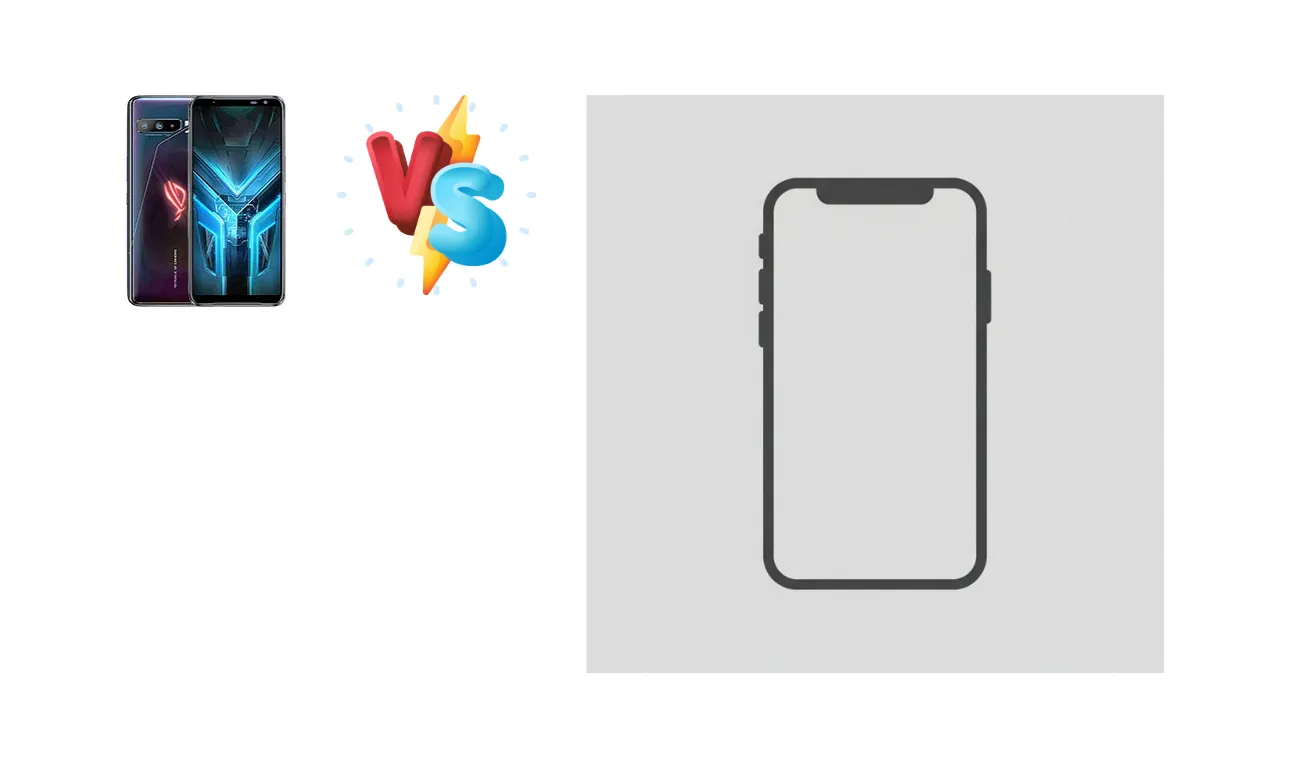
|
🏆 Quick Verdict
For most gamers, the ZTE nubia Red Magic 6 Pro emerges as the superior choice. Its Snapdragon 888 chipset offers a noticeable performance uplift, and the incredibly fast 120W (or 66W internationally) charging significantly reduces downtime. While the ROG Phone 3 Strix remains a capable device, the Red Magic 6 Pro’s advancements justify the price difference.
| PHONES | ||
|---|---|---|
| Phone Names | Asus ROG Phone 3 Strix | ZTE nubia Red Magic 6 Pro |
| Network | ||
|---|---|---|
| 2G bands | GSM 850 / 900 / 1800 / 1900 | GSM 850 / 900 / 1800 / 1900 - SIM 1 & SIM 2 |
| 3G bands | HSDPA 850 / 900 / 1700(AWS) / 1900 / 2100 | HSDPA 850 / 900 / 1700(AWS) / 1900 / 2100 |
| 4G bands | 1, 2, 3, 4, 5, 7, 8, 20, 28, 34, 38, 39, 40, 41 | 1, 2, 3, 4, 5, 7, 8, 12, 17, 18, 19, 20, 26, 28, 34, 38, 39, 40, 41, 66 |
| 5G bands | 41, 77, 78, 79 SA/NSA | 1, 3, 28, 38, 41, 78 SA/NSA |
| Speed | HSPA 42.2/5.76 Mbps, LTE (6CA) Cat18 1200/150 Mbps, 5G 4.0 Gbps DL | HSPA, LTE-A, 5G |
| Technology | GSM / CDMA / HSPA / LTE / 5G | GSM / CDMA / HSPA / EVDO / LTE / 5G |
| CDMA 800 & TD-SCDMA | CDMA2000 1xEV-DO | |
| Launch | ||
|---|---|---|
| Announced | 2020, July 22. Released 2020, July 23 | 2021, March 04 |
| Status | Discontinued | Available. Released 2021, March 11 |
| Body | ||
|---|---|---|
| Build | Glass front (Gorilla Glass 6), glass back (Gorilla Glass 3), aluminum frame | Glass front, glass back, aluminum frame |
| Dimensions | 171 x 78 x 9.9 mm (6.73 x 3.07 x 0.39 in) | 169.9 x 77.2 x 9.7 mm (6.69 x 3.04 x 0.38 in) |
| SIM | Nano-SIM + Nano-SIM | Dual SIM (Nano-SIM, dual stand-by) |
| Weight | 240 g (8.47 oz) | 220 g (7.76 oz) |
| RGB light panel (on the back) Pressure sensitive zones (Gaming triggers) | Pressure sensitive zones (400Hz touch-sensing) Built-in cooling fan | |
| Display | ||
|---|---|---|
| Protection | Corning Gorilla Glass 6 | Corning Gorilla Glass |
| Resolution | 1080 x 2340 pixels, 19.5:9 ratio (~391 ppi density) | 1080 x 2400 pixels, 20:9 ratio (~387 ppi density) |
| Size | 6.59 inches, 106.6 cm2 (~79.9% screen-to-body ratio) | 6.8 inches, 111.6 cm2 (~85.1% screen-to-body ratio) |
| Type | AMOLED, 1B colors, 144Hz, HDR10+, 650 nits (typ) | AMOLED, 1B colors, 165Hz, 630 nits (typ) |
| Platform | ||
|---|---|---|
| CPU | Octa-core (1x2.84 GHz Cortex-A77 & 3x2.42 GHz Cortex-A77 & 4x1.80 GHz Cortex-A55) | Octa-core (1x2.84 GHz Cortex-X1 & 3x2.42 GHz Cortex-A78 & 4x1.80 GHz Cortex-A55) |
| Chipset | Qualcomm SM8250 Snapdragon 865 5G (7 nm+) | Qualcomm SM8350 Snapdragon 888 5G (5 nm) |
| GPU | Adreno 650 | Adreno 660 |
| OS | Android 10, ROG UI | Android 11, Redmagic 4.0 |
| Memory | ||
|---|---|---|
| Card slot | No | No |
| Internal | 128GB 8GB RAM, 128GB 12GB RAM, 256GB 8GB RAM | 128GB 12GB RAM, 256GB 12GB RAM, 256GB 16GB RAM, 512GB 18GB RAM |
| UFS 3.1 | UFS 3.1 | |
| Main Camera | ||
|---|---|---|
| Features | LED flash, HDR, panorama | LED flash, HDR, panorama |
| Single | - | 8 MP, f/2.0, (wide), 1/4.0", 1.12µm |
| Triple | 64 MP, f/1.8, 26mm (wide), 1/1.73", 0.8µm, PDAF 13 MP, f/2.4, 11mm, 125˚ (ultrawide) 5 MP (macro) | 64 MP, f/1.8, 26mm (wide), 1/1.97", 0.7µm, PDAF 8 MP, f/2.0, 120˚, 13mm (ultrawide), 1/4.0", 1.12µm 2 MP, (macro) |
| Video | 8K@30fps, 4K@30/60/120fps, 1080p@30/60/240fps, 720p@480fps; gyro-EIS | 8K@30fps, 4K@30/60fps, 1080p@30/60/120/240fps |
| Selfie camera | ||
|---|---|---|
| Features | Panorama, HDR | HDR |
| Single | 24 MP, f/2.0, 27mm (wide), 0.9µm | 8 MP, f/2.0, (wide), 1/4.0", 1.12µm |
| Video | 1080p@30fps | 1080p@30fps |
| Sound | ||
|---|---|---|
| 3.5mm jack | No | Yes |
| 35mm jack | No | - |
| Loudspeaker | Yes, with DTS:X stereo speakers (2 dedicated amplifiers) | Yes, with stereo speakers |
| 24-bit/192kHz audio | 32-bit/384kHz audio | |
| Comms | ||
|---|---|---|
| Bluetooth | 5.1, A2DP, LE, aptX HD, aptX Adaptive | 5.1, A2DP, aptX, LE |
| NFC | Yes | Yes |
| Positioning | GPS (L1+L5), GLONASS, BDS, GALILEO, QZSS | GPS (L1+L5), GLONASS, BDS, GALILEO |
| Radio | No | No |
| USB | USB Type-C 3.1 (side), USB Type-C 2.0 (bottom), OTG, accessory connector | USB Type-C 3.0, OTG, accessory connector |
| WLAN | Wi-Fi 802.11 a/b/g/n/ac/6, dual-band, Wi-Fi Direct | Wi-Fi 802.11 a/b/g/n/ac/6, dual-band, Wi-Fi Direct |
| Features | ||
|---|---|---|
| Sensors | Fingerprint (under display, optical), accelerometer, gyro, proximity, compass | Fingerprint (under display, optical), accelerometer, gyro, proximity, compass |
| Battery | ||
|---|---|---|
| Charging | 30W wired, PD3.0, QC4 10W reverse wired | 120W wired, PD3.0, QC5, 50% in 5 min (China) 66W wired, PD3.0, QC5 (International) |
| Type | Li-Po 6000 mAh | Li-Po 5050 mAh, non-removable - International modelLi-Po 4500 mAh, non-removable - China model |
| Misc | ||
|---|---|---|
| Colors | Black Glare | Eclipse Black, Moon Silver |
| Models | ASUS_I003DD | NX669J-P |
| Price | About 1400 EUR | About 960 EUR |
Asus ROG Phone 3 Strix
- Mature software ecosystem with ROG Armoury Crate.
- Competitive pricing, especially as it ages.
- Robust cooling system for the Snapdragon 865.
- Older Snapdragon 865 chipset is less powerful than the 888.
- Slower 30W charging compared to the Red Magic 6 Pro.
ZTE nubia Red Magic 6 Pro
- Snapdragon 888 offers significantly improved performance.
- Incredibly fast 120W (China) / 66W (International) charging.
- More efficient 5nm process reduces throttling.
- Software experience may be less polished than Asus’s ROG UI.
- Potentially higher price point.
Display Comparison
Both phones feature high refresh rate displays geared towards gaming, but key differences exist. While specific display specs (brightness, color accuracy) aren't provided, the Red Magic 6 Pro benefits from the more modern Snapdragon 888’s display engine capabilities. The ROG Phone 3 Strix, utilizing the Snapdragon 865, may exhibit slightly less efficient display power consumption. Bezels are likely comparable, given both phones prioritize screen real estate, but the Red Magic 6 Pro’s design leans towards a more minimalist aesthetic.
Camera Comparison
Neither phone is primarily focused on camera performance, but the Red Magic 6 Pro likely holds a slight advantage due to the newer image signal processor (ISP) within the Snapdragon 888. While sensor sizes and apertures aren’t specified, the 888’s ISP offers improved noise reduction and dynamic range. Both phones likely feature competent main cameras for casual photography, but serious photographers should look elsewhere. The inclusion of low-resolution macro lenses on both devices is largely a marketing tactic and offers limited practical benefit.
Performance
The core difference lies in the chipsets: the Asus ROG Phone 3 Strix uses the Snapdragon 865 (7nm+), while the ZTE nubia Red Magic 6 Pro boasts the Snapdragon 888 (5nm). This 5nm process node is crucial; it allows for higher transistor density and improved thermal efficiency, meaning the Red Magic 6 Pro is less prone to throttling under sustained load. The Red Magic 6 Pro’s CPU features the Cortex-X1 prime core, offering a performance advantage over the ROG Phone 3 Strix’s Cortex-A77. Both utilize LPDDR5 RAM, but the 888’s memory controller is faster, further enhancing performance. The ROG Phone 3 Strix’s cooling system is robust, but the 888’s inherent efficiency gives the Red Magic 6 Pro an edge.
Battery Life
The Red Magic 6 Pro’s 120W (China) / 66W (International) charging is a game-changer. It can reportedly reach 50% charge in just 5 minutes (China version), drastically reducing downtime compared to the ROG Phone 3 Strix’s 30W charging. While battery capacity isn’t specified for either, the Red Magic 6 Pro’s more efficient Snapdragon 888 and optimized power management likely offset any potential capacity difference. The ROG Phone 3 Strix offers 10W reverse wired charging, a feature likely present on the Red Magic 6 Pro as well, but the faster charging speeds of the Red Magic 6 Pro are the defining factor.
Buying Guide
Buy the Asus ROG Phone 3 Strix if you prioritize a mature software experience, a well-established gaming ecosystem with accessories, and are looking for a more budget-friendly option. Buy the ZTE nubia Red Magic 6 Pro if you demand the latest processing power, lightning-fast charging, and are willing to accept a potentially less refined software experience in exchange for raw performance.