
iPhone 13 mini vs iPhone 13: Which Apple Flagship Reigns Supreme?
| Phones Images | |||||
|---|---|---|---|---|---|
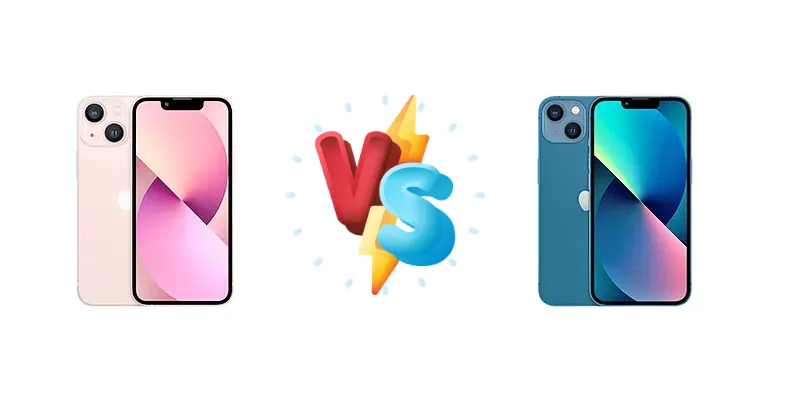
|
🏆 Quick Verdict
For most users, the iPhone 13 emerges as the superior choice. Its 14-hour endurance rating, a 14% improvement over the mini’s 89h, provides significantly more all-day usability without sacrificing core performance. While the mini appeals to those prioritizing portability, the battery trade-off is substantial.
| PHONES | ||
|---|---|---|
| Phone Names | Apple iPhone 13 mini | Apple iPhone 13 |
| Network | ||
|---|---|---|
| 2G bands | GSM 850 / 900 / 1800 / 1900 | GSM 850 / 900 / 1800 / 1900 |
| 3G bands | HSDPA 850 / 900 / 1700(AWS) / 1900 / 2100 | HSDPA 850 / 900 / 1700(AWS) / 1900 / 2100 |
| 4G bands | 1, 2, 3, 4, 5, 7, 8, 12, 13, 17, 18, 19, 20, 25, 26, 28, 30, 32, 34, 38, 39, 40, 41, 42, 46, 48, 66 - A2628, A2629, A2630 | 1, 2, 3, 4, 5, 7, 8, 12, 13, 17, 18, 19, 20, 25, 26, 28, 30, 32, 34, 38, 39, 40, 41, 42, 46, 48, 66 - A2633, A2634, A2635 |
| 5G bands | 1, 2, 3, 5, 7, 8, 12, 20, 25, 28, 29, 30, 38, 40, 41, 48, 66, 71, 77, 78, 79 Sub6/mmWave - A2628 | 1, 2, 3, 5, 7, 8, 12, 20, 25, 28, 29, 30, 38, 40, 41, 48, 66, 71, 77, 78, 79 Sub6/mmWave - A2633 |
| Speed | HSPA, LTE, 5G, EV-DO Rev.A 3.1 Mbps | HSPA, LTE, 5G, EV-DO Rev.A 3.1 Mbps |
| Technology | GSM / CDMA / HSPA / EVDO / LTE / 5G | GSM / CDMA / HSPA / EVDO / LTE / 5G |
| 1, 2, 3, 5, 7, 8, 12, 20, 25, 28, 30, 38, 40, 41, 48, 66, 77, 78, 79 SA/NSA/Sub6 - A2629, A2630 | 1, 2, 3, 5, 7, 8, 12, 20, 25, 28, 30, 38, 40, 41, 48, 66, 77, 78, 79 SA/NSA/Sub6 - A2634, A2635 | |
| Launch | ||
|---|---|---|
| Announced | 2021, September 14 | 2021, September 14 |
| Status | Available. Released 2021, September 24 | Available. Released 2021, September 24 |
| Body | ||
|---|---|---|
| Build | Glass front, glass back, aluminum frame | Glass front, glass back, aluminum frame |
| Dimensions | 131.5 x 64.2 x 7.7 mm (5.18 x 2.53 x 0.30 in) | 146.7 x 71.5 x 7.7 mm (5.78 x 2.81 x 0.30 in) |
| SIM | · Nano-SIM + eSIM· Nano-SIM + Nano-SIM | · Nano-SIM + eSIM· Nano-SIM + Nano-SIM |
| Weight | 141 g (4.97 oz) | 174 g (6.14 oz) |
| IP68 dust/water resistant (up to 6m for 30 min) Apple Pay (Visa, MasterCard, AMEX certified) | IP68 dust/water resistant (up to 6m for 30 min) Apple Pay (Visa, MasterCard, AMEX certified) | |
| Display | ||
|---|---|---|
| Protection | Ceramic Shield glass | Ceramic Shield glass |
| Resolution | 1080 x 2340 pixels, 19.5:9 ratio (~476 ppi density) | 1170 x 2532 pixels, 19.5:9 ratio (~460 ppi density) |
| Size | 5.4 inches, 71.9 cm2 (~85.1% screen-to-body ratio) | 6.1 inches, 90.2 cm2 (~86.0% screen-to-body ratio) |
| Type | Super Retina XDR OLED, HDR10, Dolby Vision, 800 nits (HBM), 1200 nits (peak) | Super Retina XDR OLED, HDR10, Dolby Vision, 800 nits (HBM), 1200 nits (peak) |
| Platform | ||
|---|---|---|
| CPU | Hexa-core (2x3.23 GHz Avalanche + 4x1.82 GHz Blizzard) | Hexa-core (2x3.23 GHz Avalanche + 4x1.82 GHz Blizzard) |
| Chipset | Apple A15 Bionic (5 nm) | Apple A15 Bionic (5 nm) |
| GPU | Apple GPU (4-core graphics) | Apple GPU (4-core graphics) |
| OS | iOS 15, upgradable to iOS 26.1 | iOS 15, upgradable to iOS 26.1 |
| Memory | ||
|---|---|---|
| Card slot | No | No |
| Internal | 128GB 4GB RAM, 256GB 4GB RAM, 512GB 4GB RAM | 128GB 4GB RAM, 256GB 4GB RAM, 512GB 4GB RAM |
| NVMe | NVMe | |
| Main Camera | ||
|---|---|---|
| Dual | 12 MP, f/1.6, 26mm (wide), 1/1.9", 1.7µm, dual pixel PDAF, sensor-shift OIS 12 MP, f/2.4, 120˚, 13mm (ultrawide), 1/3.4", 1.0µm | 12 MP, f/1.6, 26mm (wide), 1/1.9", 1.7µm, dual pixel PDAF, sensor-shift OIS 12 MP, f/2.4, 120˚, 13mm (ultrawide), 1/3.4", 1.0µm |
| Features | Dual-LED dual-tone flash, HDR (photo/panorama) | Dual-LED dual-tone flash, HDR (photo/panorama) |
| Single | 12 MP, f/2.2, 23mm (wide), 1/3.6" SL 3D, (depth/biometrics sensor) | 12 MP, f/2.2, 23mm (wide), 1/3.6" SL 3D, (depth/biometrics sensor) |
| Video | 4K@24/25/30/60fps, 1080p@25/30/60/120/240fps, HDR, Dolby Vision HDR (up to 60fps), stereo sound rec. | 4K@24/25/30/60fps, 1080p@25/30/60/120/240fps, HDR, Dolby Vision HDR (up to 60fps), stereo sound rec. |
| Selfie camera | ||
|---|---|---|
| Features | HDR | HDR |
| Single | 12 MP, f/2.2, 23mm (wide), 1/3.6", 1.0µm SL 3D, (depth/biometrics sensor) | 12 MP, f/2.2, 23mm (wide), 1/3.6", 1.0µm SL 3D, (depth/biometrics sensor) |
| Video | 4K@24/25/30/60fps, 1080p@25/30/60/120fps, gyro-EIS | 4K@24/25/30/60fps, 1080p@25/30/60/120fps, gyro-EIS |
| Sound | ||
|---|---|---|
| 3.5mm jack | No | No |
| 35mm jack | No | No |
| Loudspeaker | Yes, with stereo speakers | Yes, with stereo speakers |
| Comms | ||
|---|---|---|
| Bluetooth | 5.0, A2DP, LE | 5.0, A2DP, LE |
| NFC | Yes | Yes |
| Positioning | GPS, GLONASS, GALILEO, BDS, QZSS | GPS, GLONASS, GALILEO, BDS, QZSS |
| Radio | No | No |
| USB | Lightning, USB 2.0 | Lightning, USB 2.0 |
| WLAN | Wi-Fi 802.11 a/b/g/n/ac/6, dual-band, hotspot | Wi-Fi 802.11 a/b/g/n/ac/6, dual-band, hotspot |
| Features | ||
|---|---|---|
| Sensors | Face ID, accelerometer, gyro, proximity, compass, barometer | Face ID, accelerometer, gyro, proximity, compass, barometer |
| Ultra Wideband (UWB) support | Ultra Wideband (UWB) support | |
| Battery | ||
|---|---|---|
| Charging | Wired, PD2.0, 50% in 30 min 15W wireless (MagSafe) 15W wireless (Qi2) - requires iOS 17.2 update | Wired, PD2.0, 50% in 30 min 15W wireless (MagSafe) 15W wireless (Qi2) - requires iOS 17.2 update |
| Type | Li-Ion 2438 mAh (9.34 Wh) | Li-Ion 3240 mAh (12.41 Wh) |
| Misc | ||
|---|---|---|
| Colors | Starlight, Midnight, Blue, Pink, Red, Green | Starlight, Midnight, Blue, Pink, Red, Green |
| Models | A2628, A2481, A2626, A2629, A2630, iphone14,4 | A2633, A2482, A2631, A2634, A2635, iphone14,5 |
| Price | € 299.00 / $ 240.00 / £ 244.89 | € 304.00 / $ 249.97 / £ 248.00 |
| SAR | 1.19 W/kg (head) 1.19 W/kg (body) | 1.18 W/kg (head) 1.19 W/kg (body) |
| SAR EU | 0.97 W/kg (head) 0.98 W/kg (body) | 0.99 W/kg (head) 0.98 W/kg (body) |
| Tests | ||
|---|---|---|
| Battery life | Endurance rating 75h | Endurance rating 89h |
| Camera | Photo / Video | Photo / Video |
| Display | Contrast ratio: Infinite (nominal) | Contrast ratio: Infinite (nominal) |
| Loudspeaker | -25.9 LUFS (Very good) | -25.5 LUFS (Very good) |
| Performance | AnTuTu: 772512 (v9) GeekBench: 4681 (v5.1) GFXBench: 60fps (ES 3.1 onscreen) | AnTuTu: 775519 (v9) GeekBench: 4645 (v5.1) GFXBench: 59fps (ES 3.1 onscreen) |
Apple iPhone 13 mini
- Ultra-portable and pocketable design
- Slightly brighter display (831 nits)
- Identical A15 Bionic performance
- Significantly shorter battery life (75h endurance)
- Smaller screen size may not suit all users
Apple iPhone 13
- Superior battery life (89h endurance)
- Larger display for improved media consumption
- Potentially better sustained performance due to larger chassis
- Less pocketable than the iPhone 13 mini
- Slightly lower peak display brightness (802 nits)
Display Comparison
Both the iPhone 13 mini and iPhone 13 feature excellent Super Retina XDR displays with an infinite (nominal) contrast ratio, ensuring deep blacks and vibrant colors. However, the iPhone 13 mini boasts a slightly higher peak brightness of 831 nits compared to the iPhone 13’s 802 nits. While the difference is measurable, it’s unlikely to be noticeable in most real-world scenarios. Both displays lack ProMotion (adaptive refresh rate), a feature reserved for the Pro models, meaning neither offers the buttery-smooth scrolling experience found on higher-end iPhones.
Camera Comparison
Both iPhones share the same camera system capabilities – Photo and Video. While detailed sensor specs aren't provided, the image processing pipeline is identical. This means photo and video quality will be nearly indistinguishable between the two. The iPhone 13’s larger size *could* allow for slightly improved stabilization due to a more stable grip, but this is a minor advantage. Both support Cinematic mode and Photographic Styles, offering creative control over your images and videos.
Performance
Performance is virtually identical between the two devices, as both are powered by the Apple A15 Bionic (5 nm) chipset with a hexa-core CPU (2x3.23 GHz Avalanche + 4x1.82 GHz Blizzard). The A15’s Neural Engine handles on-device machine learning tasks with equal efficiency in both models. The shared architecture means gaming, video editing, and everyday tasks will perform identically. Thermal throttling is unlikely to be a significant issue for either device given the A15’s efficiency, but the larger chassis of the iPhone 13 may offer slightly better sustained performance under extreme load.
Battery Life
The most significant difference lies in battery life. The iPhone 13 achieves an endurance rating of 89 hours, a substantial improvement over the iPhone 13 mini’s 75 hours. This translates to roughly 14% more usage on a single charge. Both support wired charging via PD2.0, reaching 50% charge in 30 minutes. Wireless charging is also supported at 15W via MagSafe and Qi2 (requiring iOS 17.2). The iPhone 13’s larger battery capacity directly addresses a common complaint about smaller smartphones – limited battery life.
Buying Guide
Buy the Apple iPhone 13 mini if you prioritize ultimate portability and one-handed use, and are comfortable with potentially needing a midday charge with moderate to heavy use. Buy the Apple iPhone 13 if you value all-day battery life, a slightly larger display for media consumption, and don't mind a larger device that requires two hands for some operations. The iPhone 13 is the better option for power users and those who frequently travel.